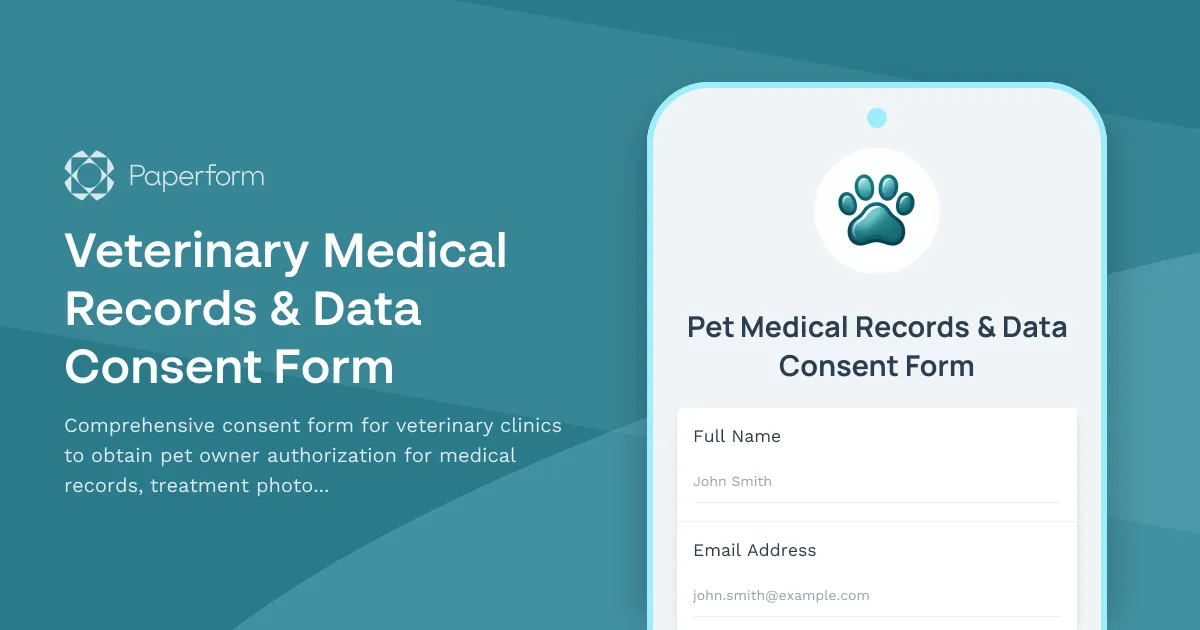
Streamline Veterinary Consent with a Professional Data Authorization Form
Running a veterinary clinic means juggling patient care with administrative compliance—and getting proper consent from pet owners is essential for everything from sharing medical records to sending appointment reminders. This Veterinary Medical Records & Data Consent Form template gives your practice a clear, professional way to obtain all necessary authorizations in one organized document.
Why Veterinary Clinics Need Dedicated Consent Forms
Modern veterinary practices handle sensitive information daily: medical histories, treatment photos, insurance documentation, and communications with specialists. Without proper consent, your clinic risks compliance issues, miscommunication with referring vets, and frustrated pet owners who don't understand how their information is used.
This template addresses the specific consent scenarios veterinary clinics face:
- Medical record sharing with specialists, emergency clinics, and new veterinary providers
- Treatment photography for documentation, before-and-after comparisons, and surgical records
- Insurance claim processing and communication with pet insurance companies
- Appointment reminders via text, email, or phone
- Educational purposes and case studies (with appropriate anonymization)
Built for Veterinary Practices of All Sizes
Whether you're a solo practitioner, a multi-vet clinic, or part of a larger veterinary hospital network, this form template adapts to your workflow. Pet owners can complete it digitally before their first appointment, during new patient registration, or as part of annual record updates.
The form clearly explains each type of consent in pet-owner-friendly language, reducing confusion and building trust. Conditional logic ensures owners only see relevant follow-up questions based on their selections, creating a streamlined experience that respects their time.
Key Features for Veterinary Professionals
Comprehensive Coverage: The template captures consent for all major data use cases in veterinary medicine, from routine appointment reminders to sharing records with board-certified specialists during complex cases.
Clear Authorization Sections: Each consent type is presented with plain explanations of why you need permission and how the information will be used—helping pet owners make informed decisions without veterinary industry jargon.
Emergency Contact Options: Built-in fields for collecting emergency contact preferences ensure you can reach owners quickly when time-sensitive decisions are needed.
Insurance Integration: Dedicated sections for insurance claim authorization streamline the billing process and reduce back-and-forth with pet insurance providers.
Flexible Communication Preferences: Let pet owners choose their preferred contact methods for different types of communication, from appointment reminders to test result notifications.
How Paperform Enhances Your Veterinary Practice
This template is built on Paperform, the all-in-one form platform trusted by healthcare providers and service businesses worldwide. The SOC 2 Type II compliance framework gives you confidence that sensitive pet owner information is handled securely, while the intuitive interface means your front desk team can customize the form without technical expertise.
With Paperform's conditional logic, you can show or hide specific consent sections based on the services your practice offers—specialty surgery, boarding, grooming, or telehealth consultations. The form automatically adapts to each pet owner's situation, making the experience feel personalized rather than bureaucratic.
Automate Your Veterinary Workflows with Stepper
Once a pet owner submits this consent form, Stepper (Paperform's AI-native workflow automation tool) can spring into action. Automatically add the new patient to your practice management system, send welcome emails with important clinic policies, create a folder in your document storage for the pet's records, and notify your veterinary team that a new patient file is ready.
For practices managing referrals, Stepper can automatically route specialist referral consents to your referral coordinator, trigger secure record transfers, and send confirmation emails to both the pet owner and the receiving specialist—all without manual data entry.
Get Digital Signatures with Papersign
Need a legally binding signature on high-stakes consent forms, such as authorization for complex surgical procedures or experimental treatments? Papersign integrates seamlessly with this template, allowing you to convert submissions into professional eSignature documents that meet legal standards for healthcare consent.
This is particularly valuable for specialty practices, mobile veterinarians, or clinics offering high-value services where clear, documented consent is critical for liability protection and client trust.
Perfect for Multiple Veterinary Specialties
This consent form template works across the full spectrum of veterinary medicine:
- General practice veterinarians handling routine care, vaccinations, and wellness exams
- Emergency and critical care hospitals needing rapid consent for record sharing
- Specialty and referral practices (surgery, oncology, cardiology, ophthalmology)
- Mobile veterinary services requiring remote consent collection
- Veterinary dentistry practices documenting before-and-after treatment photos
- Rehabilitation and physical therapy clinics tracking progress through photos and videos
- Exotic animal and avian specialists with unique documentation needs
Save Time, Reduce Errors, Build Trust
Manual consent forms create bottlenecks in your reception area, lead to incomplete documentation, and make it difficult to update consent preferences when regulations change. Digital consent forms eliminate these pain points while creating a better experience for pet owners who can complete paperwork from home before their appointment.
The form automatically timestamps each consent, creating a clear audit trail for your records. If a pet owner updates their communication preferences or revokes photo consent later, you have documentation of both the original authorization and the change—protecting your practice in case questions arise.
Customizable for Your Practice's Unique Needs
Every veterinary clinic has slightly different consent requirements based on the services offered, local regulations, and practice philosophy. Paperform's document-style editor makes it simple to add clinic-specific consent sections, adjust language to match your communication style, or remove sections that don't apply to your practice.
You can embed the form directly into your practice website, send it via email as part of new patient registration, or display it on a tablet in your waiting room—giving pet owners flexibility in how they complete their paperwork.
Start Building Better Veterinary Client Relationships Today
Clear communication about data use and privacy builds trust with pet owners, demonstrates professionalism, and protects your practice from compliance issues. This Veterinary Medical Records & Data Consent Form template gives you a ready-to-use foundation that can be customized to your exact needs and launched in minutes.
With Paperform's generous free plan, you can start collecting consents immediately, then scale up as your practice grows. Join the 500,000+ teams worldwide who trust Paperform for professional forms that actually get completed—and give your veterinary team more time to focus on what matters most: caring for animals.



More templates like this
Veterinary Specialty Hospital Medical Records & Data Consent Form
A comprehensive consent form for veterinary specialty hospitals to obtain pet owner authorization for diagnostic imaging, specialist consultation sharing, surgery recordings, research participation, and referring veterinarian coordination.
Fitness Center Member Data Consent Form
Comprehensive data consent form for fitness center members covering biometric measurements, health assessments, progress photos, wearable device integration, and wellness app data sharing.
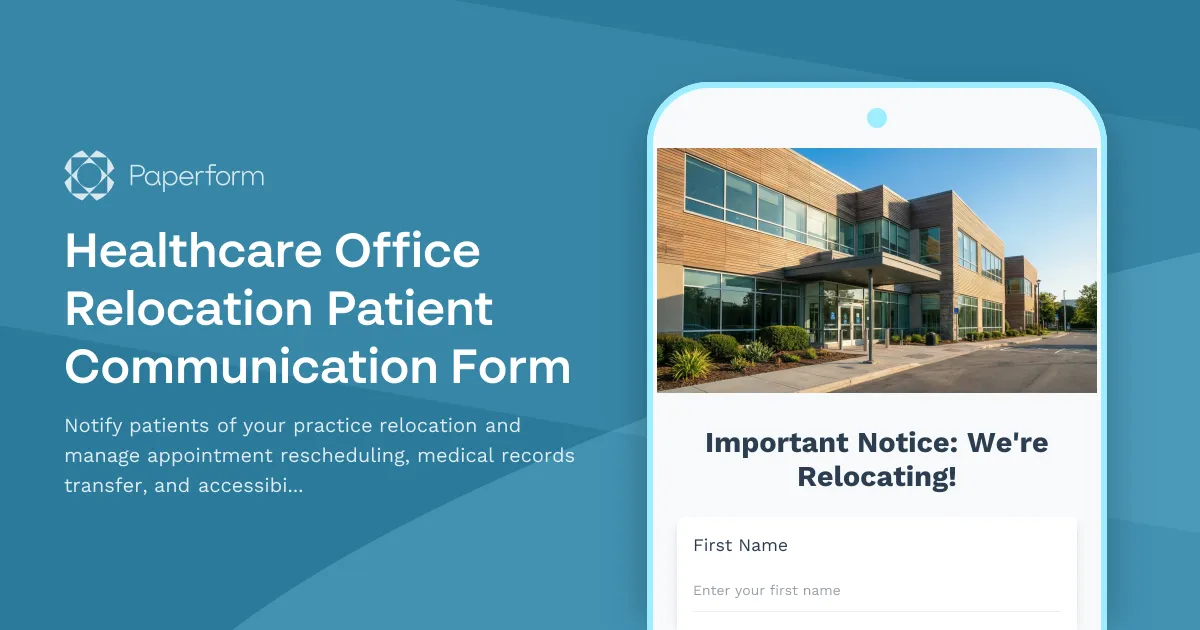
Healthcare Office Relocation Patient Communication Form
Notify patients of your practice relocation and manage appointment rescheduling, medical records transfer, and accessibility needs for a seamless transition to your new location.
Medical Device Patient Data Consent Form
A comprehensive consent form for medical device patients to authorize device usage data collection, health outcomes tracking, adverse event reporting, and participation in product improvement research.
Pet Behavioral Medication Trial Form
A comprehensive veterinary form for documenting baseline behaviors, initiating behavioral medication trials, and monitoring treatment progress and side effects for pets with behavioral concerns.
Veterinary Endoscopy Procedure Consent Form
A comprehensive consent form for veterinary endoscopy procedures including sedation authorization, procedure details, biopsy consent, and owner acknowledgment of risks and costs.
Aquatic Veterinary Consultation Form
A comprehensive consultation form for aquatic veterinarians to assess fish health, water quality, tank conditions, and diagnose diseases in home aquariums and ponds.
Botox & Filler Treatment Photo Release Form
A professional consent form for cosmetic clinics to obtain patient permission for before-and-after photos, testimonials, and marketing use of facial treatment results.
Brazilian Healthcare Patient Intake Form
Complete patient intake form for Brazilian private clinics with CPF, SUS card, medical history, and consent documentation.
Chiropractic Adjustment Consent Form
A comprehensive consent form for chiropractic patients to acknowledge treatment risks, provide health history, and authorize manual adjustment and manipulation procedures.

Clinical Research Participant Data Consent Form
A comprehensive consent form for clinical research participants covering data collection, anonymization, storage, and publication rights with clear explanations of privacy protections.

Clinical Research Study Participant Data Consent Form
Comprehensive consent form for clinical research participants covering screening data collection, randomization, protocol monitoring, adverse event reporting, and long-term follow-up communications.