
Optimize Your Video Conferencing Platform with Real User Insights
Understanding how meeting hosts interact with your video conferencing platform is critical to building features that actually solve real problems. This Video Conferencing Platform Host Experience Research template helps product teams, UX researchers, and platform developers gather detailed feedback about the day-to-day challenges hosts face—from managing participants and troubleshooting screen sharing to accessing and distributing recordings.
Built for SaaS teams, UX researchers, product managers, and communication platform developers, this template goes beyond surface-level satisfaction scores. It captures the workflows, pain points, and feature requests that drive meaningful product improvements.
Why This Template Works for Video Platform Research
Video conferencing platforms live or die by the host experience. Hosts are your power users—they're the ones who schedule meetings, troubleshoot tech issues, manage participants, and ultimately recommend (or reject) your platform for their team. This template helps you understand:
- Participant management efficiency: How easy is it to admit attendees, manage breakout rooms, mute/unmute, and handle disruptive participants?
- Screen sharing reliability: Do hosts encounter lag, quality issues, or confusion when sharing their screen or switching presenters?
- Recording workflows: Can hosts easily start recordings, access them afterward, and share them with the right people?
With Paperform's conditional logic, you can tailor follow-up questions based on specific pain points—so if a host reports issues with screen sharing, they'll automatically see deeper questions about what went wrong. This keeps your research focused and your response rates high.
Automate Your Research Workflow with Stepper
Once responses come in, you can use Stepper to automatically route feedback to the right team members, log insights in your product roadmap tool (like Notion, Airtable, or Jira), and even trigger follow-up interview invitations for hosts who flag critical issues. No more manual spreadsheet wrangling—your research workflows run on autopilot.
Designed for UX Researchers and Product Teams
Whether you're validating a new feature, running quarterly user research, or investigating a spike in support tickets, this template gives you a structured, repeatable way to gather qualitative and quantitative feedback from the people who know your platform best. Use it across different cohorts, iterate based on what you learn, and build a video conferencing experience that hosts actually love.
More templates like this
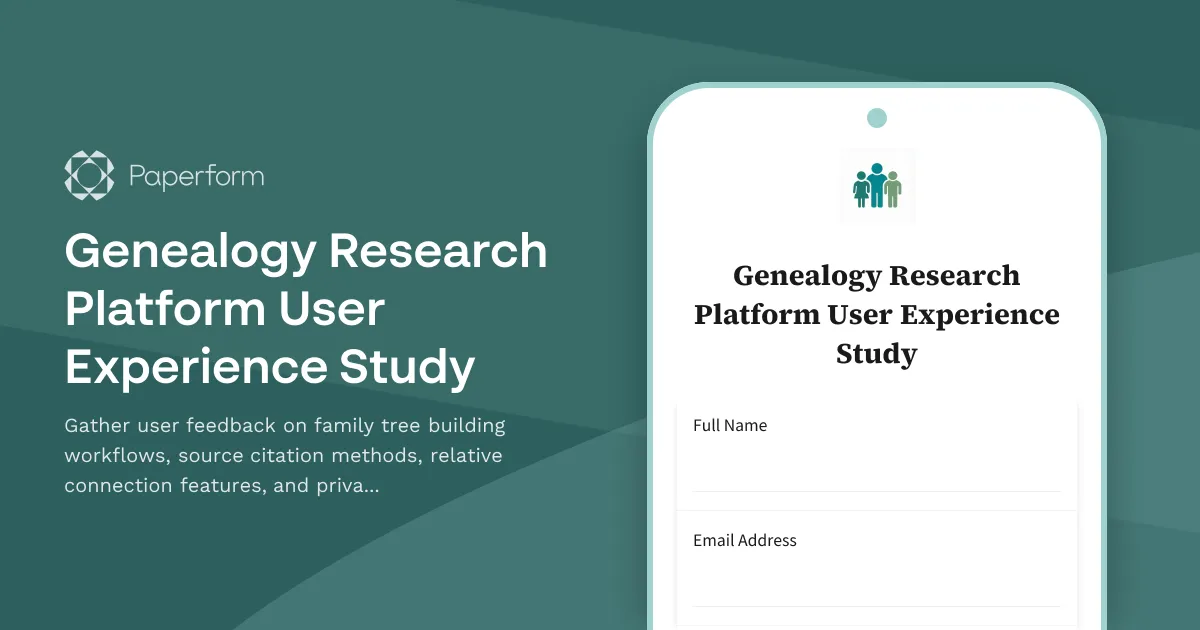
Genealogy Research Platform User Experience Study
Gather user feedback on family tree building workflows, source citation methods, relative connection features, and privacy controls in genealogy research platforms.

Banking App Security Features Perception Study
Evaluate user trust in banking app security features, authentication preferences, and feature usage patterns to inform UX and security design decisions.

Educational Platform Student Interface Research
A comprehensive UX research form for students to provide feedback on educational platform interfaces, including learning style assessment, navigation issues, and accessibility challenges.
Event Registration Platform Organizer Experience Study
Comprehensive UX research form to understand event organizers' experiences with registration platforms, attendee management workflows, check-in processes, and reporting features.

Fitness App Workout Tracking Research Form
A comprehensive UX research form to understand how users track workouts, their exercise logging habits, what motivates them, and how they prefer to visualize their fitness progress.

Home Services Marketplace User Research Form
A comprehensive UX research form designed to understand homeowner behavior when booking home services, including provider selection confidence, pricing clarity, and service description effectiveness.

Real Estate Platform Buyer Journey Research
Understand how homebuyers search for properties, their viewing preferences, and preferred communication channels to optimize your real estate platform's user experience.

Wedding Planning Platform User Research Survey
Gather insights from couples about their wedding planning experience, collaboration needs, vendor management preferences, and budget tracking challenges to inform platform design and features.
Agriculture Farm Management Software - Grower Research
A comprehensive user research form for understanding how growers use farm management software, focusing on crop planning workflows, weather integration needs, and yield tracking accuracy.
Aircraft Maintenance Software User Research Form
A comprehensive user research form designed to gather insights from aircraft maintenance technicians about their current workflows, pain points, and feature requirements for maintenance tracking software.

Automotive Service Booking Platform - Customer Research
A comprehensive user research form for automotive service platforms seeking to understand customer preferences around service selection, pricing transparency, and appointment communications.
Beta Program Accessibility Audit Form
A comprehensive accessibility evaluation form for beta testers to assess digital products using POUR principles, keyboard navigation, and screen reader compatibility testing.