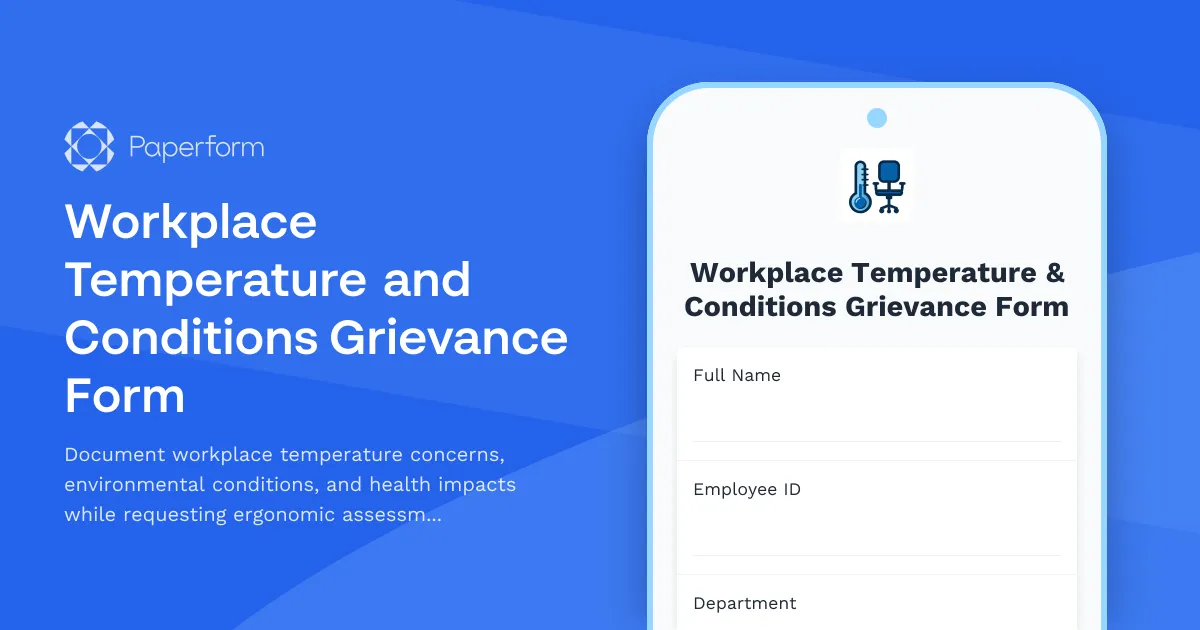
When workplace temperature and environmental conditions affect employee health, safety, and productivity, having a formal reporting process is essential. This workplace temperature and conditions grievance form helps employees document concerns about workplace conditions that may not meet OSHA standards, impact their health, or require ergonomic intervention.
Why temperature and environmental conditions matter
OSHA recommends workplace temperatures between 68-76°F, but many workplaces struggle with climate control, creating uncomfortable or even unsafe conditions. Temperature extremes can lead to decreased productivity, heat stress, cold-related injuries, and exacerbated health conditions. This form creates a clear paper trail for HR and facilities teams to address these concerns systematically.
Built for HR, facilities, and employee relations teams
This template captures essential details including specific temperature readings, time of day patterns, affected work areas, health impacts, and previous attempts to resolve the issue. Conditional logic ensures employees can document different types of environmental concerns—from HVAC failures and drafts to inadequate heating or cooling—while requesting ergonomic assessments when workstation conditions contribute to discomfort.
The form also captures witness information, photographic evidence, and medical documentation when health impacts are involved, creating a comprehensive record that supports both investigation and resolution.
Automate grievance workflows with Stepper
Connect this form to Stepper to automatically route grievances based on severity, notify facilities managers and HR, create tracking tickets in your HRIS or project management tools, and send acknowledgment emails to employees with expected resolution timeframes. You can also set up escalation workflows when issues remain unresolved beyond specific timeframes.
Paperform's SOC 2 Type II compliance ensures sensitive employee grievance data is handled securely, while the professional design makes the process feel respectful and transparent. Whether you're documenting a one-time HVAC failure or building a case for broader workplace improvements, this form helps organizations take employee comfort and safety seriously.



More templates like this
Employee Parking Lot Lighting Safety Grievance Form
A formal grievance form for employees to report inadequate parking lot lighting and related safety concerns, including security risks and potential assault hazards in workplace parking areas.
Workplace Pest Control Inadequacy Complaint Form
A formal complaint form for employees to report inadequate pest control measures, health hazards, allergic reactions, and employer maintenance failures in the workplace.

Workplace Storage Space Allocation Grievance Form
A formal complaint form for employees to address issues with workplace storage space allocation, personal item security, workspace functionality, and equitable distribution of storage resources.
Workplace Violence Incident Report Form
Document workplace violence incidents with detailed threat assessments, witness statements, security timelines, and emergency response evaluations to ensure employee safety and regulatory compliance.
Vendor & Contractor Misconduct Report Form
Report misconduct, code of conduct violations, or contract compliance issues involving external vendors and contractors who interact with your organization.
Workplace Drinking Water Quality & Access Complaint Form
Submit formal complaints about workplace drinking water quality, fountain maintenance issues, or inadequate hydration station access to ensure a safe and healthy work environment.
Workplace First Aid Kit Inadequacy Complaint Form
A formal complaint form for reporting inadequate or poorly maintained first aid kits and emergency medical supplies in the workplace, ensuring OSHA compliance and employee safety.
Workplace Ventilation and Air Quality Grievance Form
A formal grievance form for employees to report workplace ventilation issues, air quality concerns, health symptoms, and potential OSHA or building code violations.
Employee Safety Grievance Form
Report workplace safety concerns, OSHA violations, and hazardous conditions with photo evidence. Submit confidentially to ensure a safer work environment for all employees.
Employee Sick Leave Denial Grievance Form
File a formal grievance regarding denied sick leave, FMLA eligibility issues, or policy misapplication. Document your case with medical certification and request review of denied leave requests.
Return-to-Work Grievance Form
A formal grievance form for injured employees facing barriers to returning to work, including denied light duty accommodations or workers' compensation issues.
Shift Differential Pay Discrimination Complaint Form
Report concerns about shift differential pay discrimination, scheduling bias, premium pay denial, wage calculation errors, or Fair Labor Standards Act violations in a confidential and structured manner.