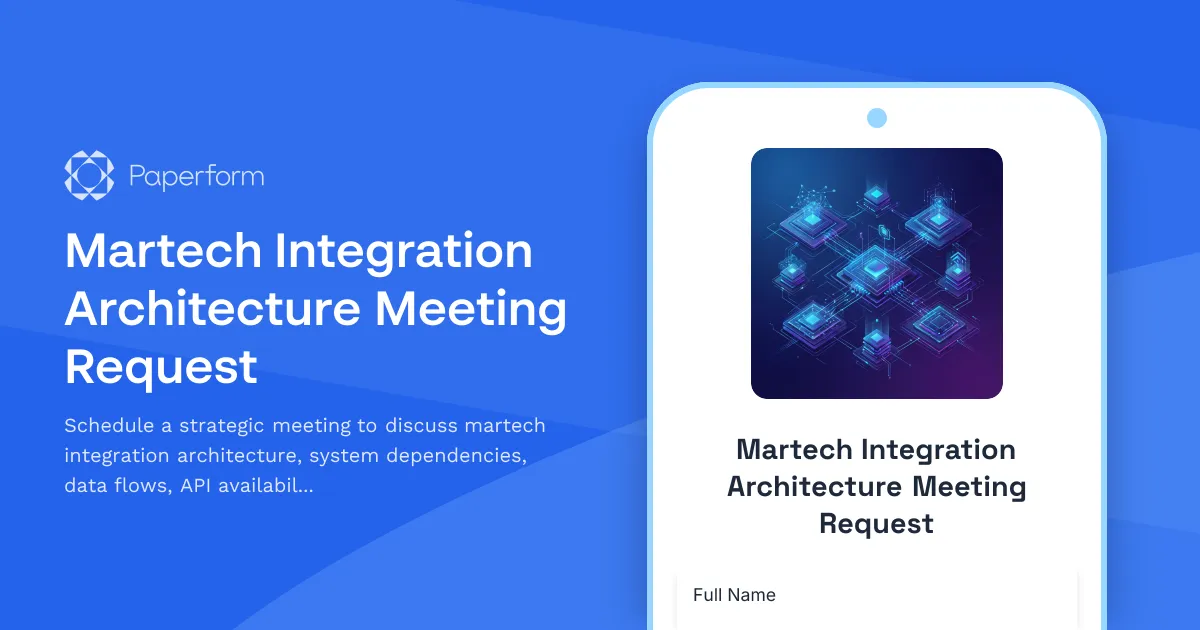
Streamline Your Martech Integration Planning
Coordinating martech integrations across multiple systems requires careful planning and clear communication. This Martech Integration Architecture Meeting Request template helps marketing operations teams, IT departments, and integration specialists schedule focused discussions about connecting marketing technology platforms, mapping data flows, and establishing technical requirements.
Built for Marketing Technology Professionals
Whether you're a Marketing Operations Manager planning a new integration between your CRM and marketing automation platform, a Solutions Architect scoping out API connections, or an IT Professional evaluating data synchronization needs, this template captures all the critical technical context before your meeting.
The form guides stakeholders through essential pre-meeting information: which systems need to connect, what data needs to flow between them, API availability and limitations, authentication requirements, and whether you need real-time or batch processing. This preparation ensures everyone arrives at the meeting with shared context and technical specifications, making your integration discussions more productive from the start.
Why Paperform for Integration Planning?
With Paperform's conditional logic, the form adapts based on your integration complexity—showing additional fields for multi-system integrations or specific API requirements only when relevant. The doc-style editor makes it easy to include technical diagrams, architecture examples, or links to API documentation directly in the form.
Once submitted, use Stepper (stepper.io) to automatically route meeting requests to the right teams, create project tracking records in your work management system, and trigger calendar invites with all the technical context attached. This keeps your integration projects organized from initial scoping through implementation.
Paperform's native integrations with calendars, CRMs, and project management tools mean your martech integration meetings can automatically sync to the right systems, while SOC 2 Type II compliance ensures your technical architecture discussions remain secure.
More templates like this
API Development Project Brief
A comprehensive project brief template for planning API development projects, covering endpoint specifications, authentication, rate limiting, documentation standards, and versioning strategies.
CMS Migration Stakeholder Interview Form
Gather comprehensive stakeholder feedback on CMS migration requirements, workflow needs, integration priorities, and training expectations from marketing, IT, content, and executive teams.
SaaS Service Disruption & Impact Assessment Form
Track service disruptions, assess customer impact, manage incident communications, and monitor SLA breaches with this comprehensive business continuity form for SaaS platforms.
Website Development Stage Gate Approval Form
A comprehensive milestone sign-off form for web development projects, featuring functionality testing checklists, design approval sections, browser compatibility verification, and go-live authorization controls.
Accessibility Compliance Project Brief
A comprehensive project brief template for managing accessibility compliance projects, including WCAG audit findings, remediation priorities, testing requirements, and training needs.
Agile Definition of Ready Checklist
Ensure user stories are fully prepared and ready for sprint planning with this comprehensive Definition of Ready checklist covering story completeness, dependencies, acceptance criteria, and team understanding.
Agile Team Capacity Planning Form
Calculate sprint capacity based on team availability, skill sets, focus factors, and planned time off. Perfect for sprint planning and resource allocation in agile teams.
Agile Team Skills Matrix Form
Track team competencies, learning goals, and knowledge sharing opportunities to optimize sprint planning and resource allocation in agile teams.
Agile Transformation Stakeholder Interview
Gather critical insights from development teams, product owners, and executives about current process pain points, collaboration challenges, and requirements for a successful agile transformation.
Cloud Infrastructure Purchase Request Form
Streamline cloud infrastructure procurement with automated cost analysis, scalability projections, and security compliance checks for SaaS teams.
Community of Practice Coordination Form
A comprehensive form for coordinating community of practice sessions, defining learning objectives, organizing knowledge sharing activities, and fostering team collaboration.
Customer Data Platform Implementation Brief
A comprehensive project brief template for CDP implementation projects, covering data source mapping, unification strategy, segment definitions, activation channels, privacy compliance, and measurement frameworks.