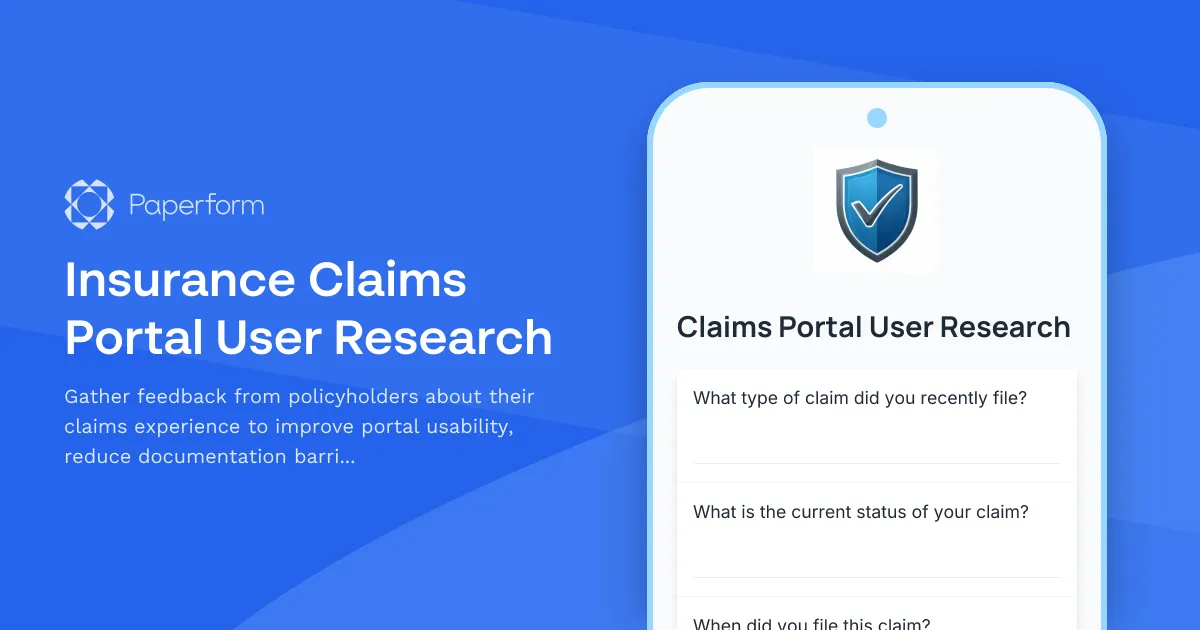
Improve Your Insurance Claims Experience Through User Research
Understanding how policyholders interact with your claims portal is essential for creating a seamless, frustration-free experience. This Insurance Claims Portal User Research template helps insurance companies gather actionable feedback about claim filing complexity, documentation upload barriers, and status tracking clarity—all the critical touchpoints that determine whether customers feel supported or stressed during an already difficult time.
Why UX research matters for insurance claims portals
When someone files a claim, they're often dealing with property damage, medical issues, or other stressful situations. A confusing portal, unclear upload requirements, or mysterious status updates can turn a manageable process into a nightmare. By conducting targeted user research with this template, you can:
- Identify friction points in the claim filing process before they drive customers away
- Understand documentation barriers that cause abandonment or delays
- Improve status communication so policyholders always know where their claim stands
- Reduce support calls by fixing the root causes of confusion
- Build customer trust by showing you're actively listening and improving
What this template helps you discover
This research form walks policyholders through their recent claims experience, asking targeted questions about:
- Claim filing complexity: How easy was it to start, navigate, and complete the filing process?
- Documentation upload experience: What challenges did they face uploading photos, receipts, or medical records?
- Status tracking clarity: Could they easily understand where their claim was in the process?
- Overall satisfaction and pain points: Open feedback to surface issues you might not have anticipated
The conditional logic built into this template adapts to each respondent's experience, showing follow-up questions only when relevant. This keeps the form focused while gathering rich, detailed insights from those who encountered problems.
Perfect for insurance companies and UX teams
This template is ideal for:
- Insurance providers looking to improve policyholder satisfaction and retention
- Digital product teams responsible for claims portal UX and CX
- Customer experience managers tracking pain points across the claims journey
- UX researchers conducting discovery interviews for portal redesigns
- Claims operations teams seeking to reduce processing delays caused by poor uploads or incomplete submissions
Streamline research analysis with AI Insights
Once responses start coming in, Paperform's AI Insights can automatically summarize themes, identify common pain points, and highlight opportunities for improvement—turning qualitative feedback into clear, actionable recommendations without manual data coding.
Automate follow-ups with Stepper
Connect this form to Stepper to automatically route responses based on severity or issue type. For example, you could:
- Send high-priority issues directly to your product team via Slack
- Add all respondents to a follow-up interview recruitment list in Airtable
- Trigger personalized thank-you emails with updates on improvements you're making
- Log feedback themes into your project management tool for sprint planning
Trusted by insurance and financial services teams
Paperform is SOC 2 Type II compliant, ensuring that policyholder feedback is handled securely and professionally. With role-based permissions and data residency controls, your research data stays protected while your team collaborates on insights.
Whether you're preparing for a portal redesign, tracking the impact of recent changes, or building a continuous feedback loop with policyholders, this template gives you the structure and flexibility to run professional UX research—no coding or survey expertise required.
More templates like this
Home Warranty Service Claim Portal Research
A comprehensive UX research form designed to gather user insights about home warranty claim portals, coverage verification processes, contractor dispatch expectations, and documentation requirements.
Banking App Security Features Perception Study
Evaluate user trust in banking app security features, authentication preferences, and feature usage patterns to inform UX and security design decisions.
Event Registration Platform Organizer Experience Study
Comprehensive UX research form to understand event organizers' experiences with registration platforms, attendee management workflows, check-in processes, and reporting features.

Food Delivery Driver Experience Research Study
A comprehensive UX research form for food delivery app drivers to share feedback on order management, navigation tools, and earnings transparency.
Genealogy Research Platform User Experience Study
Gather user feedback on family tree building workflows, source citation methods, relative connection features, and privacy controls in genealogy research platforms.

Home Services Marketplace User Research Form
A comprehensive UX research form designed to understand homeowner behavior when booking home services, including provider selection confidence, pricing clarity, and service description effectiveness.
Legal Case Management Software Attorney Workflow Research
A comprehensive UX research form designed to understand attorney workflows, time tracking practices, document organization systems, and client communication patterns for legal case management software optimization.

Real Estate Platform Buyer Journey Research
Understand how homebuyers search for properties, their viewing preferences, and preferred communication channels to optimize your real estate platform's user experience.

Video Conferencing Platform Host Experience Research
Gather actionable insights from meeting hosts about their experience with video conferencing platforms, including participant management, screen sharing reliability, and recording workflows.

Wedding Planning Platform User Research Survey
Gather insights from couples about their wedding planning experience, collaboration needs, vendor management preferences, and budget tracking challenges to inform platform design and features.
Agriculture Farm Management Software - Grower Research
A comprehensive user research form for understanding how growers use farm management software, focusing on crop planning workflows, weather integration needs, and yield tracking accuracy.
Agriculture Technology Adoption Research Survey
Comprehensive survey for understanding farmers' current practices, technology awareness, ROI expectations, and training needs in agricultural innovation.