
Identify Skills Gaps in Your Import/Export Team
Running an effective import/export operation demands coordinators who are fluent in customs regulations, trade compliance, documentation systems, and international logistics. But how do you know where your team's strengths lie—and where they need support?
This Import/Export Coordinator Competency Matrix gives you a structured way to assess critical skills across your logistics and trade compliance teams. Use it to benchmark current competencies, pinpoint training needs, and build development plans that keep your operation running smoothly and compliant.
What this form assesses
The matrix covers the five core competency areas every import/export coordinator should master:
- Customs regulations: Tariff classification, valuation methods, country-specific rules, duty drawback, and bonded warehouse procedures.
- Documentation systems: Commercial invoices, bills of lading, certificates of origin, packing lists, AES filings, and electronic customs platforms.
- Logistics coordination: Freight forwarding, carrier management, Incoterms, shipment tracking, and warehouse coordination.
- Trade compliance: Sanctions screening, export controls (EAR/ITAR), import quotas, record-keeping requirements, and audit readiness.
- International shipping procedures: Air and ocean freight processes, customs clearance workflows, delivery coordination, and exception handling.
How it works
The form collects background information on the coordinator being assessed, then walks through each competency area with clear self-assessment or manager-rated questions. You can use matrix-style rating scales to benchmark proficiency levels, multiple-choice questions to test knowledge, and open-ended fields to capture specific training needs or development goals.
Once submitted, you'll have a complete skills profile that highlights strengths, gaps, and priority areas for training or mentorship. Responses can feed directly into your LMS, HR system, or project management tool via Stepper, so you can automate follow-up tasks like enrolling coordinators in relevant courses, scheduling coaching sessions, or generating reports for management.
Who this is for
This competency matrix is designed for logistics managers, trade compliance officers, HR teams, and operations directors in industries that rely on import/export coordination, including freight forwarding, manufacturing, wholesale distribution, customs brokerage, and third-party logistics (3PL) providers.
Whether you're onboarding new hires, running annual performance reviews, preparing for customs audits, or planning your training calendar, this form gives you the insight you need to build a more capable, compliant team—without the spreadsheets or guesswork.
Get started with Paperform and turn skills assessments into actionable development plans that keep your global supply chain running smoothly.

More templates like this
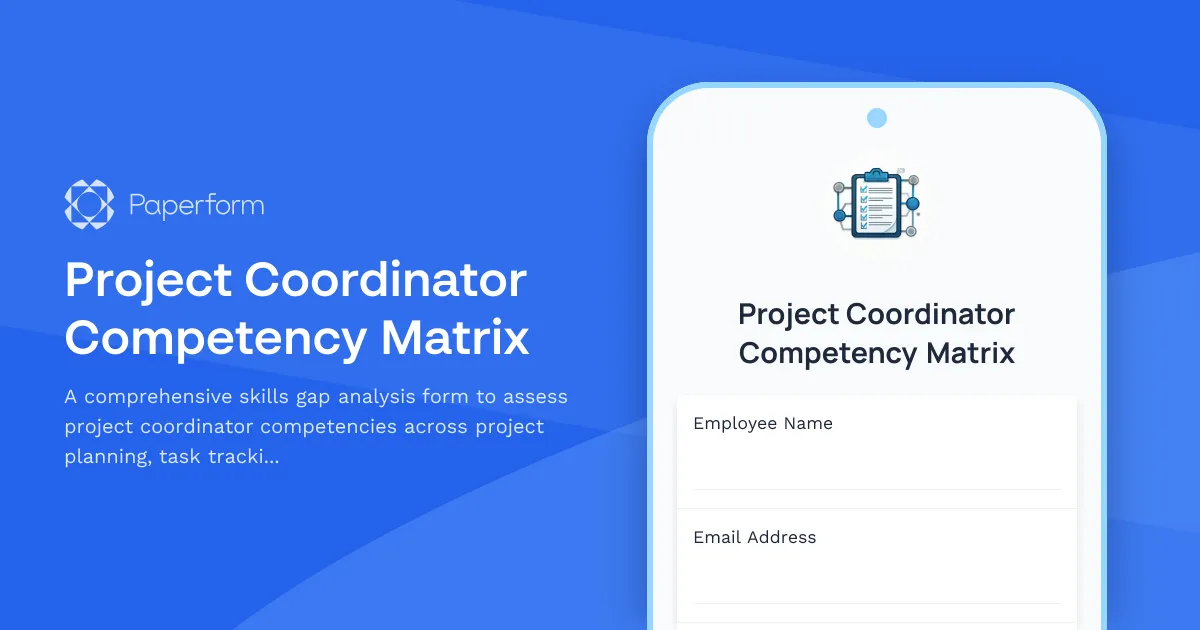
Project Coordinator Competency Matrix
A comprehensive skills gap analysis form to assess project coordinator competencies across project planning, task tracking, stakeholder communication, documentation tools, and resource coordination.
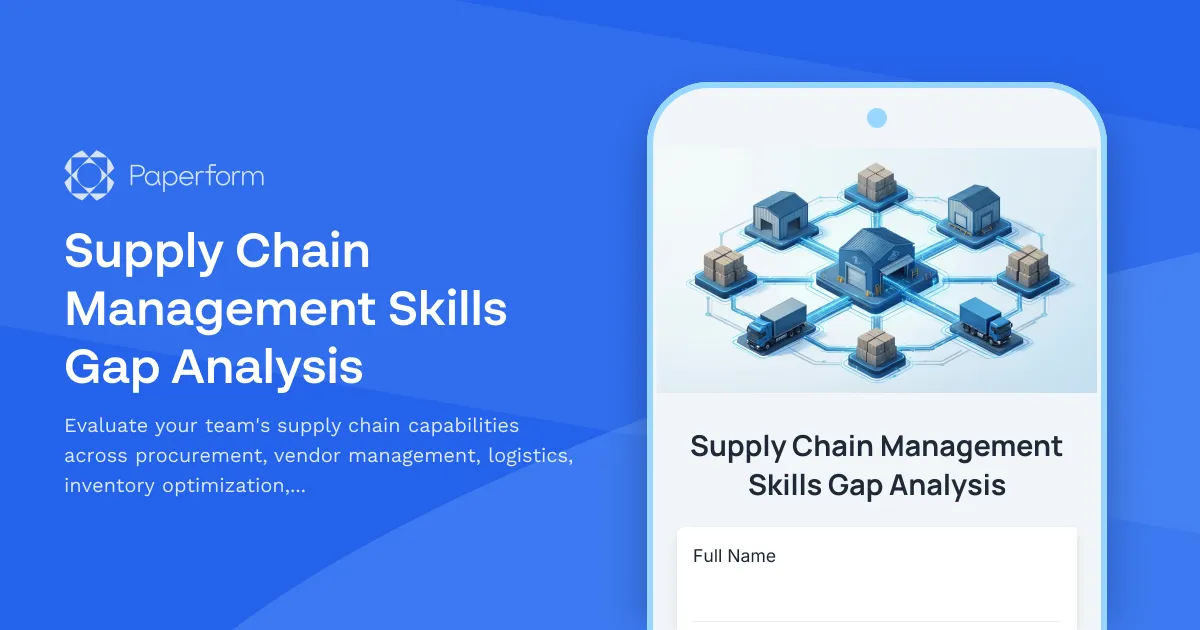
Supply Chain Management Skills Gap Analysis
Evaluate your team's supply chain capabilities across procurement, vendor management, logistics, inventory optimization, and risk assessment to identify training needs and development priorities.

Import/Export Coordinator Compliance Award Nomination
Recognize outstanding import/export coordinators who demonstrate excellence in customs accuracy, shipping efficiency, and documentation quality.
Materials Management Specialist Training Needs Analysis
Assess training requirements and identify skills gaps for materials management specialists across inventory systems, supply chain coordination, cost analysis, vendor relations, and quality assurance.
Customer Service Team Skills Gap Analysis
Evaluate your customer service team's competencies in communication, product knowledge, conflict resolution, and software proficiency to identify training needs and development opportunities.
Event Planning Team Competency Assessment
Identify skills gaps and training needs across your event planning team with this comprehensive competency assessment covering venue management, vendor coordination, event software, budget planning, and timeline management.
IT Technical Skills Gap Analysis Form
Assess current technical proficiencies, identify skill gaps, and prioritize training needs for software development teams with certification tracking and personalized development planning.
Legal Team Competency Evaluation Form
Assess your legal team's competencies across practice areas, legal technology tools, and case management systems to identify skills gaps and optimize billable hours.
Manufacturing Skills Matrix Assessment
A comprehensive skills assessment tool for tracking employee competencies, training completion, cross-training opportunities, and succession planning across manufacturing operations.
Organizational Development Consultant Skills Gap Assessment
Evaluate OD consultant competencies across change management models, culture assessment, team development, intervention design, and effectiveness measurement to identify training needs and development priorities.
Process Engineer Competency Evaluation - Six Sigma
Comprehensive competency assessment for process engineers specializing in Six Sigma methodologies, statistical analysis, process mapping, and continuous improvement practices.
Research Assistant Skills Gap Assessment
Evaluate research assistant competencies across literature review, data collection, statistical analysis, laboratory techniques, and documentation to identify training needs and development opportunities.