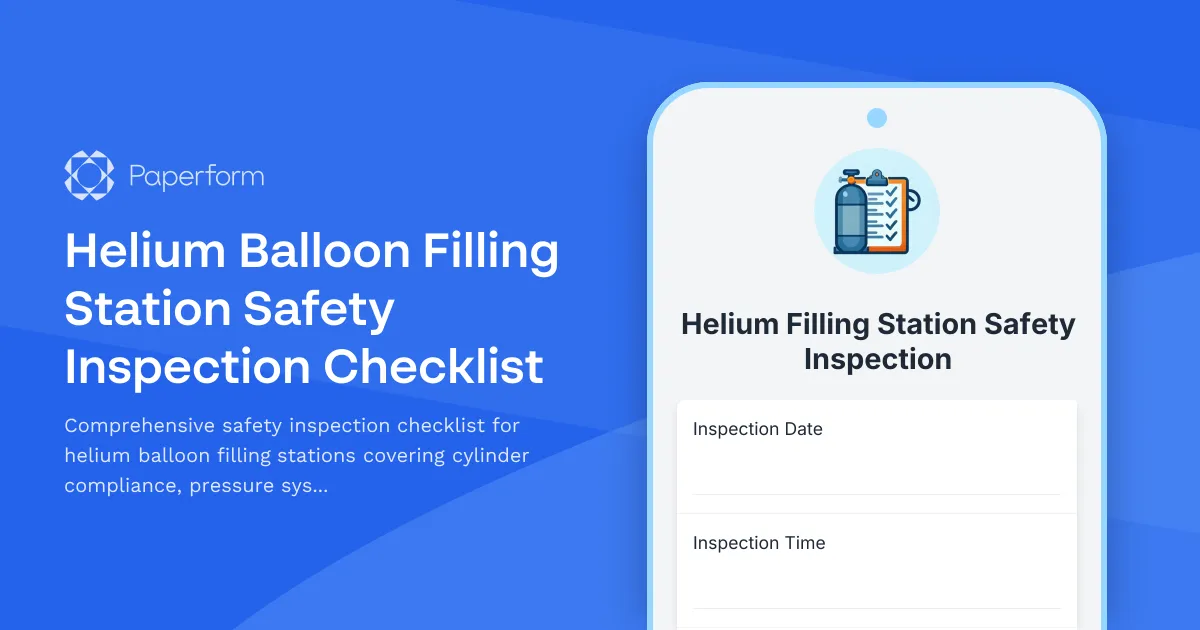
Helium Balloon Filling Station Safety Inspection Checklist
Operating a helium balloon filling station requires strict adherence to safety protocols to protect staff, customers, and property. This Helium Balloon Filling Station Safety Inspection Checklist provides a comprehensive framework for conducting regular safety inspections, ensuring compliance with compressed gas handling standards, and maintaining a safe working environment.
Why Safety Inspections Matter for Balloon Filling Operations
Helium cylinders contain gas under extreme pressure—typically between 2,000 and 2,500 PSI when full. Without proper handling, storage, and maintenance protocols, these cylinders pose significant risks including:
- Cylinder failure or rupture from improper securing or damage
- Asphyxiation hazards in poorly ventilated spaces where helium displaces oxygen
- Fire risks from static electricity ignition near flammable materials
- Equipment failure from faulty pressure regulators or damaged valves
- Injury from uncontrolled gas release due to inaccessible emergency shutoffs
Regular safety inspections using a standardized checklist help party supply stores, event companies, retail locations, and entertainment venues identify hazards before they become incidents, maintain insurance compliance, and protect team members who handle helium daily.
Who Needs This Helium Safety Inspection Template
This safety checklist is designed for:
- Party supply stores and balloon shops that fill balloons for customers on-site
- Event planners and decorators operating mobile or temporary balloon filling stations
- Retail managers overseeing balloon departments in grocery stores, pharmacies, or big-box retailers
- Entertainment venues including theme parks, family entertainment centers, and carnival operators
- Safety coordinators and compliance officers responsible for compressed gas handling protocols
- Facility managers conducting routine safety audits of balloon filling areas
- Franchise owners ensuring consistent safety standards across multiple locations
What This Safety Inspection Checklist Covers
Our template addresses the critical safety components of helium balloon filling operations:
Cylinder Securing & Storage Compliance
Verify that helium cylinders are properly chained or strapped in upright positions, stored away from heat sources and incompatible materials, and that empty and full cylinders are clearly separated and labeled.
Pressure Regulator Testing & Maintenance
Check pressure gauges for accuracy, inspect regulators for damage or wear, verify proper pressure settings, and confirm that connections are leak-free and properly tightened.
Ventilation Adequacy Assessment
Evaluate natural and mechanical ventilation systems, ensure adequate air changes per hour in enclosed filling areas, and verify that helium cannot accumulate in low-lying or confined spaces.
Static Electricity Grounding
Inspect grounding systems, verify proper bonding of equipment, check for static-generating materials near filling stations, and ensure conductive flooring or mats are in place where required.
Emergency Cylinder Valve Accessibility
Confirm that main cylinder valves remain accessible at all times, verify clear pathways for emergency access, check that valve handles or keys are available, and ensure staff know emergency shutdown procedures.
Additional Safety Elements
The checklist also covers PPE availability, fire extinguisher placement, signage visibility, staff training records, and emergency contact information posting.
How Paperform Makes Safety Inspections Easier
Managing safety inspections with paper checklists or shared spreadsheets creates gaps in documentation, makes trend analysis difficult, and risks lost or incomplete inspection records. This Paperform template transforms your helium safety inspection process:
Mobile-Friendly Inspections
Inspectors can complete checklists on smartphones or tablets directly at the filling station, capturing photos of hazards or non-compliant conditions in real-time without returning to an office.
Conditional Logic for Efficient Workflows
The form automatically shows follow-up questions only when issues are identified, streamlining the inspection process while ensuring thorough documentation when corrective actions are needed.
Automated Reporting & Alerts
Set up instant notifications when critical safety violations are identified, automatically route inspection results to facility managers or safety coordinators, and generate summary reports for compliance documentation.
Digital Signature Capture
Inspectors and managers can sign off digitally, creating a clear chain of accountability and timestamped records that satisfy insurance and regulatory requirements.
Centralized Records & Analytics
All inspection data is stored securely in one location, making it easy to track trends, identify recurring issues, compare performance across locations, and demonstrate compliance during audits.
Streamline Corrective Actions with Stepper
When your safety inspection identifies issues requiring follow-up, Stepper can automatically trigger your corrective action workflow:
- Create work orders in your maintenance management system for equipment repairs
- Assign follow-up inspections to specific team members with due dates
- Send escalation notifications to regional managers when critical violations occur
- Update compliance tracking spreadsheets or databases automatically
- Schedule re-training for staff when procedural violations are identified
This ensures that identified hazards don't slip through the cracks between inspection and resolution.
Best Practices for Helium Filling Station Safety
Establish Inspection Frequency
Conduct comprehensive safety inspections daily before operations begin, weekly for detailed equipment checks, and monthly for thorough facility assessments. High-volume operations may require more frequent inspections.
Train All Staff Members
Everyone who handles helium should understand cylinder hazards, proper filling procedures, emergency shutdown protocols, and the importance of maintaining safety systems. Document all training and conduct refresher sessions quarterly.
Maintain Equipment Properly
Replace damaged regulators immediately, never use makeshift repairs on pressure equipment, follow manufacturer maintenance schedules, and keep spare parts available for critical components.
Document Everything
Complete inspection checklists thoroughly, photograph non-compliant conditions, track corrective actions to completion, and maintain records for at least three years for liability protection and compliance verification.
Create a Safety Culture
Empower staff to stop operations when safety concerns arise, encourage reporting of near-misses and hazards, recognize employees who maintain excellent safety records, and make safety the first priority—never rushing at the expense of proper procedures.
Get Started with This Template Today
Whether you're managing a single balloon shop or overseeing safety across multiple event company locations, this Helium Balloon Filling Station Safety Inspection Checklist provides the structure you need to maintain compliance, protect your team, and operate with confidence.
The template is fully customizable in Paperform's intuitive editor—add your company logo, adjust inspection items to match your specific equipment and facility layout, incorporate your internal procedure references, and set up the exact notification and integration workflows your operation requires.
Start creating safer balloon filling operations today with Paperform—trusted by over 500,000 teams worldwide, SOC 2 Type II compliant, and designed specifically for businesses that need professional forms without coding.

More templates like this
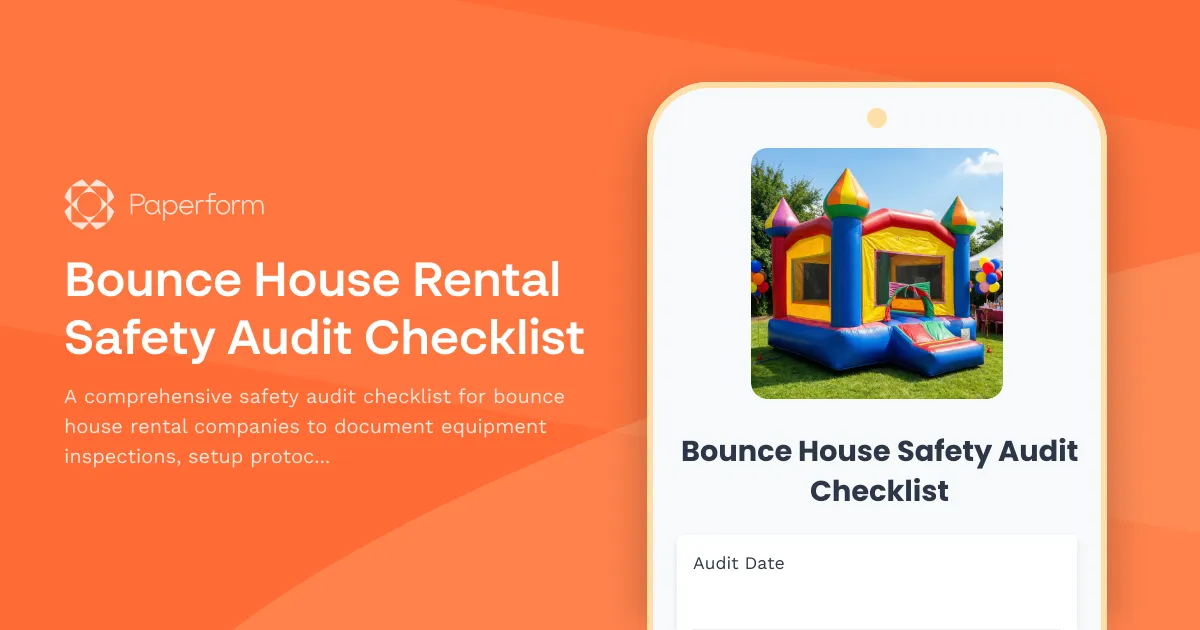
Bounce House Rental Safety Audit Checklist
A comprehensive safety audit checklist for bounce house rental companies to document equipment inspections, setup protocols, weather compliance, sanitation standards, and liability documentation.
Event Venue Safety Inspection Checklist
A comprehensive safety inspection checklist for event venues covering crowd capacity, emergency exits, temporary structures, electrical systems, and weather contingency planning to ensure compliance and attendee safety.
Motorsports Race Track Safety Inspection Checklist
Comprehensive race track safety inspection form covering barrier integrity, flag stations, medical readiness, fuel handling, and spectator protection for motorsports venues.

Stage Rigging & Theatrical Production Safety Checklist
Comprehensive safety inspection checklist for theatrical venues covering stage rigging, load-bearing points, counterweight systems, fire curtains, emergency lighting, and fall protection compliance to ensure performer and crew safety.
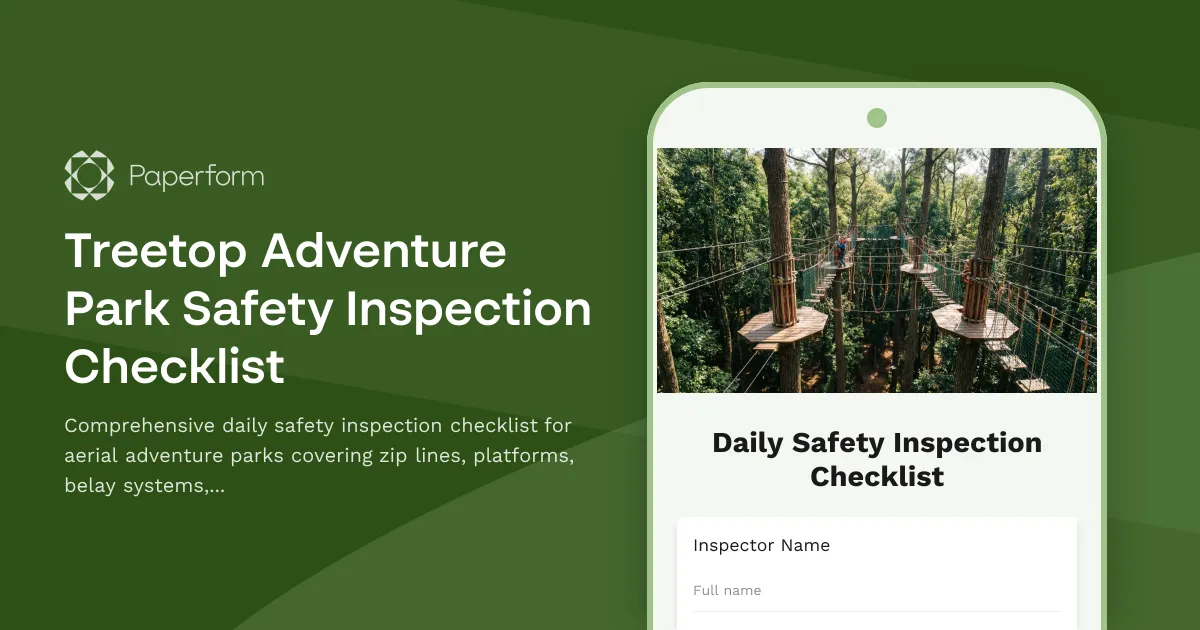
Treetop Adventure Park Safety Inspection Checklist
Comprehensive daily safety inspection checklist for aerial adventure parks covering zip lines, platforms, belay systems, equipment integrity, and emergency preparedness compliance.
Virtual Reality Arcade Safety Inspection Checklist
Comprehensive safety inspection checklist for VR arcades covering play area boundaries, equipment sanitation, motion sickness protocols, cable hazards, and emergency procedures.
Escape Room & Entertainment Venue Safety Equipment Inventory Checklist
A comprehensive safety equipment inventory and compliance checklist for escape rooms and entertainment venues, covering emergency exits, first aid supplies, fire safety equipment, and crowd capacity verification.
Escape Room Facility Safety and Equipment Maintenance Checklist
A comprehensive safety and maintenance checklist for escape room facilities, covering lock mechanisms, emergency releases, prop integrity, and essential safety systems to ensure player safety and smooth operations.
Escape Room Safety Inspection Checklist
Comprehensive safety inspection checklist for escape room attractions covering emergency exits, fire suppression, prop integrity, electrical safety, and staff training compliance.

Fireworks Display Preparation Safety Checklist
A comprehensive safety checklist for fireworks display preparation covering explosive storage compliance, firing site setup, environmental monitoring, water supply verification, and pyrotechnician licensing to ensure safe and compliant pyrotechnic events.
Haunted House Attraction Safety Inspection Checklist
Comprehensive safety inspection checklist for haunted house attractions covering emergency systems, actor safety zones, special effects clearances, exit accessibility, and participant health screening to ensure regulatory compliance and guest safety.
Indoor Trampoline Park Birthday Party Coordination Checklist
A comprehensive checklist for trampoline park staff to coordinate birthday parties, covering party room setup, cake storage, jump time allocation, and host briefing to ensure smooth celebrations.