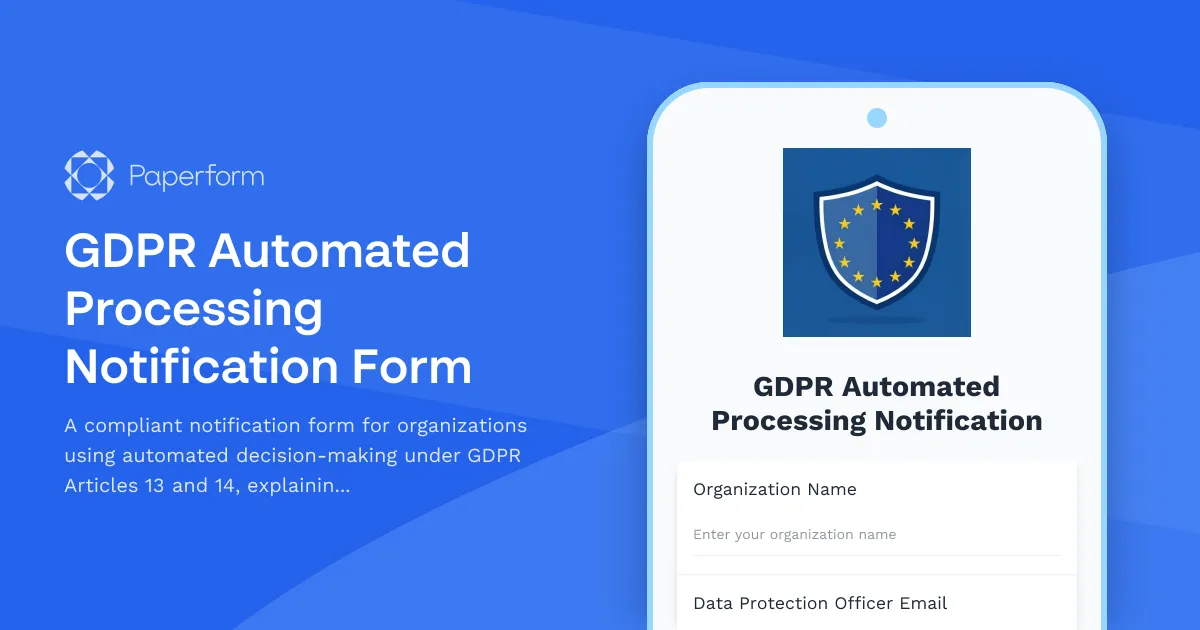
GDPR Automated Processing Notification Form: Transparent Compliance Made Simple
Under GDPR Articles 13 and 14, organizations using automated decision-making must provide clear information about the logic, significance, and potential consequences of algorithmic processing. This GDPR Automated Processing Notification Form template helps EU-based businesses, data controllers, and compliance teams meet their transparency obligations while maintaining trust with data subjects.
Whether you're deploying automated credit scoring, recruitment algorithms, personalized pricing, or AI-driven customer profiling, this form ensures you communicate the required information in a structured, auditable format. It captures acknowledgment from data subjects, documents their understanding, and creates a compliance trail that satisfies regulatory expectations.
Built for GDPR Article 13/14 Compliance
This template guides you through collecting essential information including the purpose of automated processing, categories of data involved, the logic and methodology behind decisions, potential consequences for individuals, and their rights to human intervention and contestation. Conditional logic adapts the form based on processing type, ensuring relevant disclosures for each scenario.
Integrate with Your Compliance Stack Using Stepper
Connect this form to your broader compliance ecosystem with Stepper, Paperform's AI-native workflow automation platform. Automatically log notifications in your compliance register, trigger follow-up communications, update your privacy management system, or route data subject requests to the appropriate teams—all without custom development.
Secure, Auditable, and Professional
With SOC 2 Type II compliance, data residency controls, and detailed submission tracking, Paperform gives legal teams and DPOs the confidence that notification records are secure and audit-ready. Customize the form to match your organization's branding while maintaining the professional, transparent tone GDPR demands.
Trusted by businesses across the EU for handling sensitive compliance workflows, this template transforms a complex regulatory requirement into a streamlined, user-friendly process that protects both your organization and the rights of data subjects.



More templates like this
DPO Appointment Notification Form
A GDPR Article 37 compliant form for notifying supervisory authorities and documenting Data Protection Officer appointments, including contact details and responsibilities.
Corporate Data Breach Whistleblower Report
A secure, anonymous form for employees and stakeholders to report suspected data breaches and security incidents with full GDPR compliance and incident severity assessment.
Data Controller Change Notification & Consent Form
Notify customers of business ownership transfer and obtain consent for data processing continuity under new data controller, with clear opt-out rights per GDPR requirements.
GDPR Binding Corporate Rules Application Form
A comprehensive form for multinational groups to apply for Binding Corporate Rules (BCR) approval, enabling compliant intra-group personal data transfers across borders under GDPR requirements.
Privacy Notice Update Notification Form
Notify data subjects of privacy policy changes and collect updated consent in compliance with GDPR requirements. Ensure transparent communication and maintain regulatory compliance.
Customer Data Update Reminder Form
A GDPR-compliant form that reminds customers to review and update their personal data, ensuring data accuracy obligations are met while providing a streamlined self-service profile update process.
Data Retention Audit Trail Form
Log and track data deletion activities, responsible parties, and compliance with GDPR retention schedules. Maintain a comprehensive audit trail for regulatory oversight and internal accountability.
GDPR Article 31 Supervisory Authority Cooperation Form
Document controller/processor assistance and cooperation with supervisory authorities during GDPR investigations and compliance checks under Article 31.
GDPR Automated Decision-Making Disclosure Form
A compliant form for disclosing automated decision-making and profiling under GDPR Article 22, with options to request human review and object to automated processing.
GDPR Compliance Self-Assessment for SMBs
A comprehensive self-assessment questionnaire for small and medium businesses to evaluate GDPR compliance, identify data protection gaps, and receive prioritized recommendations for remediation.
GDPR Data Breach Assessment Form
Structured assessment form to evaluate data breaches and determine if notification to supervisory authority is required under GDPR Article 33 within 72 hours.
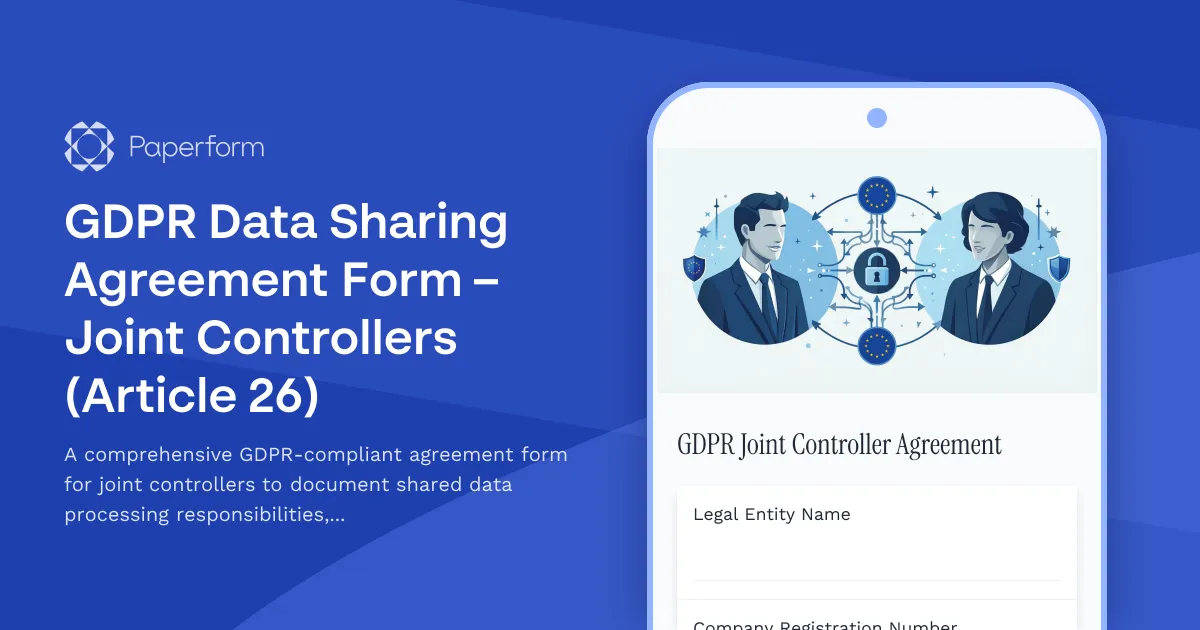
GDPR Data Sharing Agreement Form – Joint Controllers (Article 26)
A comprehensive GDPR-compliant agreement form for joint controllers to document shared data processing responsibilities, allocate obligations, and ensure transparent compliance under Article 26 of the GDPR.