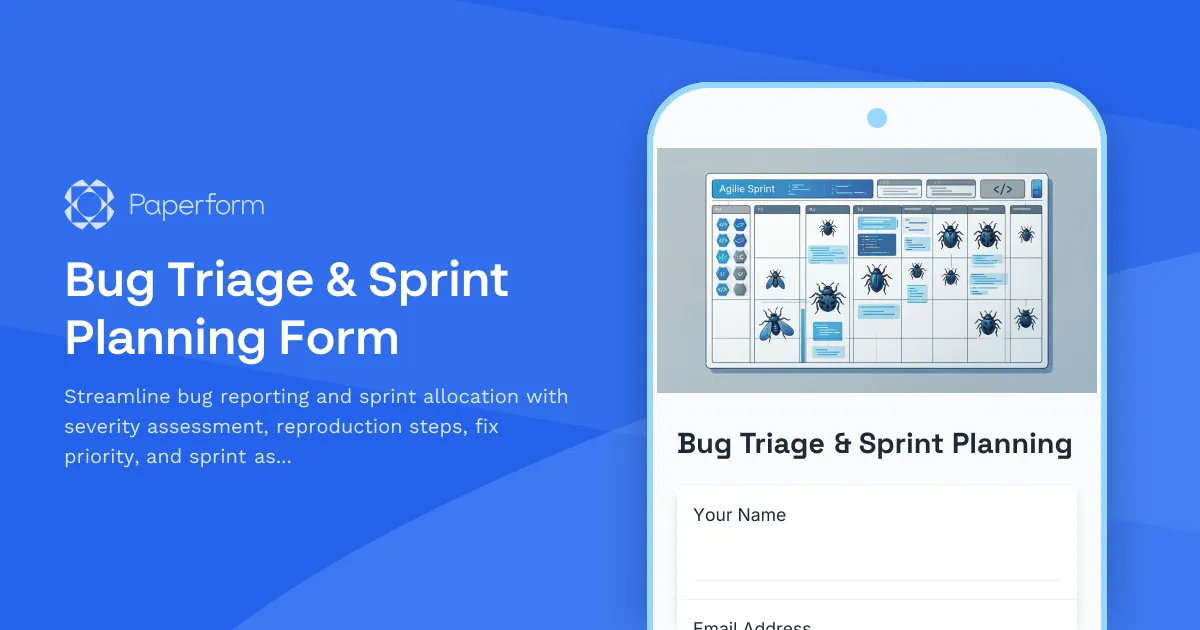
Streamline Bug Triage and Sprint Planning for Agile Teams
For software development teams running agile sprints, managing bugs efficiently is critical to maintaining velocity and delivering quality products. This Bug Triage & Sprint Planning Form helps engineering teams, product managers, and QA professionals standardize bug reporting, assess severity, prioritize fixes, and assign issues to the right sprint—all in one streamlined workflow.
Whether you're a startup engineering team, a software agency managing multiple projects, or an established tech company coordinating across multiple squads, this form ensures every bug is captured with the detail needed to reproduce, assess impact, and make smart prioritization decisions during sprint planning.
Built for Agile Workflows
This template is designed around the agile ceremonies your team already runs—sprint planning, backlog refinement, and daily standups. By capturing reproduction steps, environment details, severity ratings, and business impact upfront, you eliminate back-and-forth clarification requests and speed up triage meetings. Conditional logic ensures only the most relevant fields appear based on severity and type, keeping the form fast to complete without sacrificing depth.
Automate Handoffs with Stepper
Once a bug is submitted, use Stepper to automatically route it to the right team member, create tickets in Jira or Linear, notify Slack channels based on severity, and trigger different workflows depending on whether it's a blocker, critical, or low-priority issue. Keep your project management tools in sync and ensure high-severity bugs get immediate attention without manual work.
Why Paperform?
Paperform gives development teams a flexible, no-code way to build intake forms that match your workflow—not the other way around. With built-in logic, calculation fields for priority scoring, file uploads for screenshots and logs, and seamless integrations with the tools developers already use, this form becomes the single source of truth for bugs entering your backlog. Trusted by agile teams worldwide and SOC 2 Type II compliant, Paperform ensures your bug tracking process is both professional and secure.
More templates like this
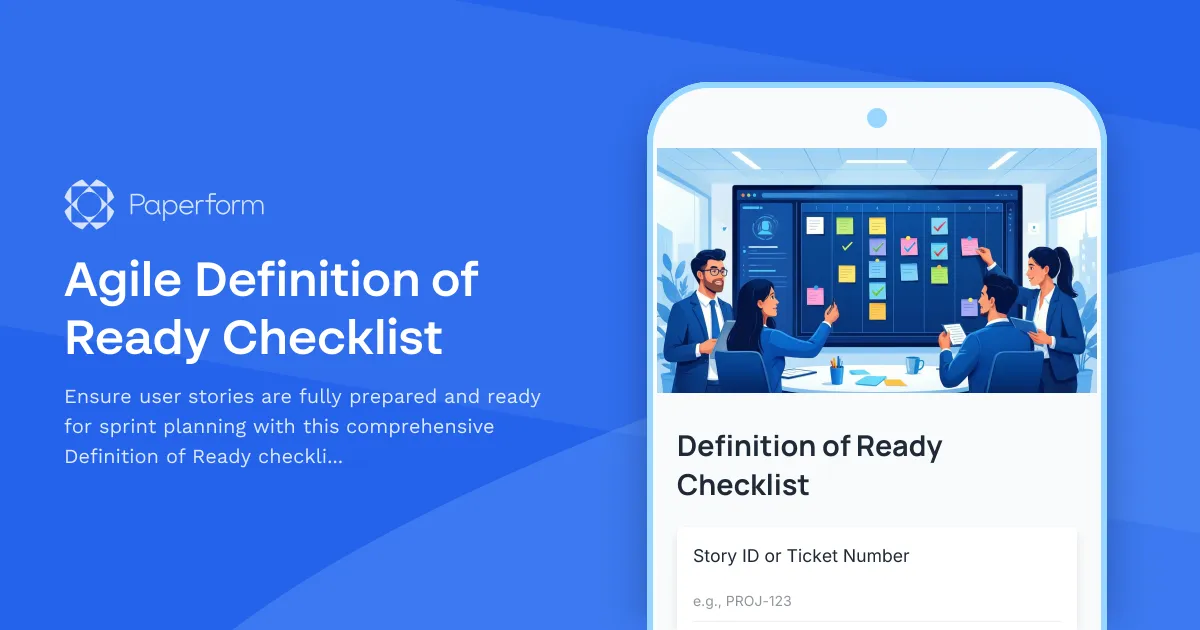
Agile Definition of Ready Checklist
Ensure user stories are fully prepared and ready for sprint planning with this comprehensive Definition of Ready checklist covering story completeness, dependencies, acceptance criteria, and team understanding.
Agile Metrics Dashboard Submission Form
Track sprint performance with comprehensive agile metrics including velocity, cycle time, lead time, and quality indicators for continuous team improvement.
Agile Release Checklist Form
A comprehensive release readiness checklist for agile teams to verify code freeze, testing completion, documentation review, and stakeholder approvals before deployment.
Agile Sprint Review Form
A comprehensive sprint review form for agile teams to document sprint demos, validate acceptance criteria, gather stakeholder feedback, and prioritize next sprint items.
Agile Team Skills Matrix Form
Track team competencies, learning goals, and knowledge sharing opportunities to optimize sprint planning and resource allocation in agile teams.
Agile Team Working Agreement
Establish team norms, communication protocols, core hours, and collaboration standards for agile teams to improve workflow and reduce friction.
Definition of Done Checklist
Ensure every sprint deliverable meets your team's quality standards with this comprehensive Definition of Done checklist covering code standards, testing, documentation, and deployment criteria.
Feature Flag Rollout Planning Form
Plan and track feature flag deployments with rollout targets, success metrics, rollback triggers, and monitoring setup for safe, controlled releases.
Hardening Sprint Planning Form
Plan and prioritize technical debt, bug fixes, performance improvements, and stability enhancements for your hardening sprint with this comprehensive agile planning form.
Iteration Zero Planning Form
A comprehensive iteration zero planning form for agile teams to set up technical infrastructure, CI/CD pipelines, development environments, and define initial architecture before starting sprint work.
PI Planning Form for SAFe Teams
Streamline your Program Increment planning with this comprehensive SAFe-aligned form. Capture team objectives, identify dependencies, and conduct confidence votes—all in one place.
Scrum of Scrums Coordination Form
Streamline cross-team agile coordination with this comprehensive scrum of scrums form. Track team progress, identify dependencies, surface impediments, and manage integration points across multiple scrum teams.