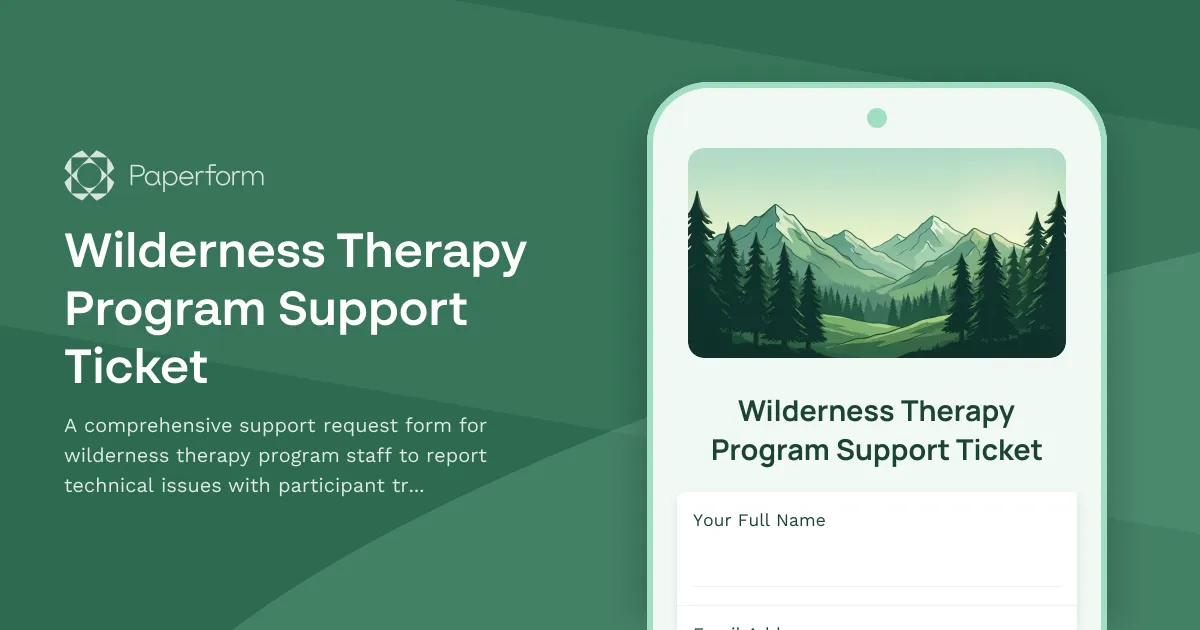
Streamline Your Wilderness Therapy Program Support Requests
Managing a wilderness therapy program comes with unique operational challenges—from tracking participant progress in remote locations to coordinating field staff communications and managing sensitive insurance authorizations. When technical issues arise, you need a clear, organized way to report problems and get them resolved quickly.
This Wilderness Therapy Program Support Ticket template is designed specifically for behavioral health professionals, program administrators, field staff, and clinical coordinators who need to report system issues affecting participant care, family engagement, and operational workflows.
Built for Behavioral Health Operations
Whether you're dealing with participant progress tracking glitches, field staff communication breakdowns, insurance authorization errors, or family update portal issues, this form captures all the critical details your IT and program support teams need to prioritize and resolve tickets efficiently.
The structured format helps you document:
- Issue type and priority level so urgent matters get immediate attention
- Affected systems and participants to understand scope and impact
- Field staff location and connectivity for remote troubleshooting
- Insurance and authorization details for billing and compliance issues
- Family portal access problems that impact transparency and engagement
Automate Your Support Workflow with Stepper
Once a support ticket is submitted through Paperform, you can use Stepper to automatically route high-priority issues to your IT team via Slack or email, create tickets in your project management system, and send acknowledgment messages to the reporter—all without manual intervention. This ensures nothing falls through the cracks, even when your team is managing participants across multiple field locations.
Designed for Healthcare and Behavioral Health Teams
With Paperform's SOC 2 Type II compliance and secure data handling, you can trust that sensitive participant information and clinical details are protected. The conditional logic in this template shows relevant questions based on the issue type selected, streamlining the reporting process and reducing cognitive load for busy clinical staff.
This template is ideal for wilderness therapy programs, outdoor behavioral health organizations, residential treatment centers with wilderness components, adventure therapy providers, and therapeutic expedition programs that need reliable support ticketing without complex enterprise software.
More templates like this
Addiction Intervention Services Inquiry Form
A compassionate inquiry form for families seeking professional addiction intervention services, collecting essential information about substance use, living situation, insurance coverage, and treatment readiness.
Addiction Recovery Center Staff Code of Conduct
A comprehensive code of conduct agreement for addiction recovery center staff covering professional boundaries, confidentiality standards, ethical guidelines, and relapse response protocols.
Addiction Treatment Center Contact Form
A compassionate, confidential contact form for addiction treatment centers to assess client needs, verify insurance, determine appropriate treatment level, and provide immediate crisis support.
Addiction Treatment Center Therapeutic Resources Purchase Request Form
A comprehensive internal purchase request form for addiction treatment centers to procure therapeutic resources, ensuring evidence-based program alignment, insurance coverage validation, and outcome tracking capabilities.
Addiction Treatment Facility Patient Complaint Escalation Form
A comprehensive escalation form for addiction treatment facilities to manage patient complaints involving clinical care quality, insurance authorization issues, and accreditation body notifications.
Addiction Treatment Facility Safety Incident Report
Document safety incidents in addiction treatment facilities while maintaining patient confidentiality, recording staff response, and tracking treatment plan impacts for clinical review.
Addiction Treatment Program Information Request Form
A confidential form for individuals seeking information about addiction treatment programs, including substance or behavioral concerns, insurance details, and preferred treatment approaches.
Addiction Treatment Telehealth Supply Request Form
A professional form for addiction treatment facilities to request telehealth supplies, remote monitoring equipment, and virtual therapy technology while maintaining HIPAA compliance.
Anonymous ACT Fidelity Concern Report
A confidential reporting form for submitting concerns about Assertive Community Treatment (ACT) program fidelity, evidence-based practice adherence, and client outcome monitoring.
Behavioral Health Crisis Center Patient Elopement Report
A comprehensive elopement report form for behavioral health facilities to document missing patients, assess risk factors, and coordinate immediate response efforts with mobile crisis teams.
Behavioral Health Crisis Intervention System Implementation Milestone Report
A comprehensive milestone tracking form for behavioral health crisis intervention systems, covering intake assessments, risk stratification, care coordination protocols, follow-ups, and outcome measurements to ensure effective implementation.
Behavioral Health Technician Crisis Intervention Certification Request
Request enrollment in crisis intervention certification for behavioral health technicians. Covers de-escalation techniques, restraint alternatives, and trauma-informed care approaches.