
All Solutions

Explore all the solutions you can create with Paperform: surveys, quizzes, tests, payment forms, scheduling forms, and a whole lot more.
See all solutions




Connect with over 2,000 popular apps and software to improve productivity and automate workflows
See all integrationsProducts
Solutions
All Solutions
Explore all the solutions you can create with Paperform: surveys, quizzes, tests, payment forms, scheduling forms, and a whole lot more.
See all solutionsIntegrations
Connect with over 2,000 popular apps and software to improve productivity and automate workflows
See all integrationsResources
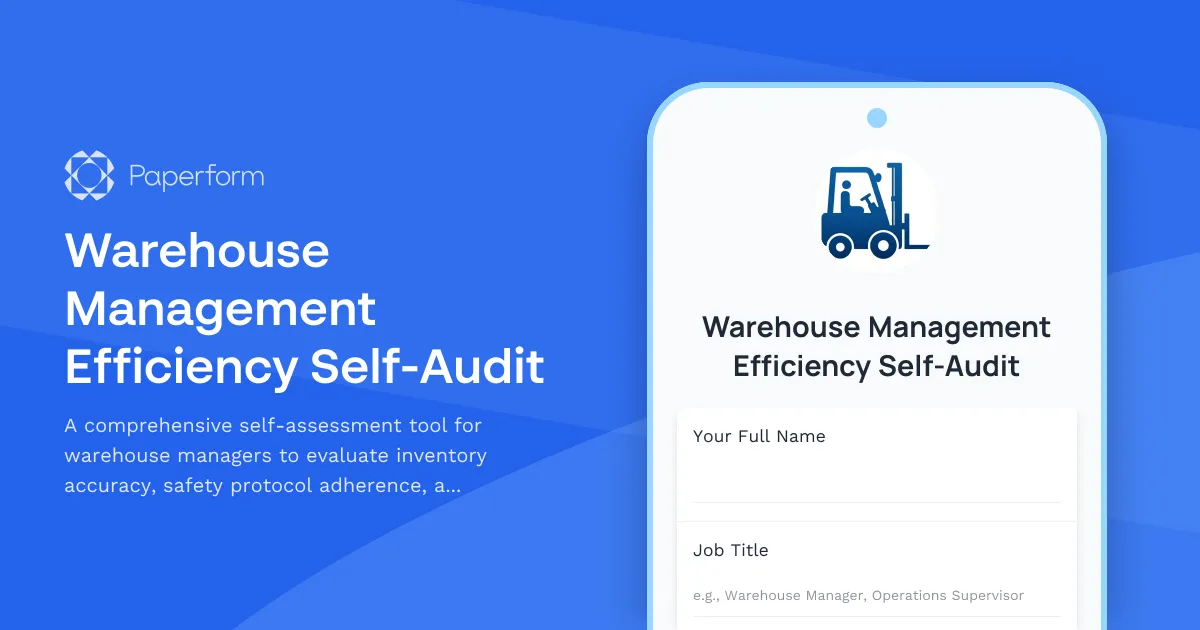
Managing a warehouse efficiently requires balancing multiple priorities—from maintaining accurate inventory counts and ensuring safety compliance to leading your team effectively. This Warehouse Management Efficiency Self-Audit template helps warehouse managers, supervisors, and operations leaders conduct honest, structured self-evaluations that highlight strengths and uncover areas for improvement.
Whether you're preparing for a performance review, seeking professional development opportunities, or simply want to benchmark your management approach, this self-assessment covers the critical dimensions of warehouse operations: inventory accuracy, safety protocol adherence, team leadership, and operational efficiency.
Why use Paperform for your warehouse self-audit?
Paperform's intelligent form builder makes it easy to create professional self-assessments that feel approachable rather than intimidating. The conditional logic ensures managers only see relevant follow-up questions based on their responses, while calculation fields automatically score different sections to provide instant feedback on performance areas.
After submission, you can use Stepper to automatically route self-audit results to HR systems, trigger follow-up coaching sessions, or create personalized development plans based on identified gaps. For operations teams managing multiple warehouse locations, this template helps standardize self-evaluation processes across sites while maintaining consistency in performance standards.
Perfect for logistics companies, distribution centers, manufacturing facilities, retail operations, and third-party logistics providers, this template transforms subjective self-reflection into actionable insights that drive continuous improvement in warehouse management practices.



More templates like this

Corporate Pallet Repair and Reuse Program
Track damaged pallets, assess repair needs, partner with repair shops, and calculate cost savings from reusing pallets instead of purchasing new ones.
Supply Chain Management Skills Inventory
A comprehensive self-assessment tool for evaluating your supply chain management competencies, from logistics optimization to vendor relationships and procurement strategy.
Warehouse Forklift Daily Inspection Checklist
A comprehensive daily forklift inspection checklist for warehouse operations, covering hydraulic systems, battery levels, safety equipment, and operator certification verification to ensure safe and compliant forklift operation.
Warehouse Inventory Control Audit Checklist
A comprehensive warehouse audit checklist to verify cycle counts, assess stock rotation compliance, identify damaged goods, review receiving processes, and evaluate picking accuracy for optimal inventory control.
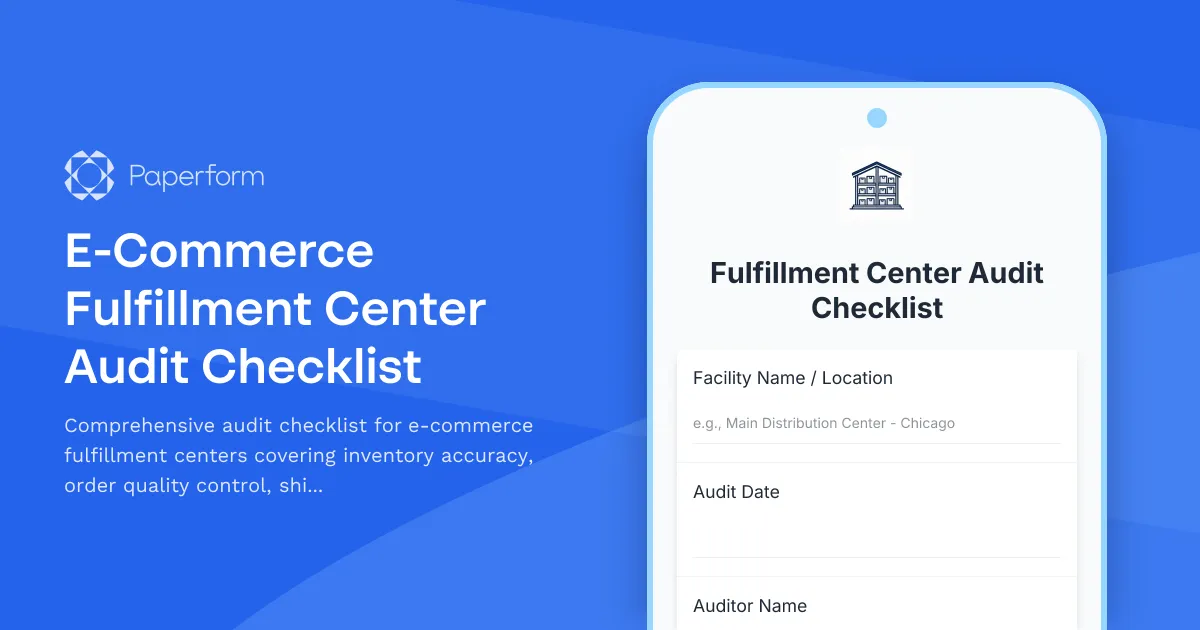
E-Commerce Fulfillment Center Audit Checklist
Comprehensive audit checklist for e-commerce fulfillment centers covering inventory accuracy, order quality control, shipping compliance, returns processing, and warehouse safety inspections.
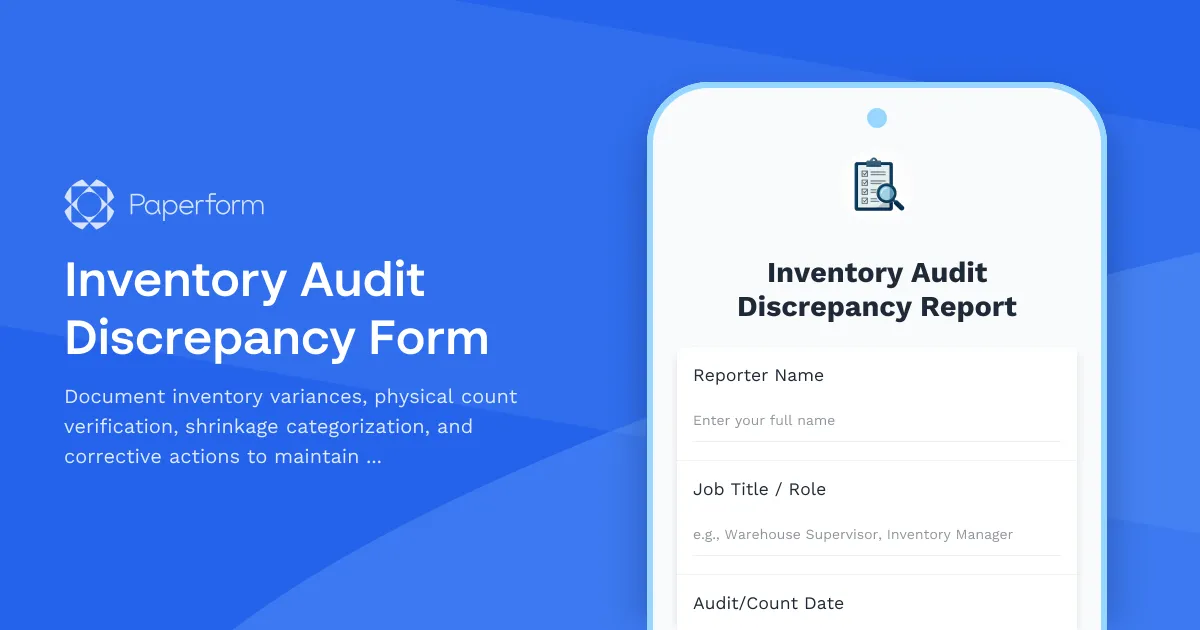
Inventory Audit Discrepancy Form
Document inventory variances, physical count verification, shrinkage categorization, and corrective actions to maintain accurate stock levels and identify root causes of discrepancies.
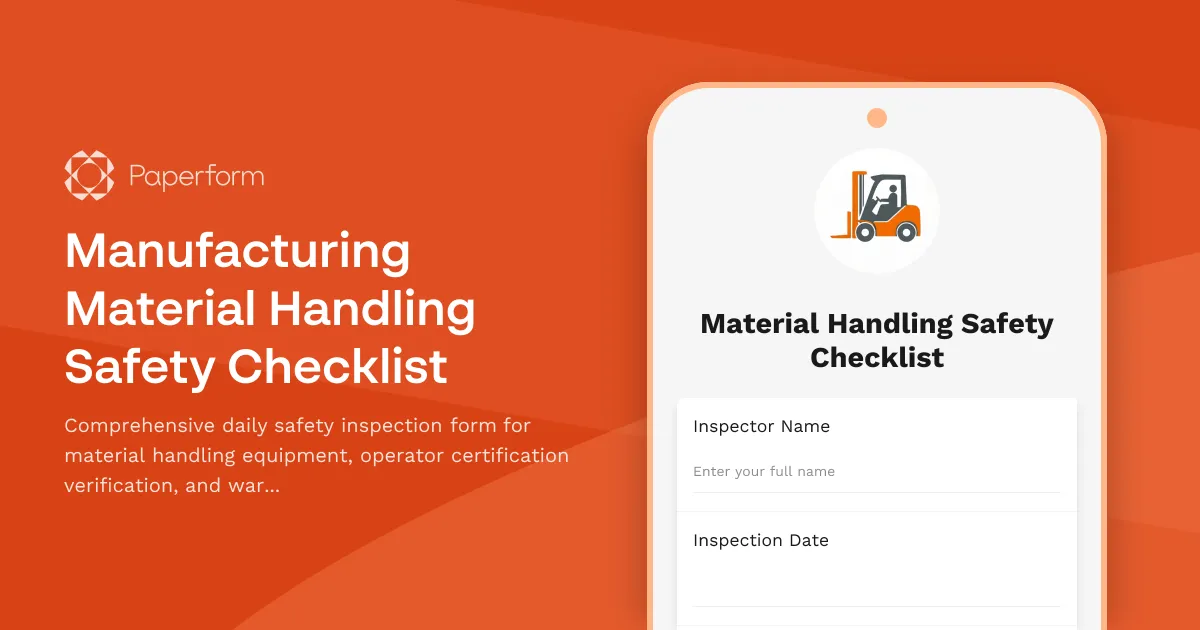
Manufacturing Material Handling Safety Checklist
Comprehensive daily safety inspection form for material handling equipment, operator certification verification, and warehouse safety compliance in manufacturing facilities.
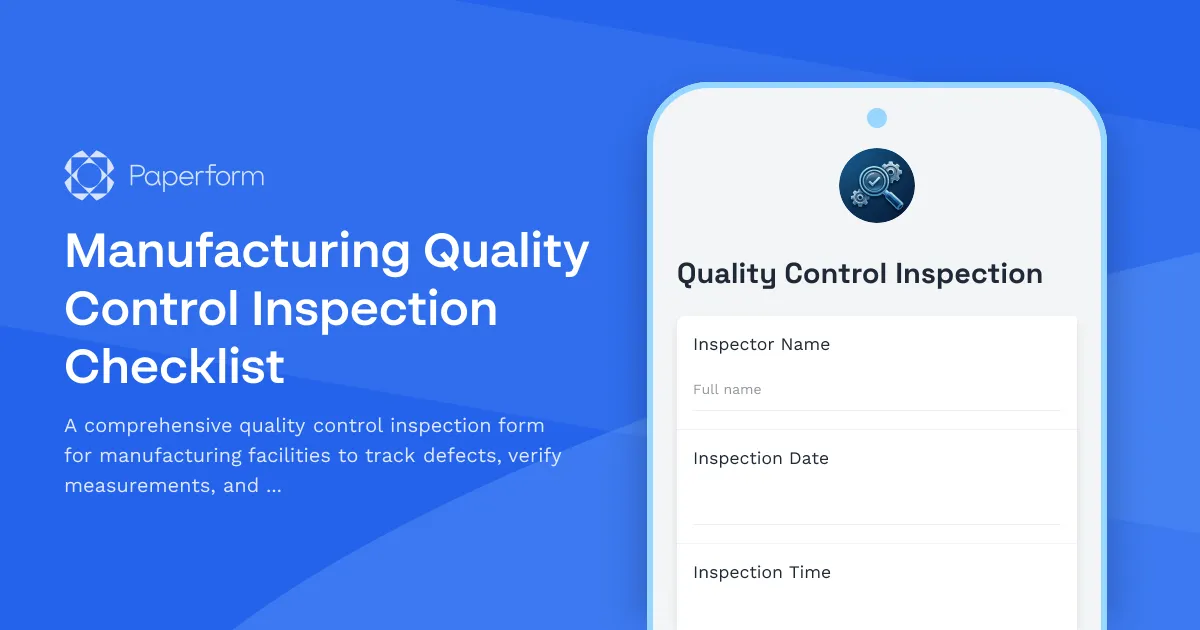
Manufacturing Quality Control Inspection Checklist
A comprehensive quality control inspection form for manufacturing facilities to track defects, verify measurements, and manage batch approvals with detailed documentation.
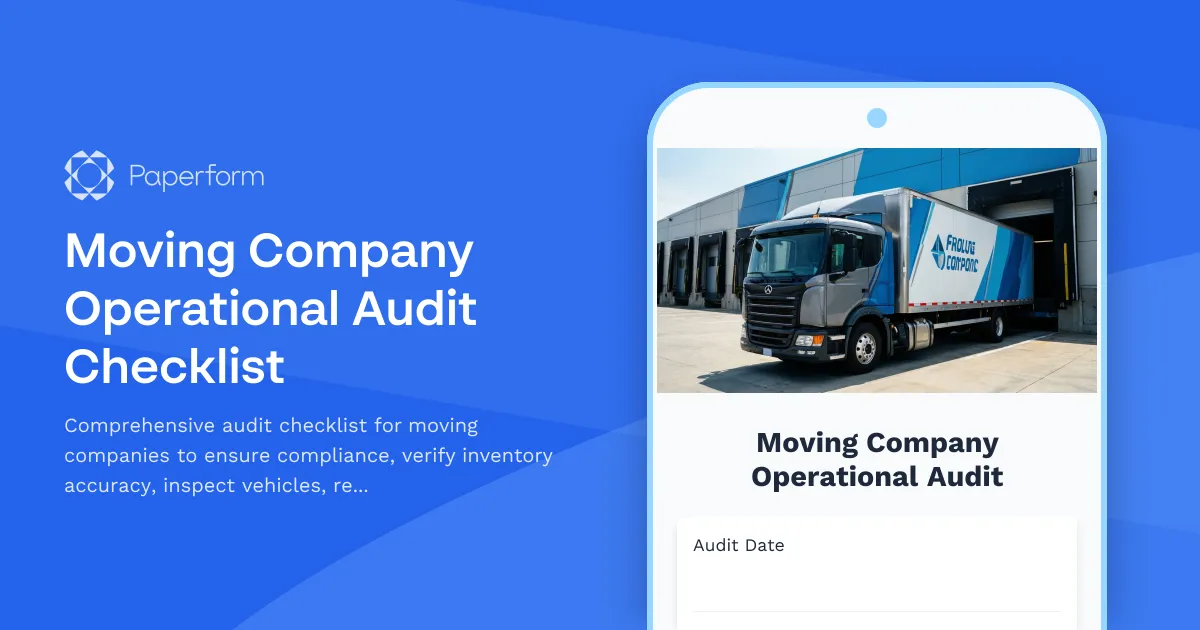
Moving Company Operational Audit Checklist
Comprehensive audit checklist for moving companies to ensure compliance, verify inventory accuracy, inspect vehicles, review damage claims, and maintain operational standards.
Quality Audit Finding Response Form
Document audit findings, perform root cause analysis, and track corrective and preventive actions to ensure quality compliance and continuous improvement.
Supplier Quality Assessment Form
Evaluate supplier performance with comprehensive quality metrics, delivery tracking, defect analysis, and corrective action planning for manufacturing operations.
Warehouse Forklift Accident Report Form
A comprehensive forklift incident report form for warehouse operations that documents accidents, verifies operator certification, assesses damage, reviews safety protocols, and determines retraining needs.