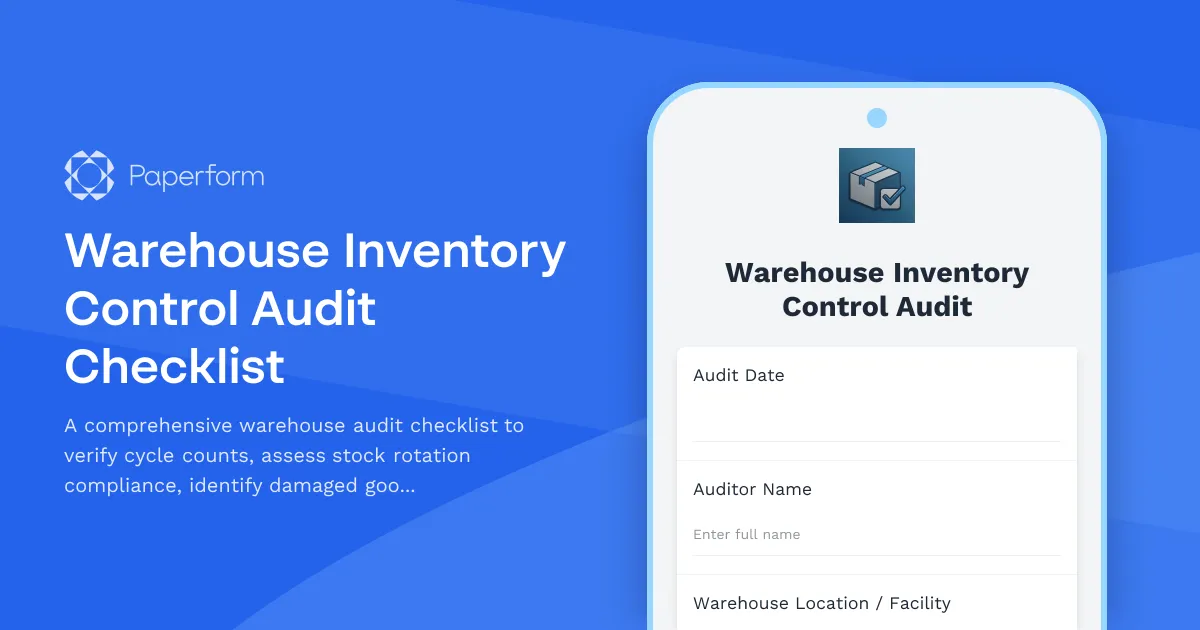
Managing a warehouse means keeping tight control over inventory accuracy, stock handling and operational compliance. This Warehouse Inventory Control Audit Checklist gives you a structured way to conduct thorough audits that cover cycle count verification, stock rotation compliance, damaged goods identification, receiving process review and picking accuracy assessment—all in one streamlined form.
Whether you're running a distribution center, fulfillment warehouse, or manufacturing facility, regular inventory audits are essential for reducing shrinkage, maintaining compliance and keeping operations running smoothly. Instead of juggling paper clipboards or disconnected spreadsheets, this template brings your entire audit process into one easy-to-use digital checklist.
Built for warehouse managers, operations teams and auditors
This template is designed for warehouse managers, inventory controllers, logistics coordinators, and quality assurance teams who need to document findings, capture photos of issues and generate clear audit trails. Each section guides your team through critical checkpoints—from verifying physical counts against system records to assessing whether first-in-first-out (FIFO) procedures are being followed correctly.
What makes Paperform perfect for warehouse audits
Paperform's flexible editor lets you customize this checklist to match your specific warehouse layout, SKU categories and compliance requirements. Add conditional logic to show follow-up questions only when issues are flagged, use image upload fields to document damaged stock or labeling problems, and apply calculations to automatically tally discrepancy counts or compliance scores.
Once submitted, audit results can flow straight into your preferred tools. Connect the form to Stepper to automatically create corrective action tasks in your project management system, notify supervisors when critical issues are found, or update inventory records in your ERP. You can also route submissions to Google Sheets, Airtable, Slack or your warehouse management system via native integrations, webhooks or tools like Zapier and Make.
For teams conducting regular cycle counts, this form becomes a repeatable, auditable process. You'll have timestamped records, photo evidence and structured data that make it easy to spot trends, prove compliance during inspections and drive continuous improvement across your warehouse operations.
Get started with this template and bring consistency, accountability and efficiency to your warehouse inventory audits.



More templates like this
E-Commerce Fulfillment Center Audit Checklist
Comprehensive audit checklist for e-commerce fulfillment centers covering inventory accuracy, order quality control, shipping compliance, returns processing, and warehouse safety inspections.
Warehouse Inventory Replenishment Request Form
Streamline your warehouse inventory management with automated replenishment requests that track stock levels, lead times, seasonal demand, and supplier performance for optimal inventory control.

Corporate Pallet Repair and Reuse Program
Track damaged pallets, assess repair needs, partner with repair shops, and calculate cost savings from reusing pallets instead of purchasing new ones.

Warehouse Order Fulfillment Checklist
Complete warehouse order fulfillment checklist with picking verification, packing standards, and shipping label validation to ensure accuracy and quality control.
Wholesale Distribution Center Disruption & Order Prioritization Form
A comprehensive disruption management form for wholesale distributors to track facility issues, prioritize retailer orders, manage inventory locations, and communicate delivery commitments during crisis events.
Inventory Audit Discrepancy Form
Document inventory variances, physical count verification, shrinkage categorization, and corrective actions to maintain accurate stock levels and identify root causes of discrepancies.
Warehouse Management Efficiency Self-Audit
A comprehensive self-assessment tool for warehouse managers to evaluate inventory accuracy, safety protocol adherence, and team leadership effectiveness to identify improvement opportunities.
Warehouse Operations Daily Report
Track daily warehouse activities including shipments received, orders fulfilled, inventory discrepancies, equipment status, and safety observations in one comprehensive daily report.
Forklift Pre-Operation Safety Checklist
A comprehensive daily forklift inspection form covering operator certification, fluid levels, brake testing, and safety compliance checks to ensure safe equipment operation.
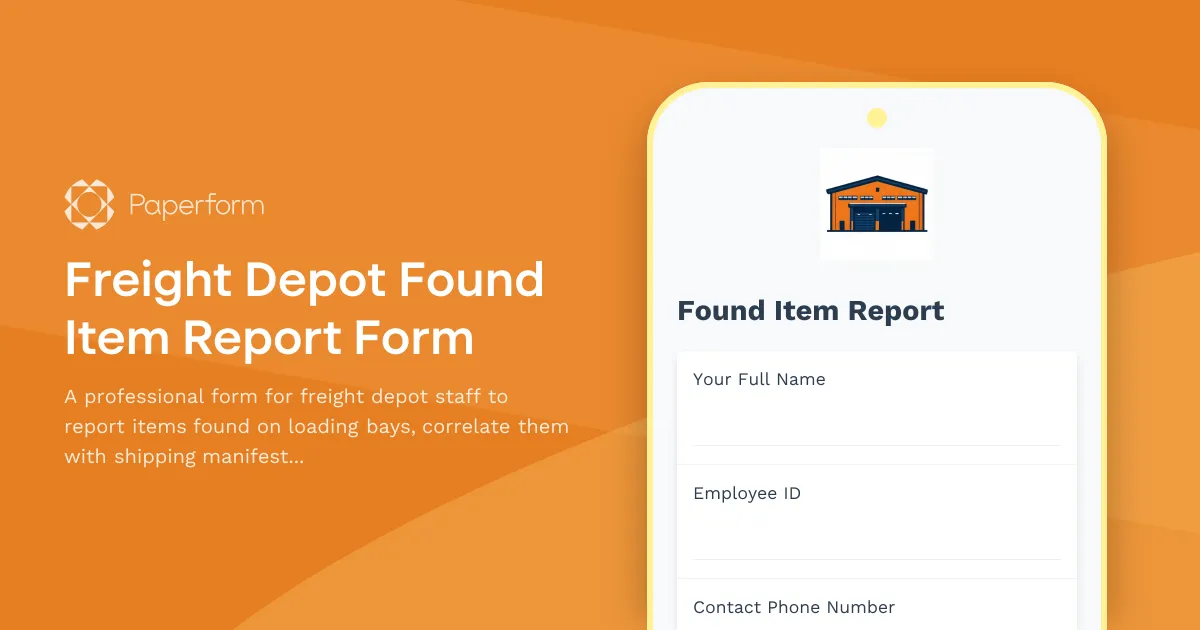
Freight Depot Found Item Report Form
A professional form for freight depot staff to report items found on loading bays, correlate them with shipping manifests, and notify warehouse supervisors and carriers for proper handling and return.
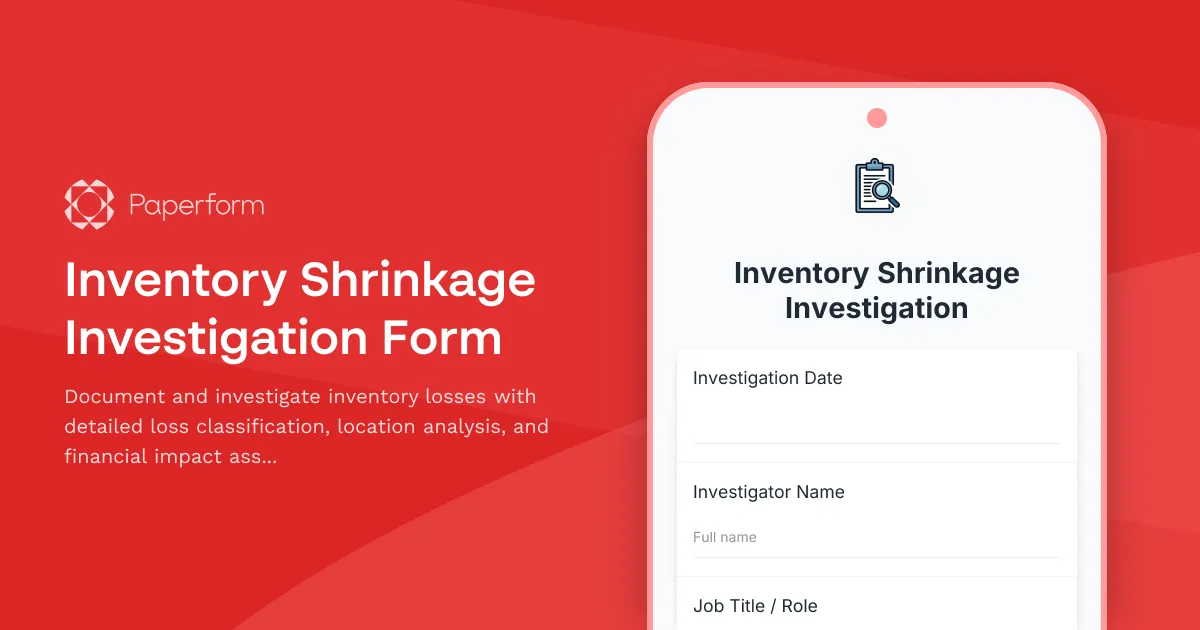
Inventory Shrinkage Investigation Form
Document and investigate inventory losses with detailed loss classification, location analysis, and financial impact assessment to identify causes and implement preventive measures.

Manufacturing Raw Material Inventory Checklist
Streamline manufacturing inventory management with comprehensive raw material tracking, JIT delivery monitoring, quality control batch testing, and production schedule integration.