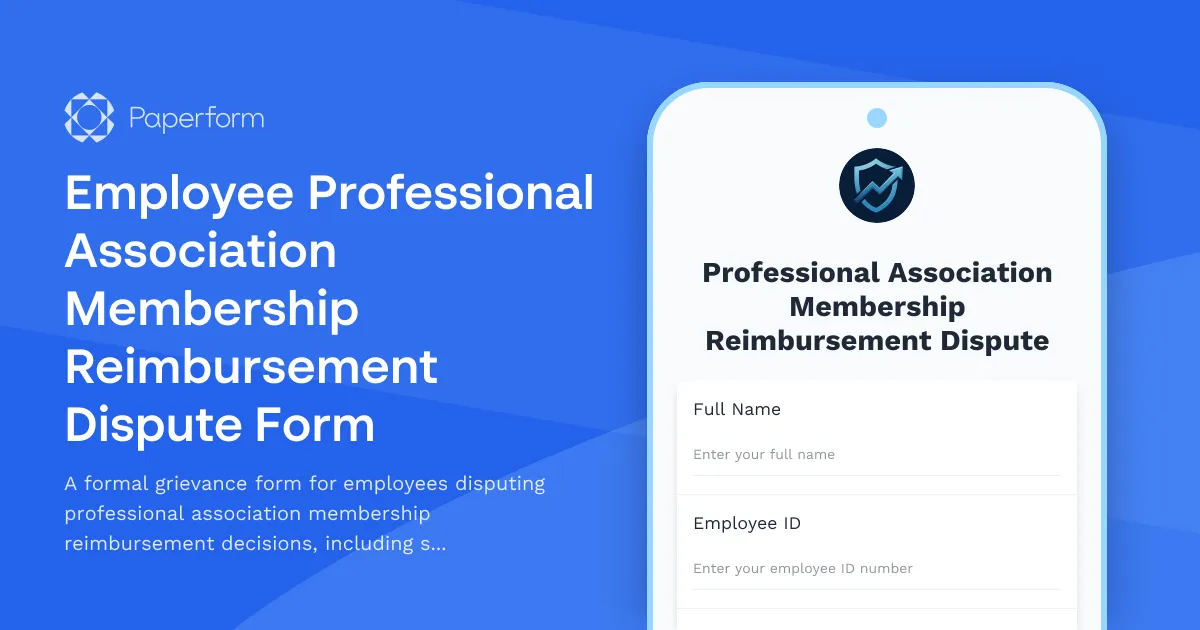
Resolve Professional Development Reimbursement Disputes with Paperform
When employees feel their professional association membership reimbursement requests have been unfairly denied or mishandled, having a clear, structured dispute resolution process is critical. This Employee Professional Association Membership Reimbursement Dispute Form provides HR teams and employees with a professional framework for addressing grievances related to career development funding, policy interpretation, and reimbursement decisions.
Why Use This Template?
Professional association memberships are valuable career development tools that provide networking opportunities, industry certifications, continuing education, and professional growth resources. However, disputes can arise when reimbursement policies are unclear, inconsistently applied, or when the business value of a membership is questioned.
This template helps organizations:
- Document formal grievances with all relevant details in one place
- Capture career development justifications that demonstrate professional value
- Record networking and business benefits to support reimbursement claims
- Address policy interpretation concerns transparently and fairly
- Create an audit trail for HR compliance and dispute resolution
Built for HR Teams and Professional Services
Whether you're in consulting, finance, healthcare, legal services, technology, or any industry where professional development is essential, this form adapts to your needs. The structured approach ensures that both employees and HR have the information needed to review disputes objectively and reach fair resolutions.
With conditional logic built in, the form adapts based on the type of dispute, previous reimbursement history, and supporting documentation provided—ensuring you capture exactly what's needed for each unique situation.
Streamline HR Workflows with Stepper
Once a dispute is submitted, you can use Stepper to automatically route the grievance to the appropriate HR representative, notify the employee's manager, create tasks in your HR management system, and trigger review timelines. This ensures disputes are handled promptly and consistently, reducing resolution time and improving employee satisfaction.
Secure, Compliant, and Professional
Built on Paperform's SOC 2 Type II certified platform, this template ensures sensitive employee grievances are handled securely. Customize the form to match your organization's branding, embed it in your HR portal, or share it directly with employees as a standalone resource.
More templates like this
Employee Achievement Recognition Disparity Complaint Form
Document concerns about unfair recognition practices, award nomination bias, and visibility inequity in the workplace. Help HR address recognition disparities and improve morale.
Company Communication Access Grievance Form
A formal grievance form for employees to report communication inequities, information access issues, remote worker exclusion, and concerns about decision-making transparency in the workplace.
Employee Peer Review Bias Grievance Form
Submit formal complaints about bias, manipulation, or retaliation in peer review and 360 feedback processes. Confidential documentation of review integrity concerns.
Employee Professional License Reimbursement Grievance Form
A formal grievance form for employees to dispute professional license and continuing education reimbursement decisions, including documentation of career requirements and policy applications.
Socioeconomic Status Discrimination Report Form
A confidential form for reporting discrimination, harassment, or workplace barriers related to socioeconomic status, class background, or economic circumstances.
Caregiver Discrimination Grievance Form
A comprehensive form for employees to report caregiver discrimination, FMLA interference, family responsibility bias, schedule accommodation denials, and related Title VII violations in the workplace.
Employee Committee Assignment Equity Grievance Form
Submit a formal grievance regarding committee assignment equity, visibility opportunities, leadership development access, and selection transparency in the workplace.
Employee Recognition Budget Allocation Grievance Form
A formal grievance form for employees to raise concerns about inequitable distribution of recognition budgets, celebration funding, and morale investment across departments.
Employee Training Completion Deadline Grievance Form
A formal grievance form for employees to raise concerns about unrealistic training completion deadlines, inadequate paid time allocation, and work-hour conflicts affecting their ability to complete required training.
Office Space Assignment Grievance Form
Submit a formal complaint regarding unfair office space allocation, workspace equity issues, or favoritism in desk assignments that affects your productivity and work environment.
Professional Development Reimbursement Dispute Form
A structured form for employees to file disputes regarding professional development reimbursement denials or discrepancies, with policy references, documentation uploads, and HR mediation requests.
Unfair Treatment Grievance Form
Report workplace unfair treatment with policy citations, comparative employee data, supporting documentation, and request a formal equity review.