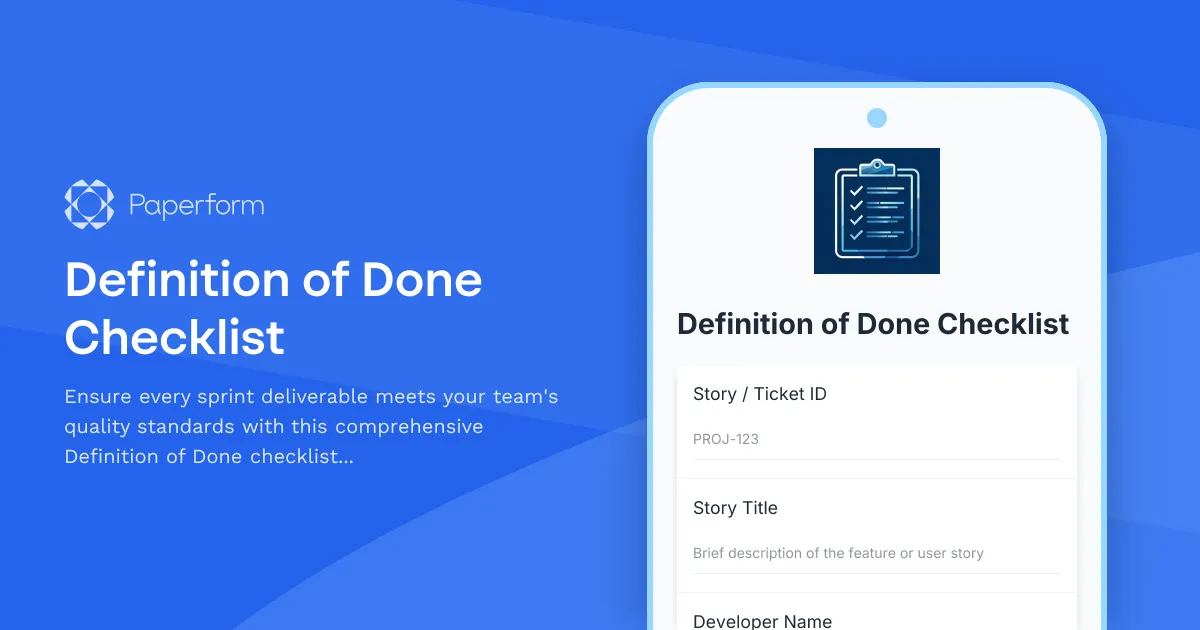
Definition of Done Checklist Template
A clear Definition of Done (DoD) is the cornerstone of successful agile teams. This Definition of Done Checklist template gives software development teams, product managers, and engineering leaders a structured way to verify that every user story, feature, or sprint deliverable meets agreed-upon quality standards before it's marked as complete.
Whether you're running two-week sprints, managing a distributed engineering team, or ensuring consistent quality across multiple squads, this template helps you enforce code standards, testing requirements, documentation expectations, and deployment readiness in one central checklist.
Why agile teams need a Definition of Done checklist
Without a shared understanding of "done," teams ship inconsistent work, accumulate technical debt, and waste time in endless back-and-forth over whether a story is truly finished. A Definition of Done checklist creates accountability, speeds up code reviews, reduces bugs in production, and ensures every team member—from junior developers to QA engineers—knows exactly what's expected before moving a ticket to "Done."
This Paperform template turns your DoD into an actionable, repeatable workflow. Use it at the end of each sprint, during story closeout, or as part of your pull request process to confirm that code standards, unit tests, integration tests, documentation, accessibility, security, and deployment steps have all been completed.
How Paperform makes Definition of Done checklists work for your team
Paperform's flexible form builder lets you customize this checklist to match your tech stack, coding conventions, and release process. Add conditional logic to show different criteria for frontend vs. backend work, adjust testing requirements based on story complexity, or require screenshots and links to deployed environments for visual changes.
Because Paperform integrates seamlessly with project management tools like Jira, Asana, Linear, and Monday.com, every completed checklist can automatically update your sprint board, notify your PM, or trigger the next step in your CI/CD pipeline. You can also connect to Slack to ping your team when a story passes DoD, or send checklist results to Google Sheets or Notion for sprint retrospectives and quality audits.
Need to automate handoffs between dev, QA, and DevOps? Use Stepper to turn each DoD submission into a multi-step workflow—route approvals, create deployment tickets, update release notes, and keep your entire delivery pipeline in sync with no code.
Trusted by agile teams at growing tech companies, SaaS startups, digital agencies, and product-led organizations, this Definition of Done Checklist template helps you ship faster without sacrificing quality.
More templates like this
Agile Metrics Dashboard Submission Form
Track sprint performance with comprehensive agile metrics including velocity, cycle time, lead time, and quality indicators for continuous team improvement.

Agile Team Skills Matrix Form
Track team competencies, learning goals, and knowledge sharing opportunities to optimize sprint planning and resource allocation in agile teams.
Daily Scrum Standup Form
Streamline your daily standup meetings with this scrum form that captures yesterday's accomplishments, today's tasks, blockers, and team progress—all in one place.
Sprint Capacity Planning Form
Plan your sprint capacity with team availability, PTO tracking, velocity estimates, and commitment levels. Perfect for agile teams running Scrum or Kanban workflows.
Sprint Commitment Form
A comprehensive sprint planning form to capture team commitments, selected user stories, stretch goals, sprint risks, and capacity acknowledgments for agile teams.
Agile Governance Review Form
A comprehensive governance review form for evaluating agile process adherence, analyzing sprint metrics, documenting improvement recommendations, and providing leadership updates on team performance.
Agile Project Intake Form
A comprehensive agile project intake form for capturing epic descriptions, business cases, success metrics, and initial story mapping to kick off new sprints and initiatives.
Agile Team Capacity Planning Form
Calculate sprint capacity based on team availability, skill sets, focus factors, and planned time off. Perfect for sprint planning and resource allocation in agile teams.
Agile Team Charter
Establish clear team agreements, norms, and working principles for your agile team with this comprehensive charter creation form.
Agile Team Retrospective (Sailboat)
Run engaging sprint retrospectives using the sailboat metaphor to identify what's propelling your team forward, what's holding you back, and where you're headed next.
Agile Team Working Agreement
Establish team norms, communication protocols, core hours, and collaboration standards for agile teams to improve workflow and reduce friction.

Community of Practice Coordination Form
A comprehensive form for coordinating community of practice sessions, defining learning objectives, organizing knowledge sharing activities, and fostering team collaboration.