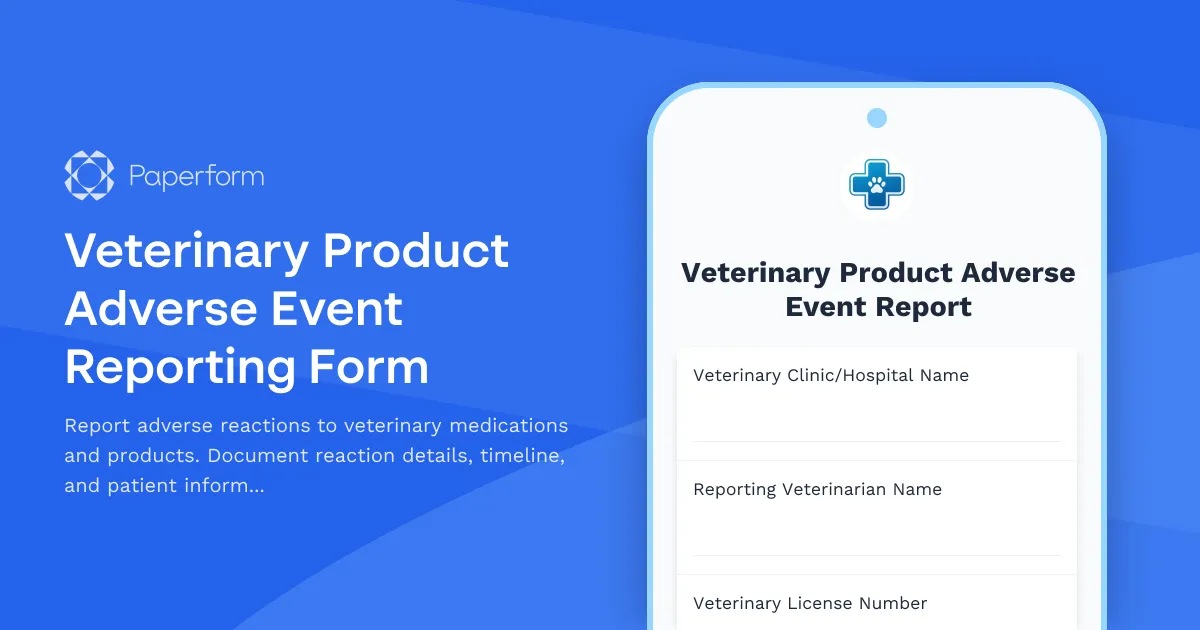
Complete Adverse Event Reporting for Veterinary Products
When a pet experiences an adverse reaction to a veterinary medication or product, timely and thorough documentation is critical for patient safety, regulatory compliance, and protecting other animals. This Veterinary Product Adverse Event Reporting Form provides a comprehensive, structured approach to capturing all essential details about medication reactions, treatment outcomes, and regulatory notifications.
Why veterinary clinics need a dedicated adverse event reporting system
Adverse event reporting is a vital component of veterinary pharmacovigilance—the practice of monitoring and preventing harm from veterinary medications and products. Whether you're a small animal clinic, specialty practice, or veterinary hospital, having a standardized reporting process helps you:
- Document reaction details thoroughly with structured fields for symptoms, severity, timeline, and patient outcomes
- Ensure regulatory compliance by maintaining proper records for FDA Center for Veterinary Medicine (CVM) reporting requirements
- Support manufacturer notifications with complete, organized information that facilitates product safety investigations
- Protect future patients by contributing to the broader veterinary safety database that identifies emerging risks
- Maintain professional standards by demonstrating your commitment to patient safety and quality care
Manual adverse event reporting through email chains, paper forms, or scattered notes creates gaps in documentation and makes it difficult to submit timely reports to manufacturers and regulatory authorities. This template brings structure and efficiency to a critical safety process.
What this adverse event reporting form includes
This comprehensive form template captures every detail needed for thorough adverse event documentation and regulatory submission:
Patient and clinic information: Complete pet demographics including species, breed, age, weight, and medical history, along with clinic and veterinarian contact details for follow-up communications.
Product identification: Detailed documentation of the suspected product including medication name, manufacturer, batch/lot numbers, expiration date, dosage, route of administration, and treatment duration.
Adverse event details: Comprehensive description of the reaction including symptom onset, severity classification, clinical signs observed, progression timeline, and whether the event was serious (death, life-threatening, hospitalization, disability, or congenital anomaly).
Causality assessment: Fields to document the veterinarian's assessment of likelihood that the product caused the reaction, consideration of alternative causes, and whether the event resolved upon discontinuation (dechallenge) or recurred upon re-administration (rechallenge).
Treatment and outcome: Documentation of interventions provided, medications used to treat the reaction, patient response to treatment, and final outcome including resolution, ongoing effects, or fatality.
Concomitant products: Space to list all other medications, supplements, or products the patient was receiving that could contribute to or interact with the suspected product.
Manufacturer and FDA notification: Checkboxes and dates to track whether the manufacturer has been notified and whether an FDA CVM report (Form 1932) will be or has been submitted.
Supporting documentation: Option to upload laboratory results, diagnostic images, medical records, product photos, or other relevant files that support the adverse event report.
How veterinary practices benefit from structured adverse event reporting
For veterinary clinics and hospitals, this form replaces fragmented documentation with a single, comprehensive submission that meets professional and regulatory standards. Staff can complete the report immediately while details are fresh, ensuring accuracy and completeness. The structured format guides veterinarians through all required information, reducing the risk of missing critical details that could delay manufacturer investigations or FDA submissions.
For specialty and emergency hospitals, where adverse events may be more likely to present due to critically ill patients on multiple medications, having a standardized reporting system helps busy emergency veterinarians document reactions quickly without sacrificing thoroughness. The form's conditional logic can adapt based on severity, ensuring serious adverse events receive appropriate attention and escalation.
For veterinary practice managers and quality assurance teams, digital adverse event forms create a searchable, analyzable database of all reported reactions. You can track trends, identify problematic products, monitor reporting compliance, and generate summaries for staff training or risk management discussions.
Paperform makes adverse event reporting efficient and compliant
Building this form with Paperform gives veterinary teams a professional, HIPAA-alternative reporting tool that integrates seamlessly into your existing workflows:
- Conditional logic adapts the form based on severity, showing additional required fields for serious adverse events while keeping simple reports streamlined
- File uploads allow veterinarians to attach lab results, radiology images, or photos directly to the report for complete documentation
- Calculation fields can auto-calculate time from product administration to symptom onset, helping identify temporal relationships
- Email notifications can alert practice managers, medical directors, or designated safety officers immediately when serious adverse events are reported
- PDF generation creates professional, formatted reports suitable for manufacturer submission or FDA Form 1932 preparation
Once an adverse event is reported through your Paperform, you can use Stepper to automate your follow-up workflow—automatically notify the manufacturer via email, create a task for your medical director to review the case, update your practice management system with a safety flag, and set reminders to follow up on patient outcome if treatment is ongoing.
Supporting veterinary product safety and patient care
Adverse event reporting isn't just about compliance—it's about contributing to the collective knowledge that keeps all veterinary patients safe. When clinics report reactions promptly and thoroughly, manufacturers can investigate product quality issues, regulatory agencies can identify safety signals requiring label changes or product recalls, and other veterinarians can make informed prescribing decisions.
This form template gives your veterinary practice a professional, efficient system for fulfilling your role in veterinary pharmacovigilance while maintaining the high standard of care your clients expect.
Trusted by veterinary professionals who prioritize patient safety
With Paperform's reliable infrastructure, SOC 2 Type II compliance, and secure data handling, veterinary clinics can trust that sensitive patient and clinic information in adverse event reports is protected. The platform's intuitive interface means your veterinary team can start using the form immediately without technical training, and the professional design ensures your reports reflect the quality and expertise of your practice.
Start documenting adverse events with the thoroughness and efficiency they deserve—because every reaction reported is an opportunity to protect the next patient.



More templates like this
Healthcare Needlestick Injury Report
Comprehensive needlestick and sharps injury reporting form for healthcare workers, covering incident details, source patient testing, post-exposure prophylaxis (PEP), and OSHA compliance documentation.
Oxygen Tank Storage Facility Damage Claim Form
Professional damage claim form for oxygen tank storage facilities with hazardous material protocols, patient supply continuity tracking, fire marshal notification, and insurance documentation.
Veterinary Clinic Animal Bite Incident Report
Document animal bite incidents at your veterinary clinic with comprehensive pet vaccination records, injury assessment, and rabies protocol tracking.
Compounding Pharmacy Equipment Damage Claim Form
Report equipment damage, sterile environment breaches, and prescription production impacts with automated state board notifications and specialized pharmacy insurance coordination.
Pharmacy Medication Error Incident Report
A comprehensive incident report form for documenting pharmacy medication errors, assessing patient harm, notifying prescribers, and meeting state board filing requirements.
Veterinary Endoscopy Procedure Consent Form
A comprehensive consent form for veterinary endoscopy procedures including sedation authorization, procedure details, biopsy consent, and owner acknowledgment of risks and costs.
Addiction Treatment Facility Safety Incident Report
Document safety incidents in addiction treatment facilities while maintaining patient confidentiality, recording staff response, and tracking treatment plan impacts for clinical review.
Animal Shelter Disease Outbreak Report
A comprehensive incident report form for documenting disease outbreaks in animal shelters, tracking affected animals, quarantine protocols, and coordinating public health responses.
Anonymous Organ Procurement Protocol Deviation Report
A confidential reporting form for documenting organ procurement protocol deviations, UNOS notifications, and transplant safety concerns to ensure patient safety and regulatory compliance.
Assisted Living Medication Administration Error Report
A comprehensive medication error reporting form for assisted living facilities to document incidents, corrective actions, and ensure regulatory compliance with state reporting requirements.
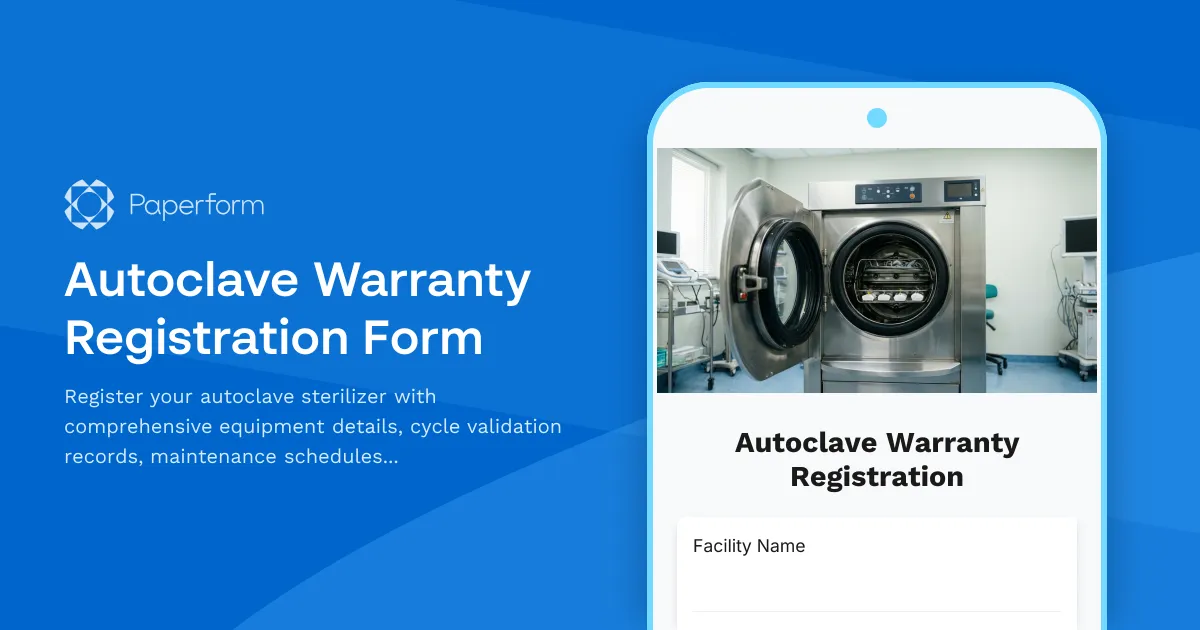
Autoclave Warranty Registration Form
Register your autoclave sterilizer with comprehensive equipment details, cycle validation records, maintenance schedules, and compliance documentation for medical facilities.
Chiropractic Adjustment Table Damage Claim Form
Report and document damage to chiropractic adjustment tables, including patient incident details, equipment information, maintenance history, and insurance notification requirements.