Streamline Your Rigging Equipment Certification with Paperform
Annual certification of rigging and lifting equipment isn't just a regulatory requirement—it's a critical safety practice that protects workers, reduces liability, and ensures operational efficiency. Whether you're managing cranes, hoists, slings, shackles, or other lifting gear, maintaining accurate certification records can be complex and time-consuming.
This Rigging and Lifting Equipment Annual Certification Form template transforms how construction companies, manufacturing facilities, warehouses, and industrial operations document their equipment inspections. Instead of juggling paper checklists, spreadsheets, and filing cabinets, you get a professional digital form that captures everything from load test results to maintenance histories in one organized workflow.
Built for Construction and Industrial Safety Compliance
Safety managers, rigging supervisors, and equipment coordinators in construction, manufacturing, and industrial environments face constant pressure to maintain compliance with OSHA, ASME, and other regulatory standards. This template addresses those exact needs with:
- Comprehensive equipment identification capturing make, model, serial numbers, capacity ratings, and classification details
- Structured load testing documentation recording test loads, safe working loads, proof loads, and pass/fail results
- Detailed visual inspection checklists covering wear, deformation, corrosion, proper labeling, and component-specific concerns
- Complete maintenance history tracking documenting repairs, replacements, and service records linked to each certification
- Regulatory compliance fields ensuring all OSHA and industry-standard requirements are met
- Inspector certification with signature capture and credentials verification
The form guides inspectors through every required checkpoint systematically, reducing the risk of overlooked defects or incomplete documentation that could lead to accidents or failed audits.
From Paper Chaos to Digital Efficiency
Traditional rigging certification processes involve multiple pain points: illegible handwriting, lost paperwork, difficult-to-search archives, and delays getting critical safety information to the right people. Paperform eliminates these friction points entirely.
Your inspection team can complete certifications on tablets or mobile devices right at the equipment location. Photos of defects or wear patterns can be uploaded directly into the form using image fields. Conditional logic shows relevant questions based on equipment type—crane certifications include different checkpoints than sling or shackle inspections.
Once submitted, all certification data flows into your connected systems automatically. Use Stepper (stepper.io) to build workflows that immediately notify maintenance teams when equipment fails inspection, update your equipment management database, schedule follow-up inspections, and generate compliance reports for regulatory audits. Integration with Google Sheets, Airtable, or your CMMS keeps equipment records synchronized across platforms without manual data entry.
Professional Documentation That Supports Your Safety Culture
Beyond compliance boxes, this template helps organizations demonstrate a genuine commitment to safety. The comprehensive nature of the inspection checklist shows regulatory inspectors, insurance auditors, and client safety officers that your organization takes rigging safety seriously.
Custom success messages can provide inspectors with immediate next steps based on inspection results—whether that's "Equipment Certified - Apply New Tag" or "Equipment Quarantined - Notify Safety Manager Immediately." Email confirmations deliver complete inspection reports to supervisors, equipment owners, and safety coordinators in real-time.
The professional appearance and thorough documentation also support safety training initiatives. New inspectors can use the form as a guided checklist, learning proper inspection protocols while ensuring nothing gets missed.
Designed for the People Who Do the Work
Rigging inspectors, safety officers, and maintenance technicians aren't office workers—they're hands-on professionals working in active job sites, plant floors, and equipment yards. This form is built to work in their world.
The clear, logical flow moves inspectors from equipment identification through load testing, visual inspection, and final certification without confusion. Field descriptions provide helpful reminders about inspection criteria without cluttering the interface. Required fields ensure critical data never gets skipped, while optional fields allow for detailed notes when situations warrant.
For facilities managing dozens or hundreds of pieces of lifting equipment, the efficiency gains are substantial. What once took an inspector 20 minutes of paperwork after a 10-minute inspection now happens in real-time, with immediate visibility for everyone who needs to know equipment status.
Built on Paperform's Powerful Foundation
This template leverages Paperform's strengths as the form platform trusted by construction companies, industrial operations, and safety-focused organizations worldwide:
- Mobile-optimized design works perfectly on tablets and phones in the field
- File upload fields capture photos of equipment tags, defects, or test setups
- Signature fields provide legally valid inspector certification
- Conditional logic tailors the inspection to specific equipment types
- Date fields track inspection dates, next due dates, and maintenance schedules
- SOC 2 Type II compliance ensures your safety records meet enterprise security standards
- PDF generation creates permanent certification records for equipment files
- Unlimited integrations connect to your existing safety management systems
For larger construction firms or industrial operations, Paperform's Agency+ and Enterprise plans support team collaboration, role-based permissions, and centralized management across multiple sites or divisions.
Perfect for Multiple Industries and Equipment Types
While designed with construction rigging in mind, this template adapts beautifully for any industry using lifting equipment:
- Construction contractors certifying tower cranes, mobile cranes, and rigging gear
- Manufacturing facilities inspecting overhead cranes, hoists, and material handling equipment
- Warehousing and logistics certifying forklifts, pallet jacks, and loading equipment
- Shipping and ports documenting container handling equipment and gantry cranes
- Entertainment and events certifying rigging for stages, lighting, and audio equipment
- Oil, gas, and energy inspecting drilling rig lifting equipment
- Mining operations certifying underground and surface hoisting systems
The template's flexible structure makes customization straightforward—add industry-specific checkpoints, adjust terminology, or incorporate company-specific safety protocols while maintaining the comprehensive foundation.
Get Started in Minutes
This template is ready to use immediately or customize to match your specific certification requirements, equipment types, and safety procedures. The thoughtful structure provides a professional starting point that saves hours of form design while ensuring nothing critical gets overlooked.
Paperform's intuitive editor makes adjustments simple—add your company logo, modify inspection checklists, include additional equipment categories, or adjust pass/fail criteria to match your standards. No coding skills or technical expertise required.
For organizations ready to modernize their equipment certification process, reduce compliance risks, and give safety teams better tools, this Rigging and Lifting Equipment Annual Certification Form delivers immediate value. Your inspectors, safety managers, and regulatory compliance team will appreciate the difference.
Start building a stronger safety culture with digital tools designed for how your team actually works.



More templates like this
Dust Suppression System Inspection Form
A comprehensive safety inspection form for evaluating dust suppression systems, water spray functionality, coverage adequacy, and runoff collection compliance on construction sites.
Hand and Power Tool Inspection Form
Comprehensive tool safety inspection form for evaluating hand and power tools, including guard functionality, cord integrity, grounding verification, and storage compliance.
Silica Dust Air Sampling & Exposure Assessment Form
Comprehensive respirable crystalline silica exposure monitoring form for construction and industrial worksites. Document personal air sampling, monitor placement, sampling duration, and lab analysis results to ensure OSHA compliance.
Blasting and Explosives Safety Inspection Form
Comprehensive safety inspection form for blasting operations, explosives storage, and blast site compliance. Covers magazine security, lightning protection, blast area clearance, and regulatory compliance requirements.
Construction Site Fire Safety Inspection Form
A comprehensive fire safety inspection form for construction sites to document fire extinguisher locations, emergency exit routes, and assembly points to ensure OSHA compliance and worker safety.
Crane Lift Plan and Safety Inspection Form
A comprehensive crane lift plan and safety inspection form for construction sites. Includes load calculations, rigging inspection checklists, exclusion zone documentation, and safety compliance verification for crane operations.
Housekeeping and Waste Management Inspection Form
A comprehensive construction site housekeeping and waste management inspection form with debris removal tracking, material segregation verification, and dumpster placement safety checks.
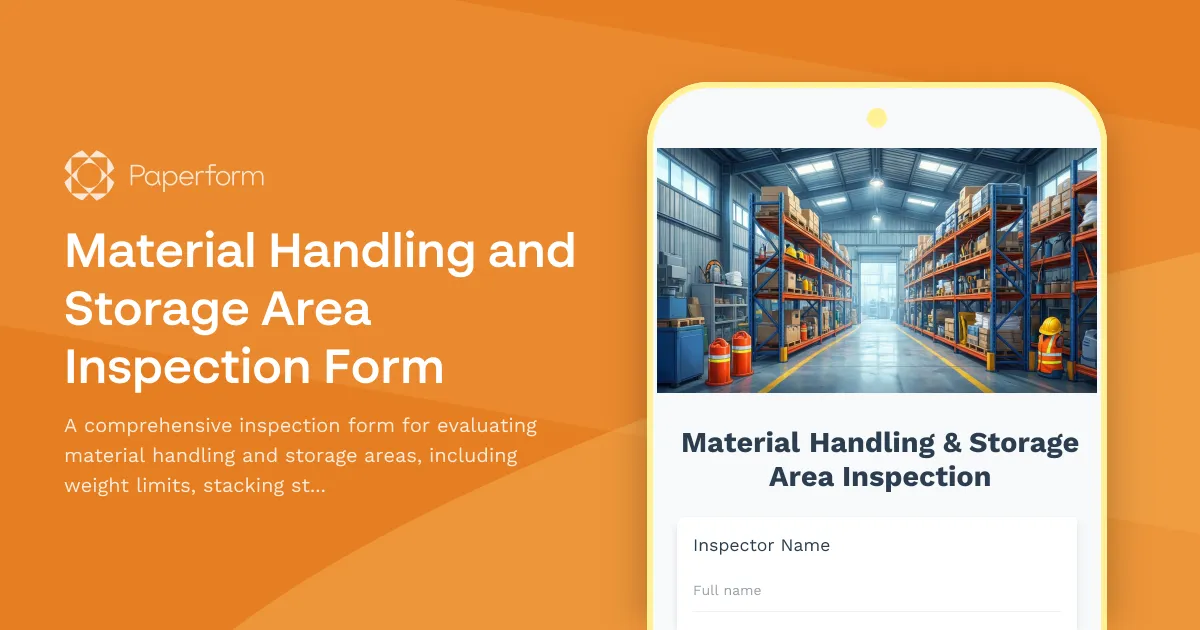
Material Handling and Storage Area Inspection Form
A comprehensive inspection form for evaluating material handling and storage areas, including weight limits, stacking stability, and aisle clearance verification to ensure workplace safety compliance.
Rebar Safety Inspection Form
Comprehensive rebar safety inspection checklist covering impalement protection, storage compliance, and lifting procedures to ensure construction site safety and regulatory compliance.
Respiratory Protection Fit Testing Form
Comprehensive respiratory fit testing documentation form with medical clearance verification, qualitative and quantitative test results, and training compliance records for workplace safety programs.
Site Emergency Eyewash and Shower Accessibility Audit
Comprehensive safety inspection form to verify emergency eyewash stations and safety showers meet ANSI Z358.1 standards for accessibility, 10-second reach time, clear pathways, and proper signage.
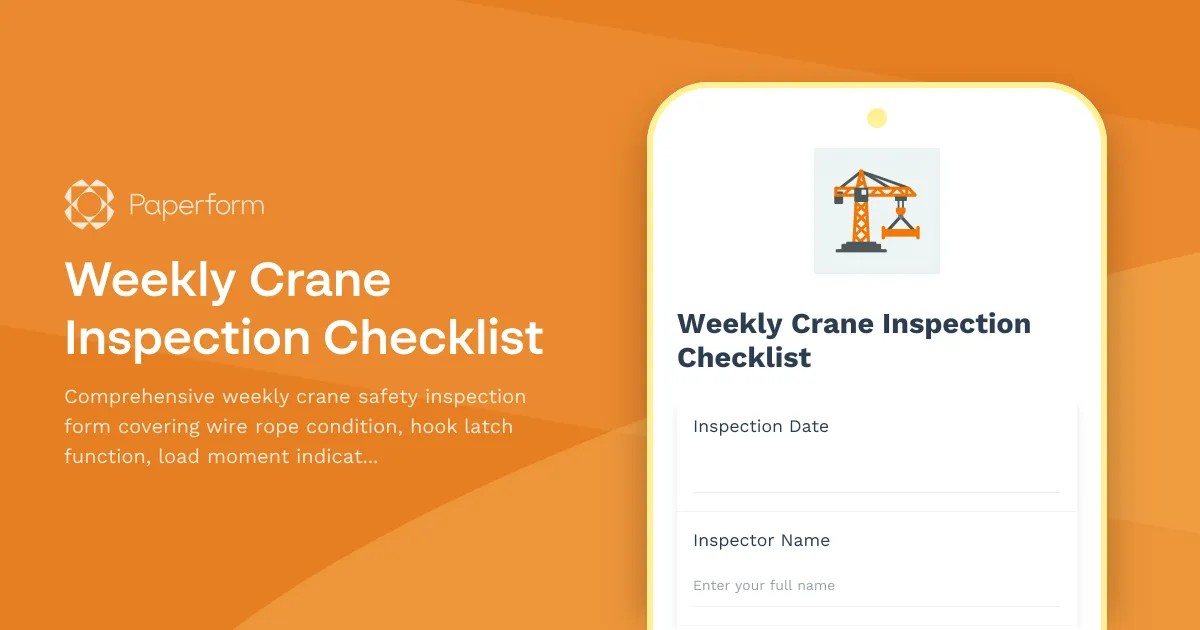
Weekly Crane Inspection Checklist
Comprehensive weekly crane safety inspection form covering wire rope condition, hook latch function, load moment indicators, fluid levels, and critical safety components to ensure compliance and prevent equipment failure.