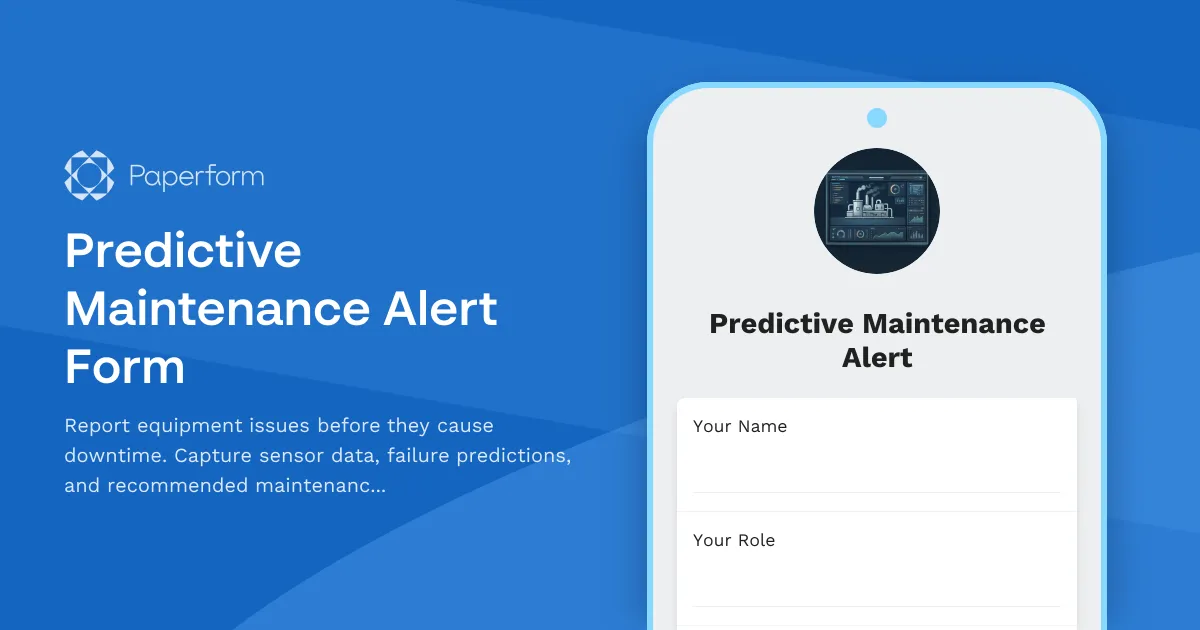
Manufacturing downtime is expensive—unplanned equipment failures can cost thousands per hour in lost production, emergency repairs, and missed deadlines. This Predictive Maintenance Alert Form helps manufacturing teams stay ahead of equipment issues by capturing sensor data, failure predictions, and recommended actions before small problems become costly breakdowns.
Whether you're monitoring CNC machines, conveyor systems, hydraulic presses, or robotic assembly lines, this form creates a standardised process for logging maintenance alerts and triggering the right response. Maintenance teams can document early warning signs, operators can flag unusual behaviour, and supervisors can prioritise interventions based on predicted failure risk and production impact.
Built for manufacturers who need to minimise downtime and maximise equipment lifespan, this template captures critical details including equipment ID, sensor readings, failure probability, recommended actions, and urgency level. Conditional logic ensures the form adapts based on alert severity, collecting additional context for high-priority situations that require immediate attention.
Use Paperform's calculation engine to automatically score maintenance priority based on failure risk and production impact, then route alerts to the right team members via email notifications or integrations with your CMMS (Computerised Maintenance Management System). Connect to Stepper to automate your entire maintenance workflow—create work orders in your asset management system, notify maintenance supervisors, schedule technicians, and update production planning tools when equipment needs to go offline.
For manufacturing operations that rely on preventive maintenance programmes, TPM (Total Productive Maintenance), or Industry 4.0 sensor networks, this form transforms raw data and observations into actionable maintenance intelligence. The result? Less unplanned downtime, lower repair costs, and production lines that keep running when you need them most.



More templates like this
Production Line Downtime Tracking Form
Track production line downtime incidents with equipment identification, failure mode analysis, root cause investigation, and resolution time tracking to improve manufacturing efficiency.
Manufacturing Carbon Footprint Tracking Form
Track and calculate your manufacturing facility's carbon footprint with detailed reporting on energy consumption, material sourcing, waste generation, and emissions data.
Manufacturing Equipment Effectiveness Tracker
Track and calculate Overall Equipment Effectiveness (OEE) with automated calculations for availability, performance, and quality rates to optimize production efficiency.
Manufacturing Equipment Malfunction Incident Report
Streamline equipment failure reporting with detailed machine tracking, downtime analysis, root cause identification, and automated maintenance requests for manufacturing facilities.

Manufacturing Safety Incident Report
A comprehensive safety incident reporting form for manufacturing facilities to document workplace injuries, near misses, witness accounts, root cause analysis, and maintain OSHA compliance records.

Quality Assurance Deviation Investigation Report
Document and investigate quality deviations with event description, immediate actions, impact assessment, and CAPA assignment to ensure product quality and regulatory compliance.
Quality Assurance Non-Conformance Report
A comprehensive quality control form for documenting product defects, classifying non-conformances, and planning corrective actions to maintain manufacturing standards.
Aircraft Maintenance Hangar Evacuation Form
A comprehensive emergency evacuation and headcount form for aircraft maintenance facilities that tracks personnel, equipment status, and safety protocols during evacuations.
Factory Quality Control Sampling Plan Change Request Form
Request changes to quality control sampling plans with statistical validation, inspection station reconfiguration details, training requirements, and manager approval workflow.
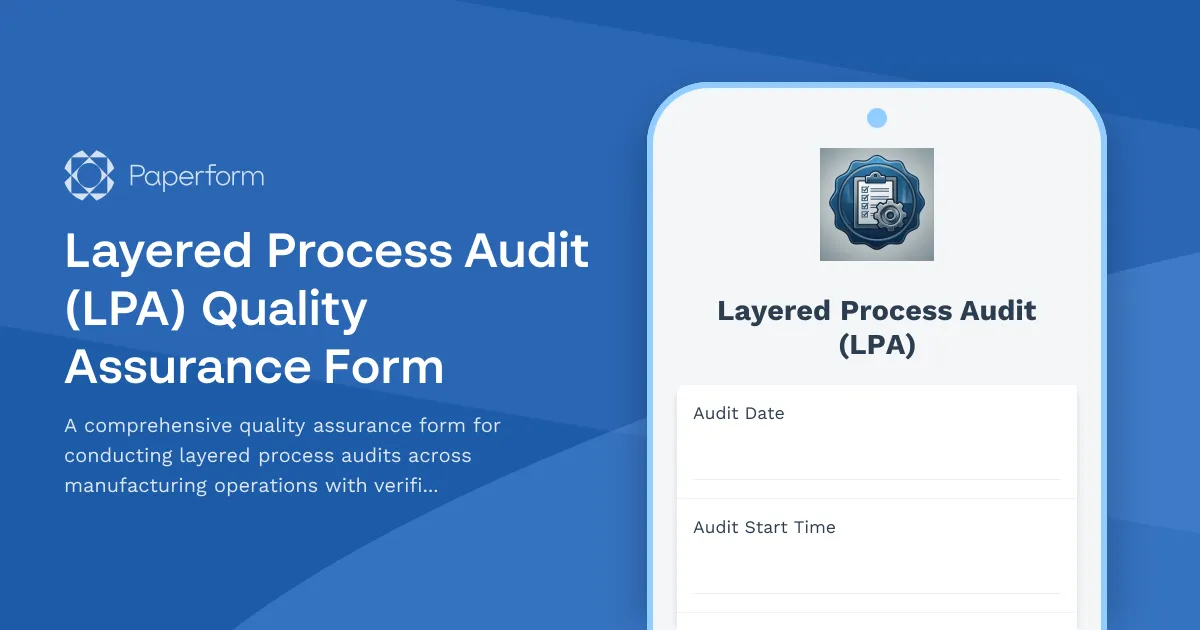
Layered Process Audit (LPA) Quality Assurance Form
A comprehensive quality assurance form for conducting layered process audits across manufacturing operations with verification questions, sample frequency tracking, audit layer designation, and non-conformance documentation.
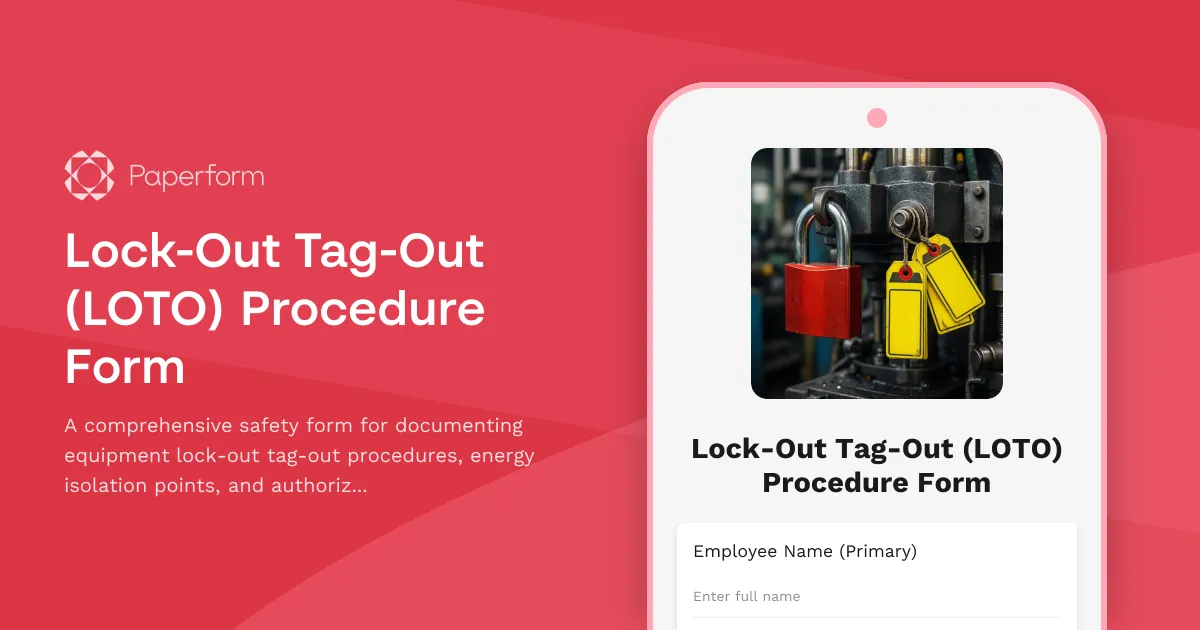
Lock-Out Tag-Out (LOTO) Procedure Form
A comprehensive safety form for documenting equipment lock-out tag-out procedures, energy isolation points, and authorized personnel to ensure safe maintenance and servicing operations.
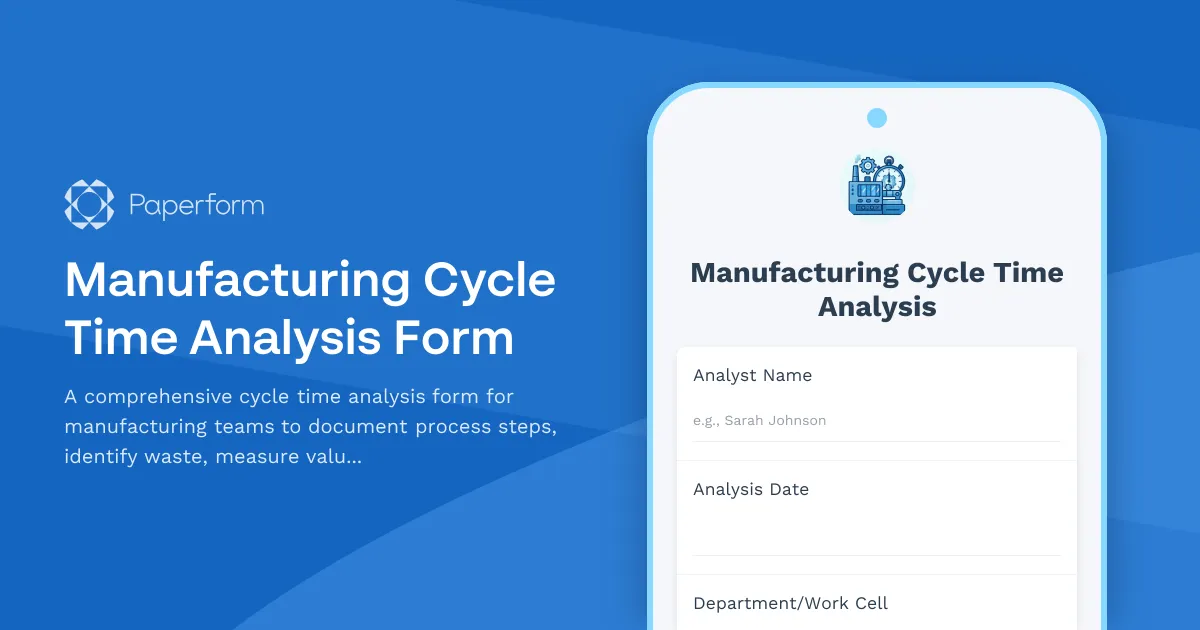
Manufacturing Cycle Time Analysis Form
A comprehensive cycle time analysis form for manufacturing teams to document process steps, identify waste, measure value-added time, and set improvement targets to optimize production efficiency.