Streamline Palliative Care Consultations with a Patient-Centered Research Form
Palliative care teams need to gather detailed, sensitive information quickly to provide the best possible comfort-focused care. This Palliative Care Consultation Request & Research Form template from Paperform helps healthcare providers, hospice organizations, and medical practices collect comprehensive patient information while maintaining dignity and compassion throughout the intake process.
Why This Template Works for Healthcare Teams
Built specifically for palliative care coordinators, case managers, and clinical research teams, this form template guides patients and families through identifying symptom management priorities, communication preferences, and readiness for advance care planning discussions. The thoughtful structure ensures no critical detail is missed while remaining sensitive to the emotional nature of these conversations.
The form captures essential information including current symptom severity, pain management preferences, care team communication styles, family involvement preferences, and readiness to discuss advance directives—all within a single, professional intake experience.
Automate Your Care Coordination Workflow
With Stepper, you can transform each submission into an automated care coordination workflow. Route urgent symptom reports to the appropriate clinical staff, schedule follow-up consultations based on readiness indicators, update patient management systems, and ensure care team members receive the right information at the right time—all without manual data entry.
For practices requiring signed consent forms or advance directive documentation, Papersign seamlessly converts form responses into legally binding eSignature documents, keeping all patient paperwork connected to their original consultation request for complete audit trails and compliance.
HIPAA Compliance Considerations
Important note: While Paperform offers SOC 2 Type II compliance and robust security features suitable for many healthcare workflows, it is not HIPAA compliant. Healthcare organizations handling protected health information (PHI) should ensure proper business associate agreements and security measures are in place, or use this template for research and pre-screening purposes only.
This template is trusted by palliative care programs, hospice organizations, healthcare researchers, and patient advocacy groups who need a compassionate, comprehensive way to begin the care planning conversation.



More templates like this
Hospice Eligibility Assessment & Care Readiness Form
A compassionate form to assess hospice eligibility, evaluate readiness for prognosis discussions, understand care philosophy preferences, and clarify service expectations for patients and families.
Bipolar Disorder Medication Adherence Research Study Registration
A comprehensive registration form for participants joining a bipolar disorder medication adherence research study, including consent for mood tracking, pharmacogenetic testing, digital monitoring, and hospitalization prevention planning.
Celiac Disease Gluten Challenge Research Enrollment Form
A comprehensive enrollment form for celiac disease research studies involving gluten challenge protocols, with consent sections for antibody testing, endoscopy procedures, symptom monitoring, and strict follow-up requirements.
Clinical Trial Participant Screening Form
A comprehensive screening form for clinical trial recruitment that collects participant eligibility information, medical history, current medications, and informed consent documentation.
Community Health Needs Assessment Survey
A comprehensive community health needs assessment form to identify health priorities, access barriers, social determinants of health, and gather feedback for program improvement.
Hospice Care Discovery Form
A compassionate intake form for hospice care providers to assess patient needs, medical status, symptom management requirements, spiritual preferences, and family support services.
Hospice Care Focus Group Recruitment Form
A compassionate screening form for recruiting family members of hospice patients to participate in focus group discussions about care experiences, preferences, and support needs.
Patient Advocate Matching Research Form
Match patients with qualified advocates based on case complexity, advocate qualifications, and communication style compatibility for optimal support outcomes.
Patient Satisfaction Survey
A comprehensive post-visit survey to gather patient feedback on wait times, provider communication, facility cleanliness, and overall healthcare experience.
Preterm Labor Prediction Study Participant Form
Comprehensive research enrollment form for preterm labor prediction studies, including cervical length monitoring consent, biomarker testing authorization, and detailed participant information for neonatal outcome tracking.
Telehealth Platform Technical Requirements Check
Assess user device compatibility, internet connectivity, and technical readiness for telehealth platform participation with backup planning.
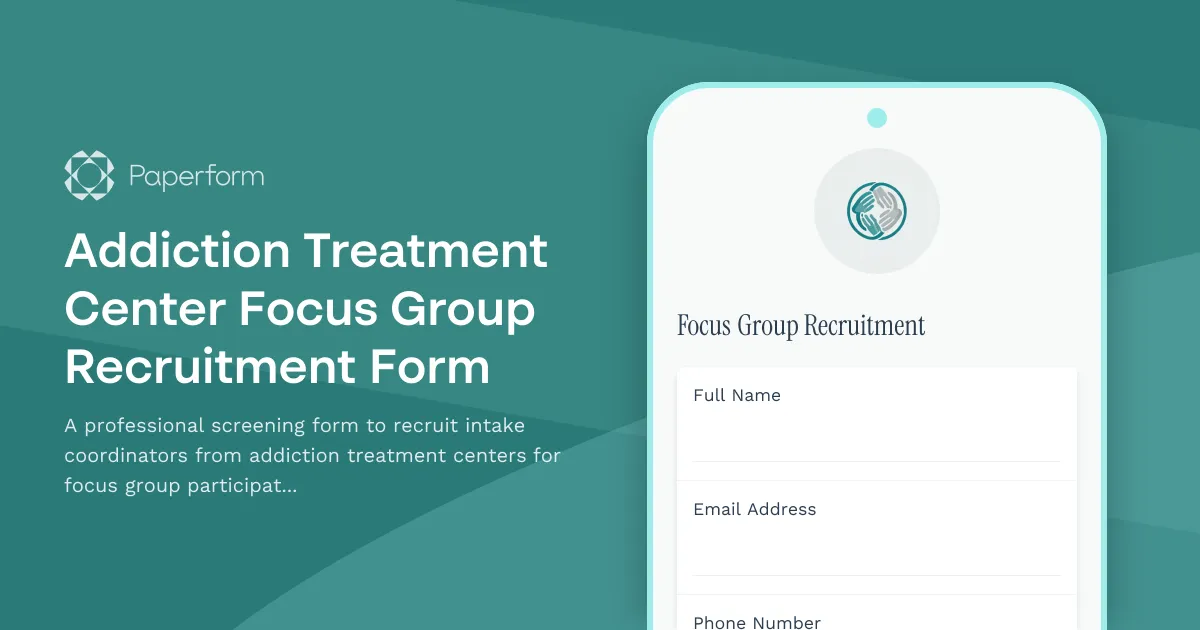
Addiction Treatment Center Focus Group Recruitment Form
A professional screening form to recruit intake coordinators from addiction treatment centers for focus group participation, gathering insights on bed capacity, insurance acceptance, treatment modalities, and family involvement approaches.