
Create an Inclusive Macrame Workshop Experience
Whether you're running macrame classes, craft workshops, or creative sessions, ensuring every participant can fully engage is essential. This Macrame Workshop Accommodation Request Form helps you gather detailed information about accessibility needs, workspace modifications, and learning preferences so you can create a welcoming, inclusive environment for all skill levels and abilities.
Why Accessibility Matters in Creative Workshops
Macrame and fiber arts should be accessible to everyone. Participants may need adjusted workstation heights, specialized tools with ergonomic grips, visual or tactile instruction alternatives, or additional time for complex knots. By proactively requesting accommodation needs before the workshop, you can prepare adaptive materials, modify your teaching approach, and ensure your workspace meets each participant's requirements.
Streamline Accommodation Planning with Paperform
This template makes it easy to collect detailed accommodation requests including mobility considerations, sensory needs, communication preferences, and tool adaptations. With conditional logic built in, the form only asks relevant follow-up questions based on each participant's specific needs, creating a respectful and efficient experience.
Use Papersign to handle confidentiality agreements or medical documentation if needed, keeping everything connected to the original request. Then connect the form to your calendar or workshop management system using Stepper to automatically notify instructors about required accommodations and trigger preparation checklists.
Perfect for craft studios, community centers, art schools, occupational therapy programs, and creative entrepreneurs offering inclusive workshops, this template helps you build a reputation for accessibility while ensuring every participant has what they need to succeed and enjoy the creative process.
Trusted by creative businesses and community organizations worldwide, Paperform makes it simple to collect, organize, and act on accommodation requests without any coding required.

More templates like this

Neon Sign Making Workshop Accommodation Request Form
Request accessibility accommodations for neon sign making workshops, including equipment modifications, safety gear adaptations, and instruction format preferences to ensure an inclusive creative experience.
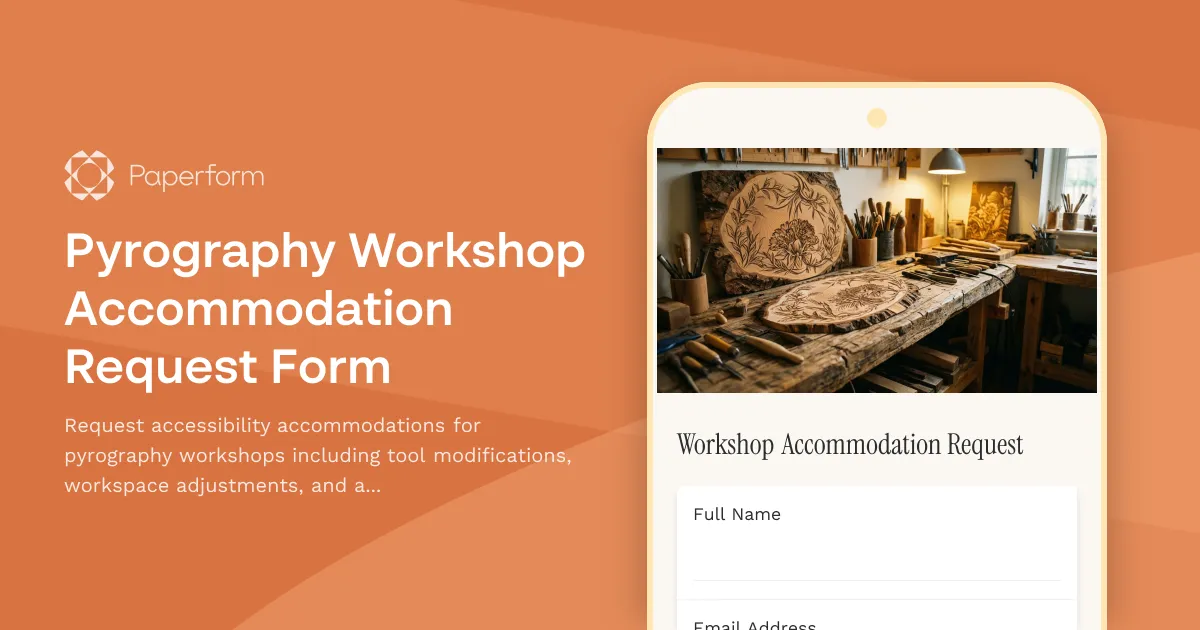
Pyrography Workshop Accommodation Request Form
Request accessibility accommodations for pyrography workshops including tool modifications, workspace adjustments, and alternative instruction methods to ensure an inclusive creative experience.
Soap Making Class Accommodation Request Form
Request disability accommodations and accessibility modifications for soap making classes. Customize workspace setup, equipment adaptations, and instruction methods to ensure an inclusive learning experience.
Yuzen Dyeing Workshop Accommodation Request Form
Request workspace modifications, material handling assistance, and instruction format preferences for participants in yuzen dyeing workshops to ensure an accessible and inclusive learning experience.
Calligraphy Class Accommodation Request Form
Request accessibility accommodations for calligraphy classes including pen modifications, paper positioning adaptations, and preferred instruction formats to ensure an inclusive learning experience.
Chocolatier Workshop Accommodation Request Form
Request disability and accessibility accommodations for chocolatier workshops, including workspace modifications, adapted tools, and alternative instruction methods to ensure an inclusive learning experience.
Embroidery Class Accommodation Request Form
Request accessibility accommodations for embroidery classes including adaptive equipment, workspace modifications, and alternative instruction methods to ensure an inclusive learning experience.
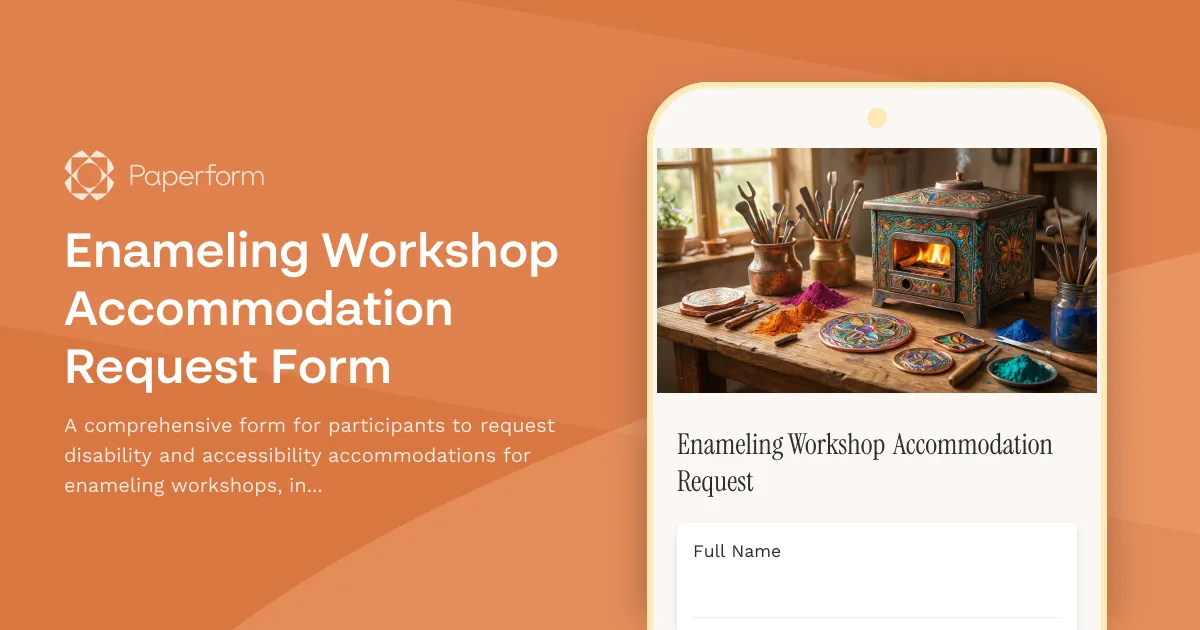
Enameling Workshop Accommodation Request Form
A comprehensive form for participants to request disability and accessibility accommodations for enameling workshops, including kiln accessibility needs, tool modifications, and instruction format preferences.
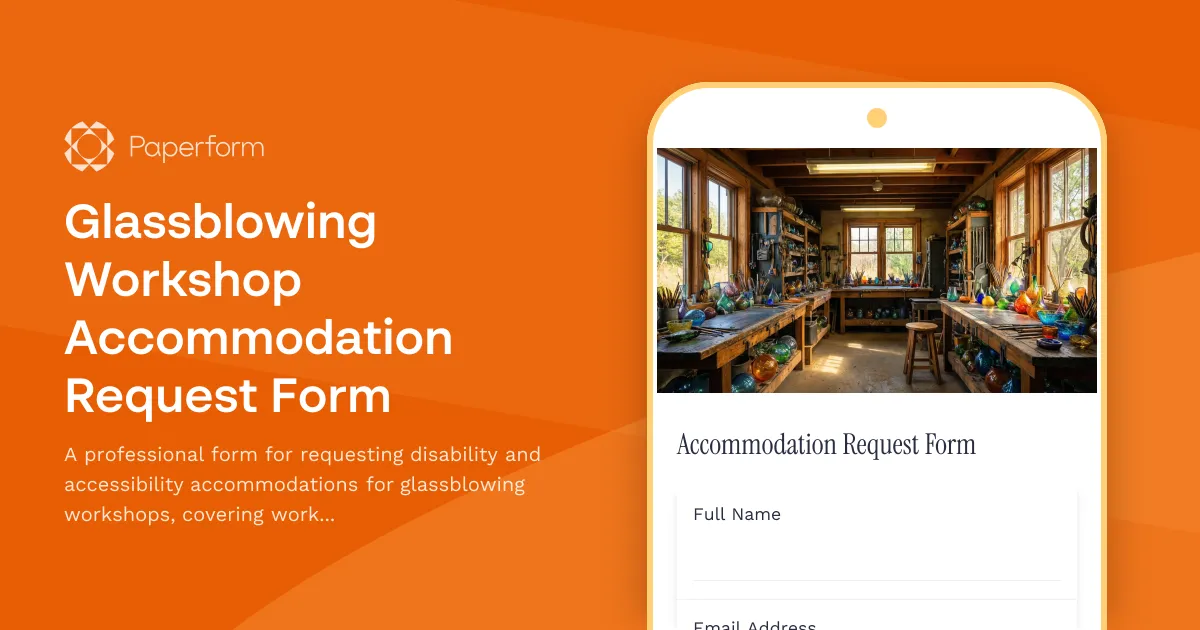
Glassblowing Workshop Accommodation Request Form
A professional form for requesting disability and accessibility accommodations for glassblowing workshops, covering workspace modifications, tool adaptations, and safety protocol adjustments.
Ink Making Workshop Accommodation Request Form
Request accessibility accommodations for ink making workshops including workspace modifications, material handling assistance, and alternative instruction methods to ensure an inclusive creative experience.
Lampworking Workshop Accommodation Request Form
A comprehensive form for requesting disability and accessibility accommodations for lampworking workshops, including torch accessibility, safety equipment modifications, and instruction method preferences.
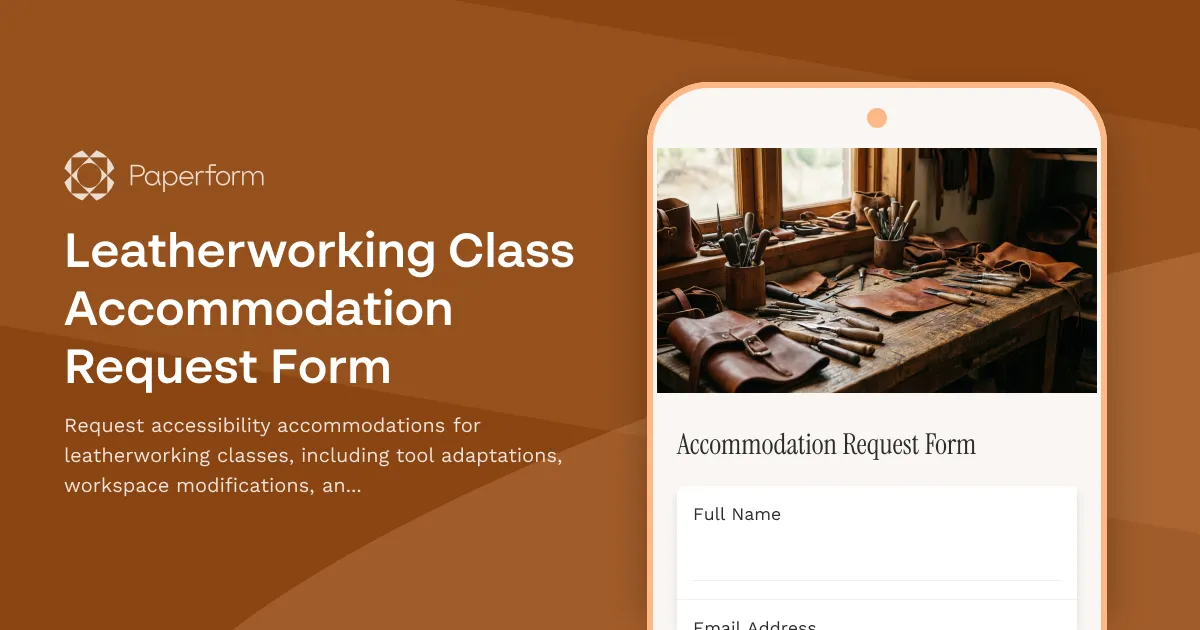
Leatherworking Class Accommodation Request Form
Request accessibility accommodations for leatherworking classes, including tool adaptations, workspace modifications, and personalized instruction methods to ensure an inclusive learning experience.