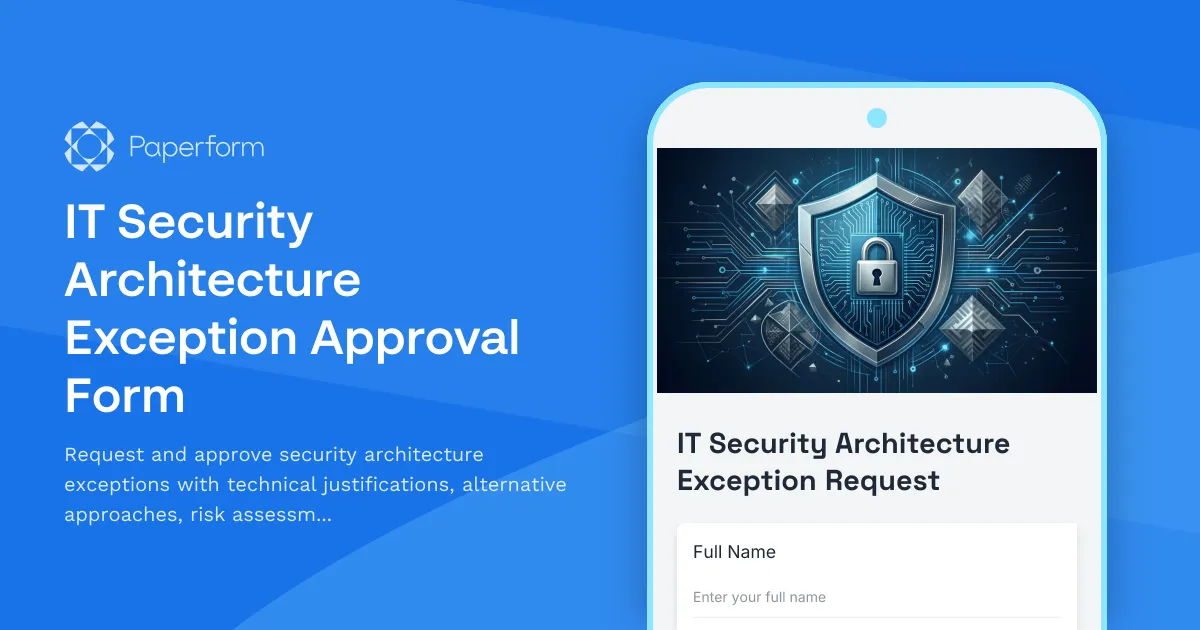
Streamline IT Security Architecture Exceptions with Paperform
Managing security architecture exceptions is one of the most critical—and often most complex—processes in IT governance. When systems, applications, or infrastructure can't meet standard security policies, you need a clear, auditable way to request exceptions, evaluate risk, propose alternatives, and grant time-bound approvals. This IT Security Architecture Exception Approval Form template is built for IT teams, security officers, and compliance managers who need to balance security rigor with operational flexibility.
Why IT teams need a dedicated exception approval form
Security standards exist for good reason, but real-world constraints—legacy systems, vendor limitations, tight deadlines, or technical debt—sometimes make full compliance impossible. Without a structured exception process, you risk either blocking legitimate business needs or creating untracked security gaps that auditors (and attackers) will find later.
This Paperform template gives you a single, auditable workflow for:
- Requesting exceptions with full technical context and business justification
- Documenting alternative controls and compensating measures
- Assessing risk and impact across confidentiality, integrity, and availability
- Setting time-bound permissions with clear expiry dates and review cycles
- Capturing approvals from security, architecture, and leadership stakeholders
Instead of chasing approvals through email threads and spreadsheets, you get a branded, conditional form that routes the right information to the right people—and integrates with your existing IT workflows.
Who this template is for
This form is designed for:
- IT security officers and architects managing exception requests and maintaining security posture
- System administrators and DevOps teams who need to request exceptions for technical constraints
- Compliance and risk managers ensuring exceptions are documented, justified, and time-limited
- CISOs and IT directors who need visibility into all active exceptions and their risk profiles
- Enterprise IT teams in regulated industries (finance, healthcare, government) where audit trails are critical
What's included in this template
The form captures everything needed for a complete exception request and approval:
- Requester and system information – Who's requesting the exception, for which system or application, and what environment is affected
- Security standard reference – Which policy, standard, or control is being excepted (e.g., NIST, ISO 27001, CIS Controls)
- Technical limitation – Detailed explanation of why compliance isn't possible, including vendor constraints, technical debt, or resource limitations
- Risk assessment – Impact on confidentiality, integrity, and availability, plus overall risk rating
- Alternative approaches and compensating controls – What mitigations will reduce risk in the absence of full compliance
- Business justification – Why this exception is necessary and what business outcome depends on it
- Time-bound permissions – Requested start and end dates, with options for temporary or permanent exceptions
- Approval workflow – Conditional fields for security architect, CISO, and business owner sign-offs
Conditional logic ensures that higher-risk exceptions trigger additional approval steps, while lower-risk requests can move through faster review paths.
How Paperform makes IT change management easier
Unlike static PDFs or generic survey tools, Paperform gives IT teams a flexible, automated exception process that feels like part of your stack:
- Conditional logic shows or hides approval fields based on risk rating, exception type, or system criticality
- Date fields and reminders for exception expiry and review cycles, so temporary approvals don't become permanent gaps
- File uploads for architecture diagrams, risk assessments, vendor documentation, or compliance reports
- Custom success pages that confirm submission and outline next steps, including expected approval timelines
- Integrations with Jira, ServiceNow, Slack, and your ITSM tools via native connections or Stepper workflows
For teams that need even more automation, Stepper (Paperform's AI-native workflow builder) can turn each exception request into a multi-step approval process—routing to different stakeholders based on risk level, updating your CMDB or GRC platform, and sending reminders when exceptions are about to expire.
Security, compliance, and audit readiness
IT and security teams need to trust their tools. Paperform is SOC 2 Type II compliant and offers data residency controls, SSO, roles and permissions, and a dedicated Trust Center—so you can roll this form out across your organization with confidence.
Every submission is timestamped, version-controlled, and exportable for audits. You can pull reports on all active exceptions, filter by risk rating or system, and prove to auditors that every exception was justified, approved, and reviewed on schedule.
Customise for your organisation's security framework
This template is designed to work out of the box, but you can easily adapt it to match your specific security standards:
- Replace references to NIST or ISO 27001 with your organisation's internal policies
- Add fields for asset classification, data sensitivity, or business impact analysis
- Include checkboxes for specific compensating controls (MFA, network segmentation, logging, etc.)
- Adjust approval workflows to match your governance structure (security review board, change advisory board, etc.)
- Embed the form into your internal portal or intranet for seamless access
Paperform's doc-style editor makes these changes fast—no developer required.
Get started with smarter IT change management
Security exceptions don't have to mean security risk. With the right process, you can approve exceptions quickly, document compensating controls clearly, and keep your security posture strong—even when full compliance isn't possible.
This IT Security Architecture Exception Approval Form gives IT teams a single, automated workflow for requesting, reviewing, and approving exceptions—without slowing down the business or creating audit headaches. Whether you're managing a handful of exceptions per quarter or dozens per month, Paperform scales with your needs and keeps everything connected to the tools you already use.
Trusted by over 500K teams worldwide, SOC2 Type II & GDPR compliant, Paperform is engineered for businesses requiring professional forms and automations without coding. Start streamlining your IT change management today.

More templates like this
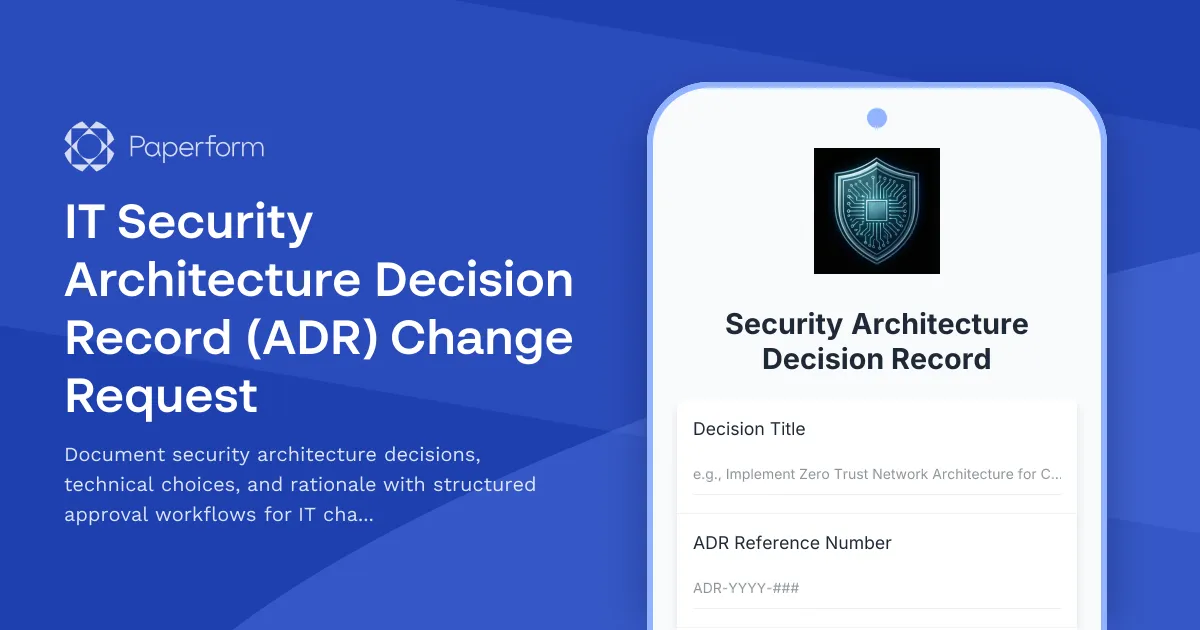
IT Security Architecture Decision Record (ADR) Change Request
Document security architecture decisions, technical choices, and rationale with structured approval workflows for IT change management and governance.
IT Security Architecture Roadmap Update Change Request
Submit and track IT security architecture roadmap changes, strategic initiatives, technology adoption plans, and investment requests for approval.
IT Security Policy Version Control Change Request Form
Submit, track, and approve security policy changes with version control, approval workflow, and publication management for IT governance and compliance.
Privileged Access Management Change Request Form
Streamline privileged access requests with automated approval workflows, audit trails, and time-based access controls for enhanced security compliance.
Cybersecurity Breach Incident Report
Report and document cybersecurity breaches, data exposures, and security incidents with comprehensive system impact assessment and executive notification workflow.
Cybersecurity Incident Post-Mortem Report
Conduct thorough post-incident analysis with attack vector documentation, response timeline tracking, and security gap identification to strengthen your organization's cybersecurity posture.
Data Breach Incident Report Form
Document and manage data breach incidents with comprehensive system impact analysis, user assessment, response tracking, and regulatory notification timelines.
Disaster Recovery Platform Access Request
Request access to disaster recovery orchestration platforms with failover testing permissions, recovery plan execution rights, and RTO/RPO monitoring capabilities.
IT Network Segmentation Change Request Form
Submit network segmentation change requests including VLAN configuration, security zones, and access control list modifications with technical details and approval workflow.
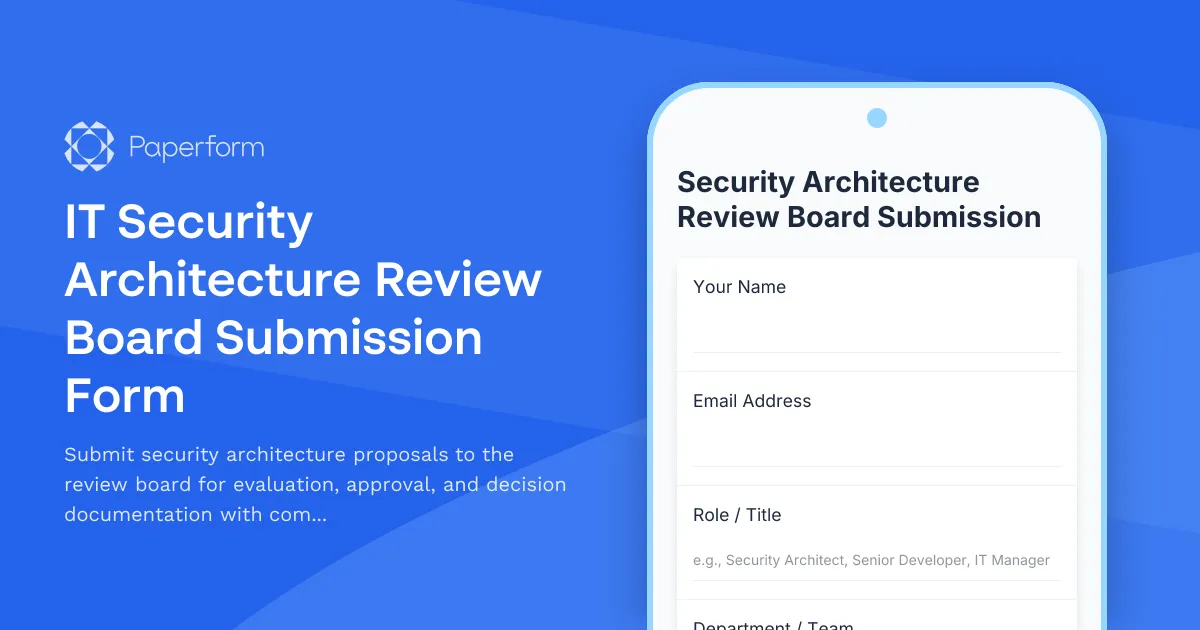
IT Security Architecture Review Board Submission Form
Submit security architecture proposals to the review board for evaluation, approval, and decision documentation with comprehensive risk assessments and compliance considerations.
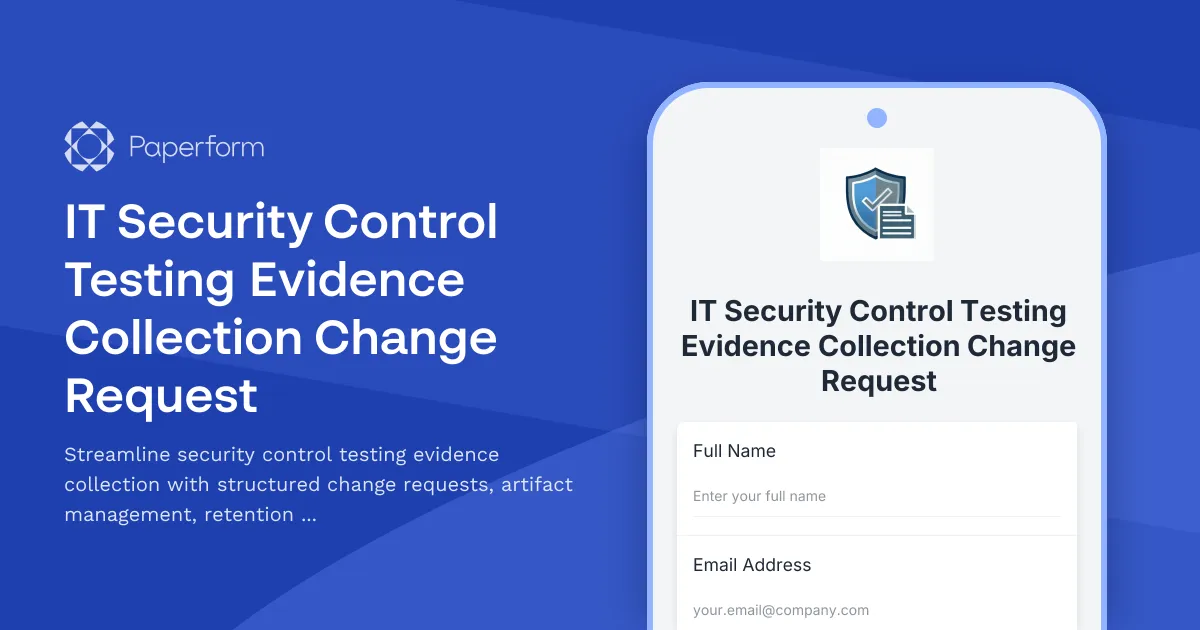
IT Security Control Testing Evidence Collection Change Request
Streamline security control testing evidence collection with structured change requests, artifact management, retention policies, and complete audit trails for compliance and governance.
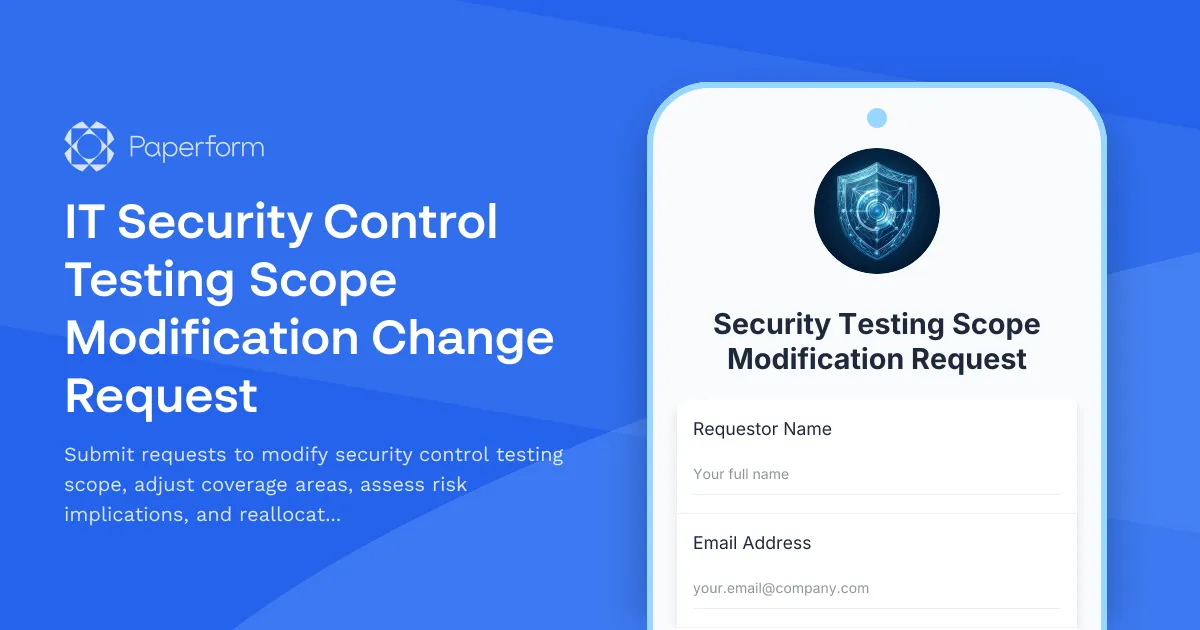
IT Security Control Testing Scope Modification Change Request
Submit requests to modify security control testing scope, adjust coverage areas, assess risk implications, and reallocate testing resources for cybersecurity programs.