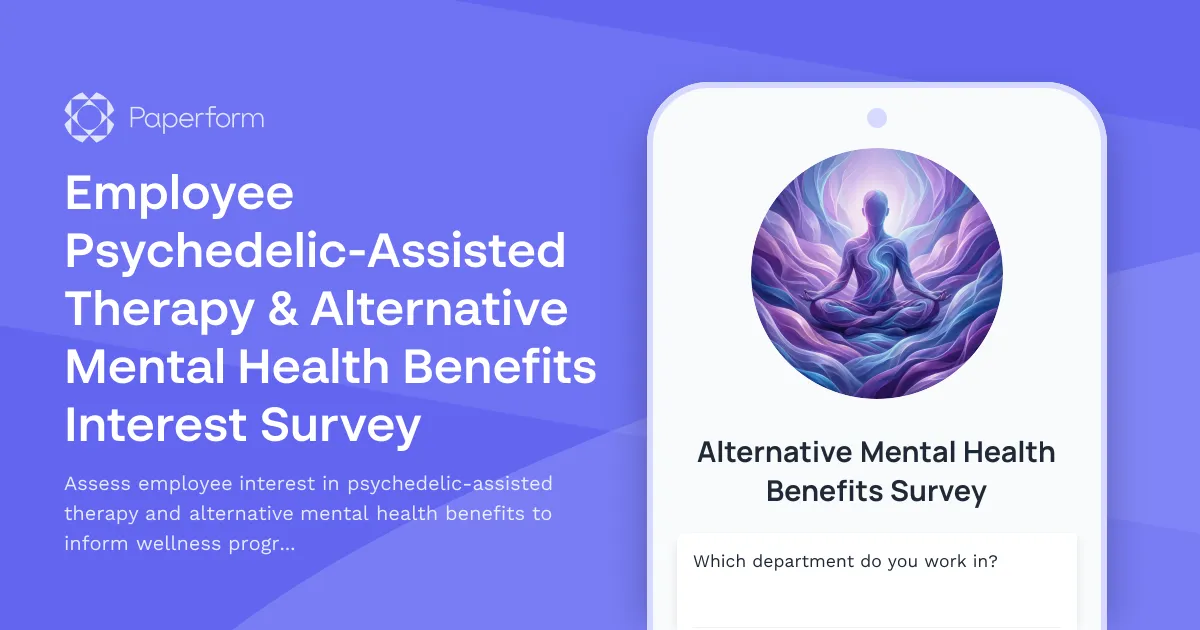
Understanding Employee Interest in Alternative Mental Health Benefits
Mental health support is evolving beyond traditional therapy and medication. Forward-thinking organizations are exploring psychedelic-assisted therapy and alternative mental health treatments as part of comprehensive employee wellness programs. This survey template helps HR teams and benefits administrators gauge employee interest, understand access barriers, and identify stigma reduction needs.
Why This Survey Matters
Psychedelic-assisted therapy—including treatments with psilocybin, MDMA, and ketamine—has shown promising results for treatment-resistant depression, PTSD, anxiety, and other mental health conditions. As regulatory landscapes shift and clinical research expands, employees are increasingly curious about these evidence-based alternatives.
This template allows you to:
- Measure genuine interest in psychedelic-assisted therapy and alternative mental health treatments
- Identify coverage gaps in your current benefits package
- Understand accessibility concerns including provider availability and cost barriers
- Assess workplace stigma that may prevent employees from seeking innovative treatments
- Gather feedback on educational resources and support employees need
Built for Progressive HR Teams
Whether you're a startup exploring cutting-edge benefits or an established organization updating your wellness offerings, this survey provides actionable insights. Paperform's anonymous submission options and SOC 2 Type II compliance ensure employees can respond honestly about sensitive mental health topics.
Use conditional logic to tailor follow-up questions based on interest levels, and leverage AI Insights to identify key themes across hundreds of responses without manually reading every submission. Export results directly to your HRIS or collaboration tools via Stepper to coordinate benefits expansion planning across stakeholders.
Destigmatizing Mental Health Innovation
By simply asking these questions, you signal organizational openness to mental health innovation. The survey addresses stigma head-on, asking employees what would make them more comfortable exploring these treatments and what educational resources would be helpful.
Create a culture where mental health support—in all its forms—is normalized, accessible, and championed. Start gathering insights today with this ready-to-deploy template.
More templates like this
Employee Bereavement Leave Policy Adequacy Survey
Gather employee feedback on your organization's bereavement leave policy, including time-off duration, family coverage, support resources, and return-to-work flexibility to ensure compassionate support during difficult times.
Employee Resource Group (ERG) Participation Survey
Gather employee feedback on ERG participation, affinity group interests, event attendance, and leadership opportunities to strengthen workplace diversity and inclusion initiatives.
Employee Student Loan Repayment Assistance Survey
Gather employee feedback on your student loan repayment assistance program to measure awareness, satisfaction, and program effectiveness.
Workplace Long COVID & Chronic Illness Support Survey
A confidential employee survey designed to assess workplace accommodations, support needs, and policy effectiveness for staff managing long COVID and chronic illness conditions.
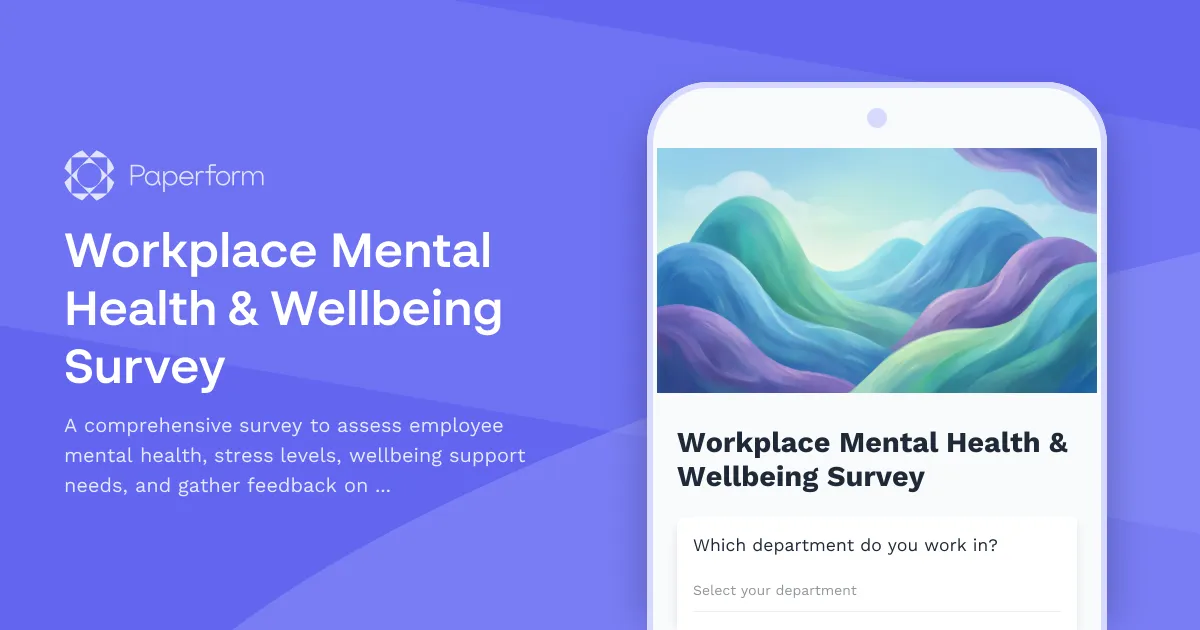
Workplace Mental Health & Wellbeing Survey
A comprehensive survey to assess employee mental health, stress levels, wellbeing support needs, and gather feedback on existing counseling services and workplace mental health initiatives.
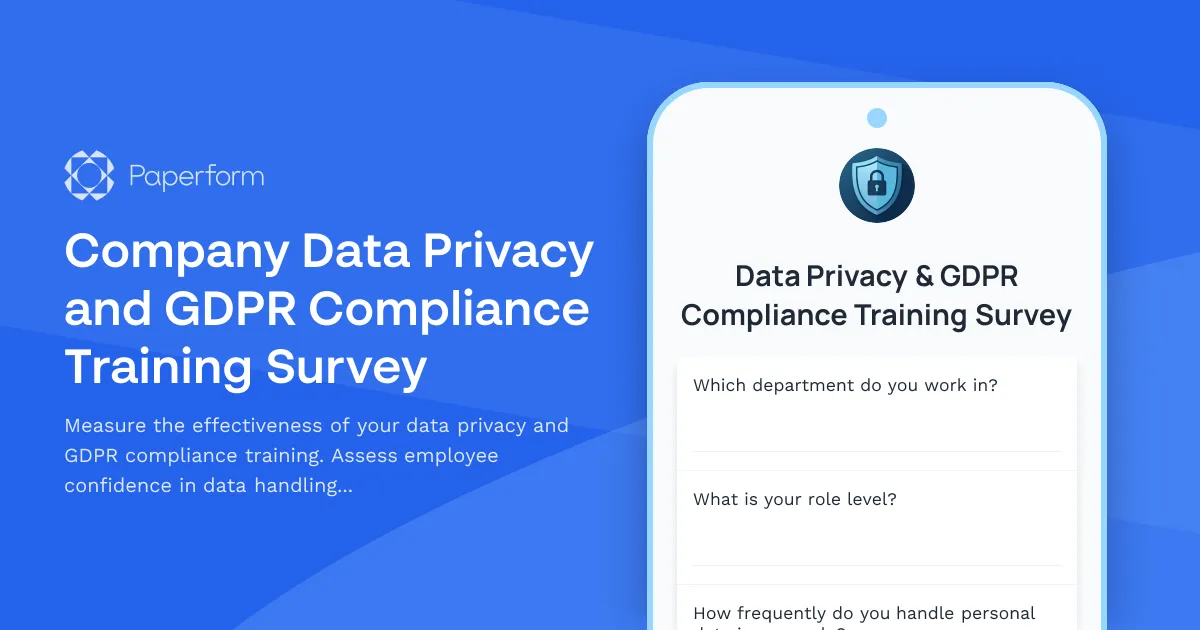
Company Data Privacy and GDPR Compliance Training Survey
Measure the effectiveness of your data privacy and GDPR compliance training. Assess employee confidence in data handling, understanding of compliance requirements, and identify knowledge gaps to strengthen your organisation's data protection culture.
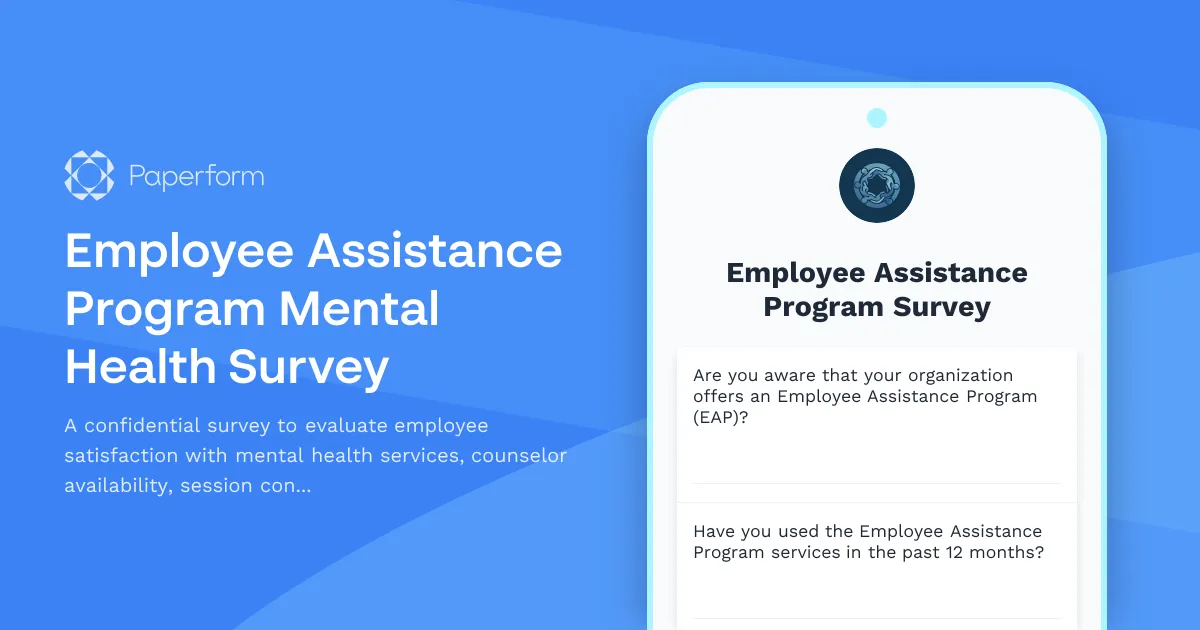
Employee Assistance Program Mental Health Survey
A confidential survey to evaluate employee satisfaction with mental health services, counselor availability, session confidentiality, workplace issue resolution, and crisis intervention effectiveness in your EAP program.
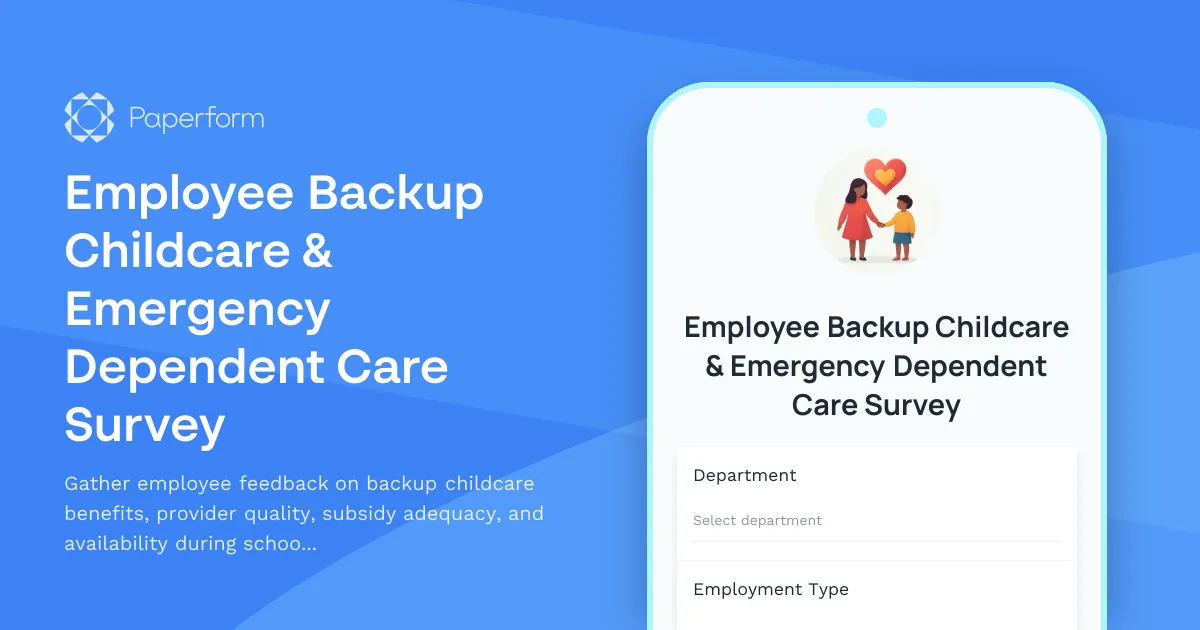
Employee Backup Childcare & Emergency Dependent Care Survey
Gather employee feedback on backup childcare benefits, provider quality, subsidy adequacy, and availability during school closures to improve your dependent care support programs.
Employee Financial Transparency & Salary Policy Perception Survey
Gather employee feedback on salary transparency, pay equity, and compensation disclosure practices to build a fairer workplace.
Employee Gig Work & Side Hustle Policy Survey
Gather employee feedback on moonlighting policies, conflict of interest understanding, and the approval process for side work and gig economy participation.
Employee Pay Equity Audit Communication & Remediation Satisfaction Survey
A comprehensive survey to gather employee feedback on pay equity audit communications, adjustment transparency, retroactive corrections, and confidence in ongoing monitoring processes.
Employee Professional Association Membership Survey
A comprehensive survey to assess employee interest in professional associations, membership reimbursement awareness, perceived value, networking opportunities, and budget adequacy for professional development.