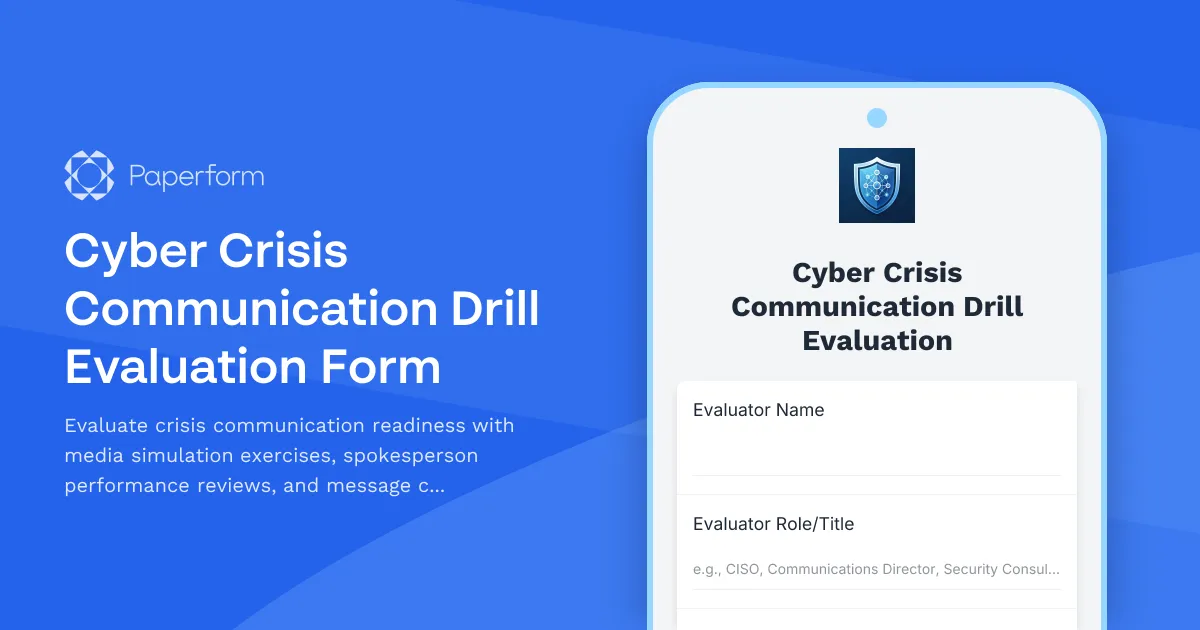
Professional Crisis Communication Drill Evaluation for IT Security Teams
In today's digital landscape, a cybersecurity incident can escalate from a technical problem to a full-blown reputation crisis in minutes. When a data breach, ransomware attack, or system compromise occurs, your organization's response to media inquiries, stakeholder communications, and public statements can make the difference between controlled recovery and lasting damage.
This Cyber Crisis Communication Drill Evaluation Form is designed specifically for IT security teams, incident response coordinators, and communications professionals who need to assess their organization's readiness to handle the communications side of a cyber crisis. Whether you're running tabletop exercises, live media simulations, or spokesperson training sessions, this template helps you capture comprehensive feedback and identify gaps before a real incident occurs.
Why Crisis Communication Drills Matter for Cybersecurity
Technical incident response plans are essential, but they're only half the equation. Research shows that organizations with practiced crisis communication protocols recover faster and maintain stakeholder trust more effectively during security incidents. Regular drills help your team:
- Test message consistency across different spokespeople and communication channels
- Identify gaps in authority, decision-making processes, and approval workflows
- Build muscle memory for high-pressure media interactions
- Validate crisis playbooks before you need them in a real emergency
- Improve coordination between IT, legal, PR, and executive teams
Who This Template Is For
This evaluation form is ideal for:
- Chief Information Security Officers (CISOs) coordinating enterprise-wide incident response readiness
- IT Security Managers running tabletop exercises and simulation drills
- Communications and PR Teams responsible for external messaging during incidents
- Compliance Officers ensuring regulatory notification requirements are understood and practiced
- Risk Management Professionals assessing organizational preparedness across technical and reputational dimensions
- Consultants and Trainers delivering crisis communication workshops for technology companies
How Paperform Streamlines Drill Evaluation
Traditional drill evaluations often rely on paper checklists, disconnected spreadsheets, or lengthy email debriefs that make it difficult to spot patterns and track improvement over time. Paperform transforms this process into a streamlined, professional workflow:
Capture rich, structured feedback with conditional logic that adapts questions based on drill type, performance ratings, and identified issues. Evaluators can provide detailed assessments of spokesperson performance, message accuracy, and timeline adherence in one clean, organized form.
Maintain consistency across multiple drills by using the same evaluation framework for every exercise, making it easy to benchmark progress, compare different team members' performance, and identify recurring weaknesses that need additional training.
Generate instant reports and insights with Paperform's AI Insights feature, which can analyze responses across multiple drill evaluations to surface themes, highlight common failure points, and produce executive summaries for leadership review.
Integrate with your security workflow by connecting submissions to Slack for immediate debriefs, Google Sheets or Airtable for tracking improvement over time, or your project management tools to assign follow-up training tasks.
Automate Post-Drill Actions with Stepper
After each drill evaluation, there's typically a list of follow-up actions: update the crisis playbook, schedule additional media training, revise message templates, or brief executives on gaps. With Stepper, Paperform's AI-native workflow automation platform, you can turn each evaluation into an automated improvement process.
Set up Stepper workflows that:
- Route high-priority findings (like spokesperson performance issues or major message inconsistencies) to the appropriate team leaders
- Create training tasks in your project management system based on identified skill gaps
- Update your crisis response documentation automatically when new best practices are identified
- Send summarized feedback to drill participants and schedule follow-up sessions
- Maintain a centralized knowledge base of lessons learned across all drills
This means your crisis communication program becomes truly iterative—every drill automatically feeds into better preparation for the next one.
Building a Culture of Preparedness
The most effective crisis communication programs don't treat drills as compliance checkboxes—they build them into an ongoing culture of preparedness. By making drill evaluations easy to complete, analyze, and act on, this Paperform template helps security-conscious organizations:
- Run drills more frequently without administrative burden
- Make evaluation data actionable rather than letting it sit in filing cabinets
- Demonstrate measurable improvement in crisis readiness to boards and executives
- Create institutional memory around what works (and what doesn't) in high-pressure situations
Whether you're a lean startup running your first media simulation or an enterprise security team managing complex, multi-stakeholder crisis scenarios, this template adapts to your needs while maintaining the rigor required for meaningful evaluation.
Trusted by Security-Conscious Organizations
Paperform is trusted by over 500,000 teams worldwide and maintains SOC 2 Type II compliance, ensuring your sensitive drill evaluation data is handled with the same security standards you apply to your own operations. With role-based permissions, you can control who sees evaluation results, and with data residency options, you can ensure compliance with regional data protection requirements.
Start building a more resilient crisis communication capability today with this professional, ready-to-use drill evaluation template—because when a real cyber incident strikes, your team won't have time to figure out who says what to whom.


More templates like this
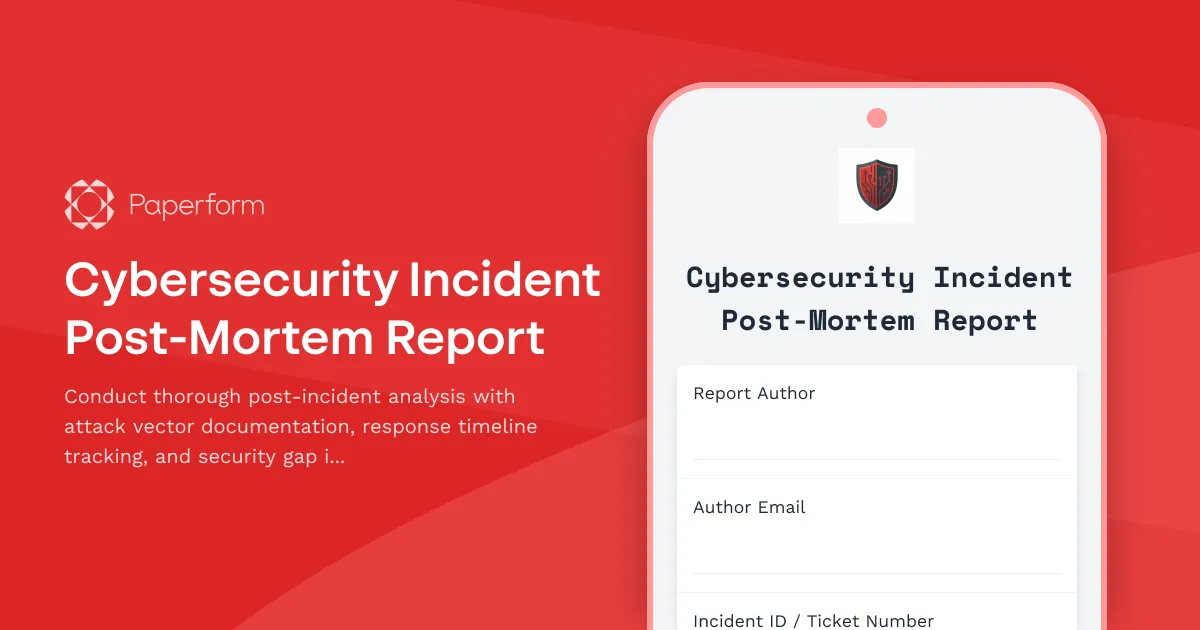
Cybersecurity Incident Post-Mortem Report
Conduct thorough post-incident analysis with attack vector documentation, response timeline tracking, and security gap identification to strengthen your organization's cybersecurity posture.
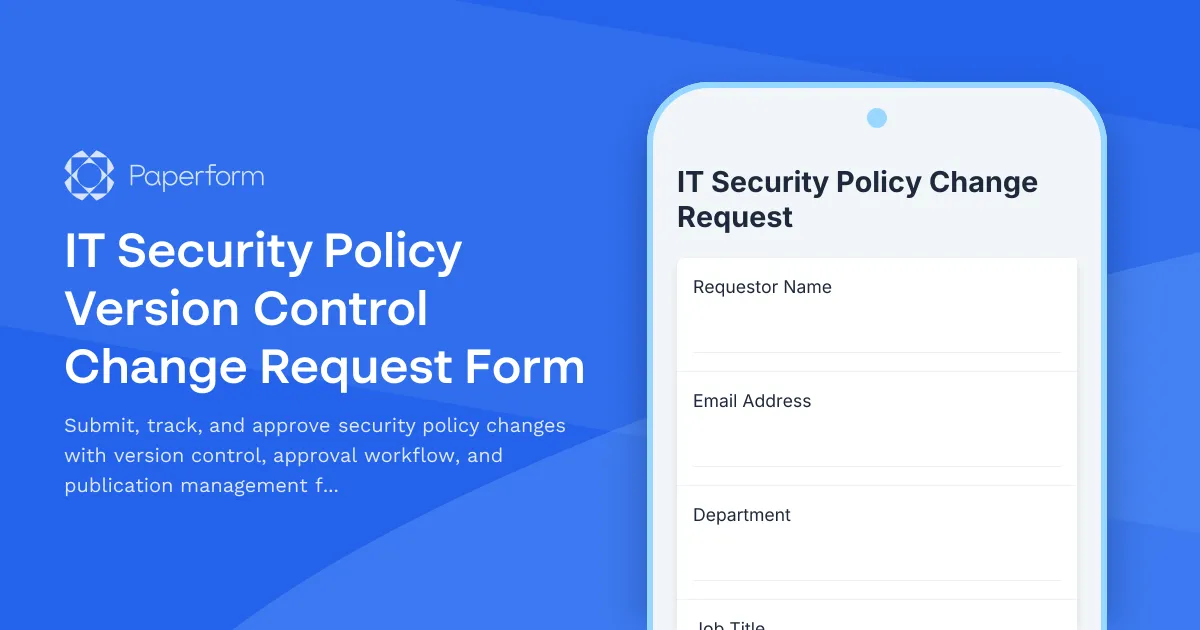
IT Security Policy Version Control Change Request Form
Submit, track, and approve security policy changes with version control, approval workflow, and publication management for IT governance and compliance.
Security Control Rationalization Review Form
Streamline your security controls by identifying redundancies, analyzing cost-effectiveness, and managing control retirement approvals through a structured review process.

Security Investment Portfolio Review & Budget Allocation
A comprehensive security investment analysis form for evaluating budget allocation, identifying control coverage gaps, and prioritizing strategic security initiatives across your organization.
IT Security Architecture Roadmap Update Change Request
Submit and track IT security architecture roadmap changes, strategic initiatives, technology adoption plans, and investment requests for approval.
IT Security Incident Response Communication Change Request Form
Request changes to security incident response communication protocols, including notification groups, escalation paths, and stakeholder contact information.
IT Security Incident Response Plan Annual Review Change Request
Submit change requests for your organization's IT security incident response plan, integrate lessons learned, update emergency contacts, and validate preparedness through tabletop exercises.
Catastrophic Data Loss Incident Report
Report critical data loss incidents, activate business continuity protocols, and manage customer notification and regulatory disclosure requirements for corporate emergencies.
Cybersecurity and Data Privacy Governance Report
A comprehensive ESG reporting form for documenting cybersecurity governance, data privacy measures, breach incidents, and security training compliance across your organization.
Cybersecurity Breach Incident Report
Report and document cybersecurity breaches, data exposures, and security incidents with comprehensive system impact assessment and executive notification workflow.
Cybersecurity Exception Approval Request Form
A comprehensive form for requesting cybersecurity policy exceptions with risk assessment, compensating controls, business justification, and remediation plans requiring CISO authorization.
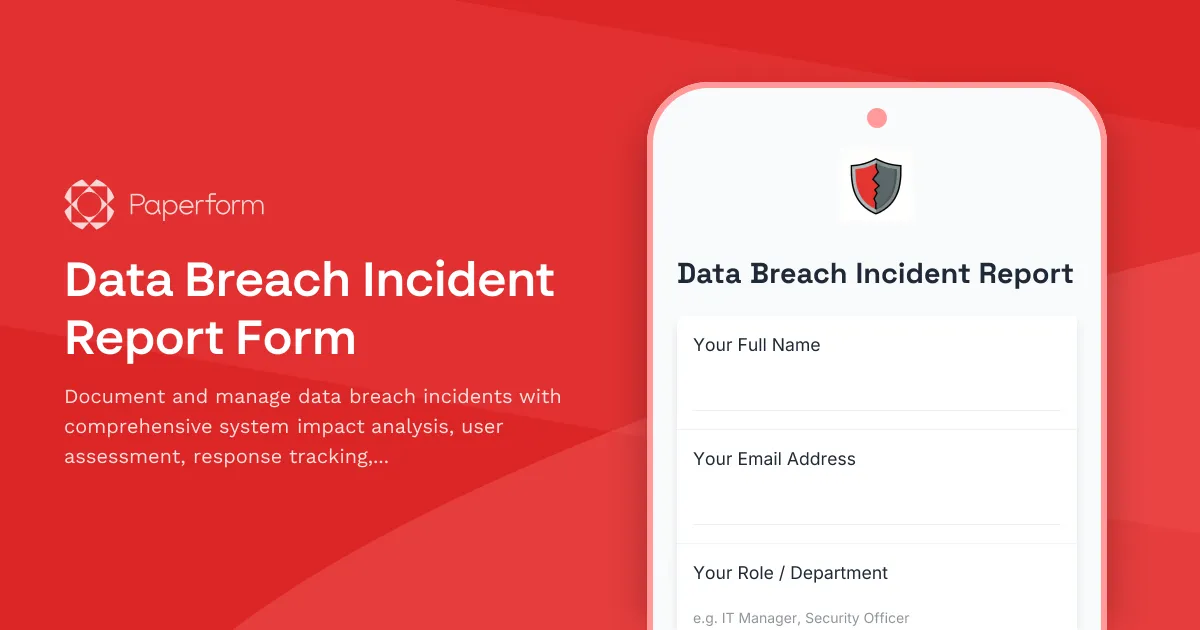
Data Breach Incident Report Form
Document and manage data breach incidents with comprehensive system impact analysis, user assessment, response tracking, and regulatory notification timelines.