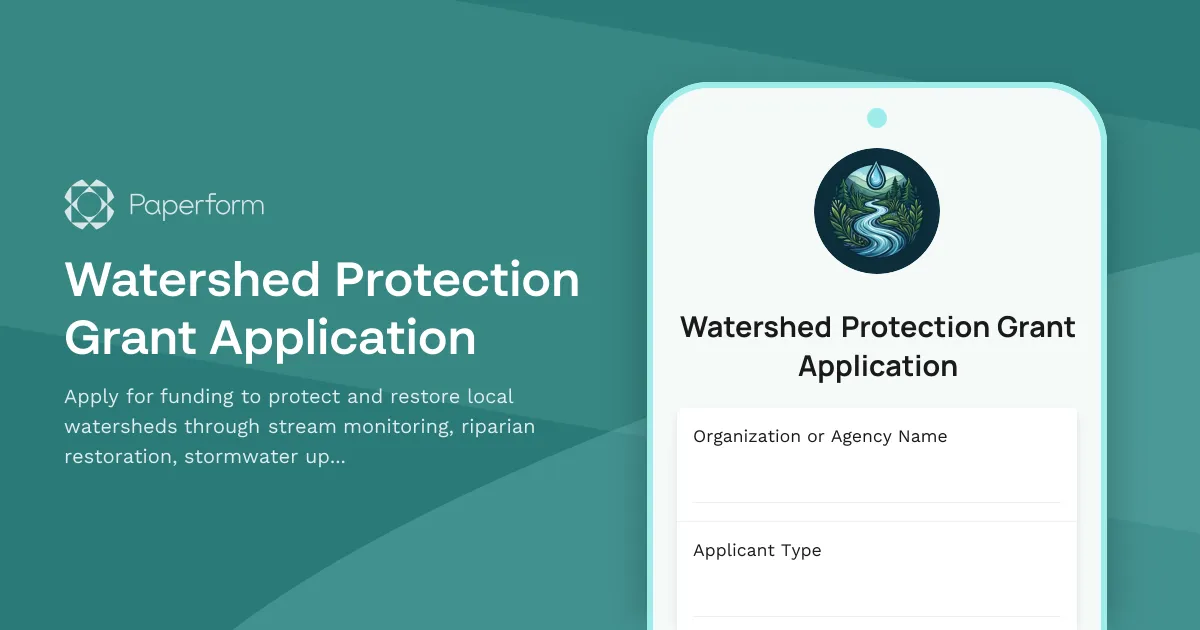
Secure Funding for Watershed Protection with a Professional Grant Application Form
Protecting our watersheds is critical for clean water, healthy ecosystems, and resilient communities. Whether you're a nonprofit organization, municipality, conservation district, or agricultural cooperative, applying for watershed protection grants shouldn't be complicated. This Watershed Protection Grant Application template from Paperform streamlines the entire process, helping you collect detailed project proposals, environmental data, and budget information in one professional, easy-to-complete form.
Why Watershed Protection Grants Matter
Watersheds face mounting pressures from urban development, agricultural runoff, aging stormwater infrastructure, and habitat loss. Grant programs funded by environmental agencies, conservation foundations, and government bodies provide essential resources for:
- Stream monitoring and assessment to track water quality, biodiversity, and ecosystem health
- Riparian buffer restoration that stabilizes stream banks, filters pollutants, and provides wildlife habitat
- Stormwater management upgrades including green infrastructure, rain gardens, and detention systems
- Agricultural runoff controls such as cover crops, nutrient management, and livestock exclusion fencing
Securing these funds requires clear, complete applications that demonstrate environmental impact, technical feasibility, and responsible stewardship. This template ensures applicants provide all the information grant reviewers need to make confident funding decisions.
Built for Environmental Organizations, Municipalities & Agricultural Stakeholders
This form template is designed for organizations and agencies managing watershed grant programs, including:
- Environmental nonprofits and conservation trusts running competitive grant rounds for stream restoration and protection projects
- State and county environmental agencies administering Clean Water Act funding, 319 grants, and state revolving funds
- Soil and water conservation districts supporting farmers and landowners with agricultural best management practices
- Municipal stormwater programs allocating funds for green infrastructure and MS4 compliance projects
- Watershed councils and alliances coordinating collaborative restoration efforts across jurisdictions
With Paperform's flexible form builder, you can customize every section to match your specific grant criteria, funding priorities, and reporting requirements—no coding needed.
What Makes This Template Work
Unlike generic application forms, this watershed protection grant template captures the specialized information environmental funders need:
- Project overview and objectives with clear conservation goals and measurable outcomes
- Stream monitoring protocols including baseline data, testing parameters, frequency, and quality assurance methods
- Riparian restoration plans detailing buffer width, native plantings, invasive species control, and long-term maintenance
- Stormwater upgrade specifications such as bioretention cells, permeable pavement, cisterns, and capacity calculations
- Agricultural practice details covering crop rotation, nutrient management plans, livestock fencing, and erosion controls
- Budget breakdown and matching funds with line-item costs, in-kind contributions, and sustainability planning
- Site assessment and partner coordination including land ownership, permits, and collaborative stakeholders
Conditional logic guides applicants through relevant sections based on project type, so stream monitoring applicants see different questions than stormwater infrastructure projects. This keeps forms focused and prevents confusion.
Streamline Review with Payments, File Uploads & Automated Workflows
Beyond data collection, Paperform helps you manage the entire grant lifecycle:
- Collect application fees via Stripe, PayPal, or Square to cover administrative costs or require matching fund deposits
- Accept maps, photos, and technical documents with file upload fields for site plans, watershed assessments, letters of support, and budget spreadsheets
- Route applications for review using Stepper (stepper.io) workflows that notify committee members, track scoring, and manage approval stages
- Sync data to Airtable or Google Sheets for collaborative review, comparison dashboards, and geographic prioritization
- Send automated confirmations and updates with custom success pages and follow-up emails that keep applicants informed
With Paperform's calculation fields, you can automatically total project budgets, verify matching fund percentages, and flag incomplete cost breakdowns before submission—saving reviewers time and improving application quality.
Professional Design That Reflects Your Mission
First impressions matter, especially when applicants are investing time in detailed proposals. This template uses Paperform's document-style editor to create a clean, accessible application experience. Add your watershed program logo, customize fonts and colors to match your agency branding, and include helpful descriptions, examples, and resource links inline with each question.
Applicants can save progress and return later, upload supporting documents directly within the form, and receive instant confirmation that their application was received. For grant administrators, this reduces follow-up emails, lost attachments, and incomplete submissions.
Secure, Compliant & Scalable for Growing Programs
Managing sensitive environmental data and applicant information requires robust security. Paperform is SOC 2 Type II compliant and offers data residency controls, role-based permissions, and secure file storage—critical for grant programs handling proprietary farm data, landowner information, or competitive proposals.
As your watershed program grows, Paperform scales with you. Use Agency+ features to manage multiple grant cycles, track applications across different funding streams, and coordinate reviews across partner organizations—all from one platform.
Extend Your Impact with Stepper Automation
Once applications are submitted, Stepper can automate the post-submission workflow:
- Assign applications to reviewers based on expertise, geography, or project type
- Send scoring rubrics and evaluation deadlines to committee members
- Notify finalists of site visit scheduling or additional documentation requests
- Update applicants on award decisions and disbursement timelines
- Create project folders in Google Drive or Dropbox for awarded grants
This keeps your team organized, applicants informed, and projects moving forward without manual coordination.
Get Started in Minutes
With over 30,000 templates and trusted by 500,000+ teams worldwide, Paperform makes it easy to launch professional grant applications without developers or designers. Customize this watershed protection template to match your funding priorities, embed it on your website or share via direct link, and start accepting applications immediately.
Whether you're funding stream buffers in rural counties, green infrastructure in urban centers, or agricultural conservation on working lands, this template helps you collect complete, high-quality applications that protect our watersheds for generations to come.

More templates like this
Indigenous Land Restoration Grant Application
Apply for funding to support Indigenous-led land restoration projects that integrate traditional ecological knowledge, species reintroduction, fire management, and community consultation.
Pollinator Habitat Grant Application
Apply for funding to establish or enhance pollinator habitats with native plant species, pesticide reduction plans, and community education components.
Climate Adaptation Grant Application
Apply for climate adaptation funding with comprehensive vulnerability assessment, resilience strategies, stakeholder consultation records, and monitoring framework documentation.
Coastal Restoration Grant Application
Apply for funding to restore coastal ecosystems with erosion control, native species replanting, dune stabilization, and hurricane resilience projects.
Community Composting Grant Application
Apply for grant funding to establish or expand community composting programs. Includes project scope, collection logistics, composting methodology, distribution plans, and sustainability measures.
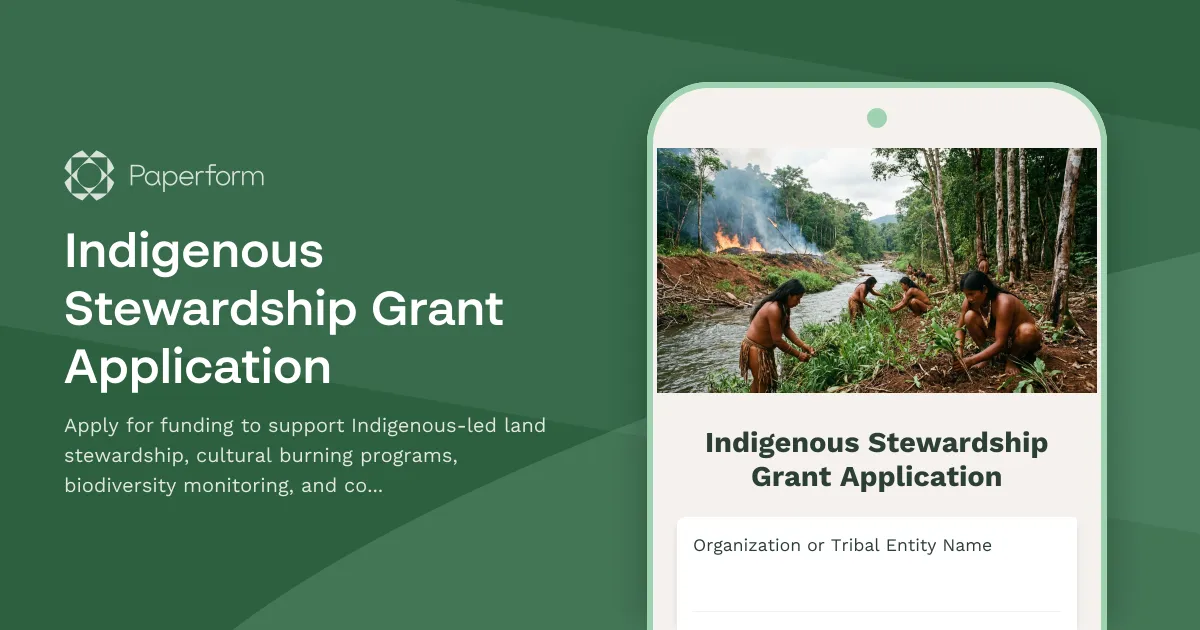
Indigenous Stewardship Grant Application
Apply for funding to support Indigenous-led land stewardship, cultural burning programs, biodiversity monitoring, and co-management initiatives on traditional territories.
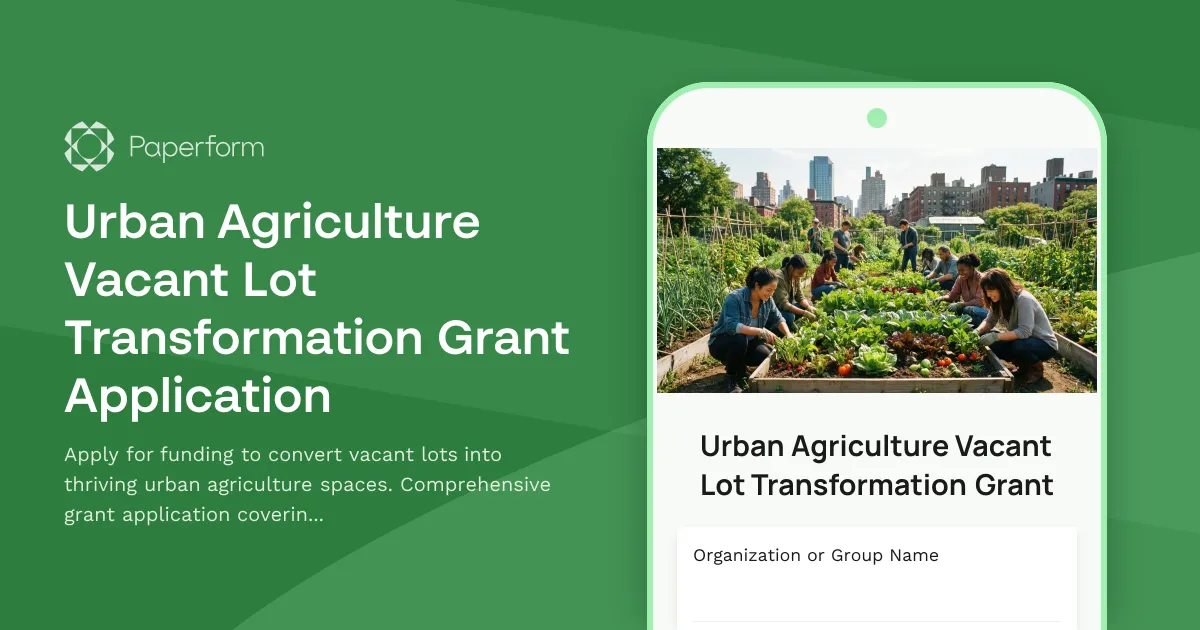
Urban Agriculture Vacant Lot Transformation Grant Application
Apply for funding to convert vacant lots into thriving urban agriculture spaces. Comprehensive grant application covering land acquisition, soil remediation, growing infrastructure, community gardens, and food access improvements.
Aquatic Invasive Species Management Scholarship Application
A comprehensive scholarship application for students pursuing careers in aquatic invasive species management, with focus on ecology, rapid response, and conservation work.
Climate Justice Grant Application
A comprehensive grant application form for climate justice initiatives focused on frontline community leadership, environmental health, just transition planning, and policy advocacy.
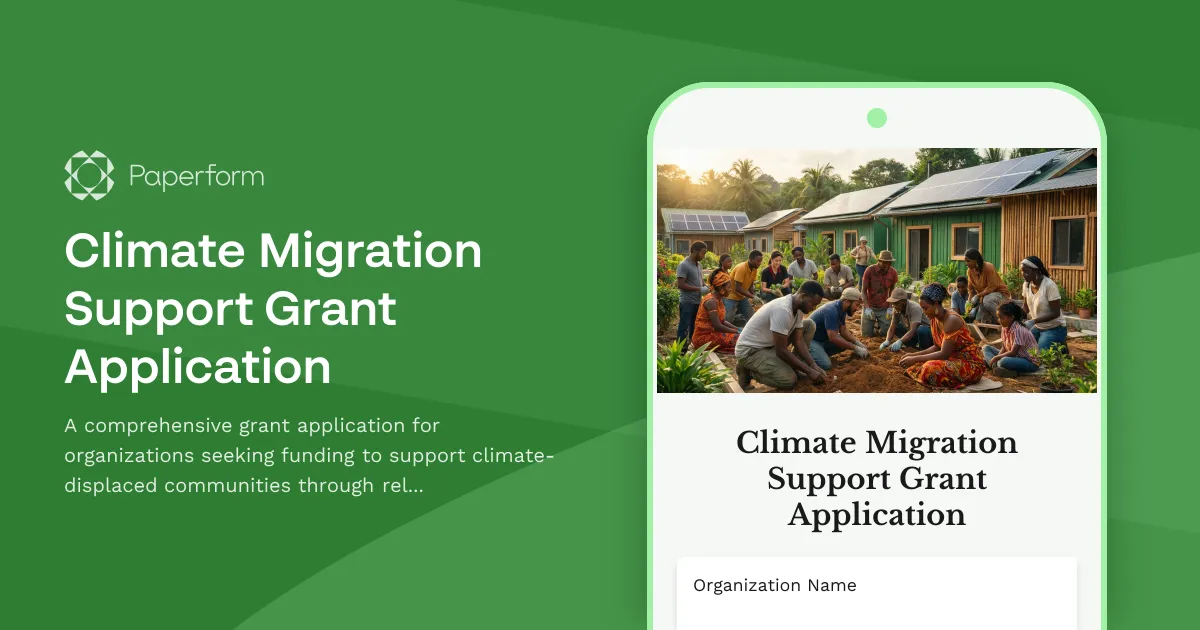
Climate Migration Support Grant Application
A comprehensive grant application for organizations seeking funding to support climate-displaced communities through relocation assistance, cultural preservation, community reception planning, and trauma-informed services.
Community-Owned Energy Grant Application
A comprehensive grant application form for renewable energy cooperatives seeking funding for community-owned energy projects with energy democracy principles, just transition programs, and rate affordability protections.
Criminal Justice Reform Grant Application
Apply for criminal justice reform funding to support diversion programs, data collection systems, and racial equity initiatives in your community.