Professional Laser Safety Compliance for Tattoo Removal Clinics
Running a tattoo removal clinic means managing sophisticated laser equipment that demands strict safety protocols. Whether you're preparing for regulatory inspections, training new staff, or maintaining your daily safety standards, this Tattoo Removal Laser Safety Checklist gives you a streamlined way to document compliance across protective eyewear, equipment functionality, emergency preparedness, and client safety procedures.
Why laser clinics need digital safety checklists
Tattoo removal lasers operate at intensities that can cause serious injury if safety protocols aren't followed to the letter. Traditional paper checklists get misplaced, damaged, or skipped when things get busy. This digital template ensures every inspection is recorded, timestamped, and accessible for audits—while making it faster for your team to complete daily, weekly, and pre-treatment safety checks.
This form is designed for:
- Laser technicians and operators conducting pre-shift equipment checks
- Clinic managers and safety officers running weekly or monthly compliance audits
- Medical directors and practice owners maintaining regulatory documentation
- Training coordinators onboarding new laser technicians
What this safety checklist covers
The template guides your team through every critical safety checkpoint, including:
- Protective eyewear compliance: Verify that operator and client eyewear is present, undamaged, and rated for your specific laser wavelength
- Skin cooling equipment functionality: Confirm that cooling systems, cryogen sprays, or contact cooling devices are working properly to minimize discomfort and thermal injury
- Emergency burn treatment supplies: Check that burn gel, sterile dressings, ice packs, and first aid supplies are stocked and within expiration dates
- Laser calibration records: Document calibration dates, power output verification, and maintenance schedules to ensure consistent, safe treatments
- Client patch test documentation: Record patch test results, skin reactions, and clearance for full treatment before proceeding
Each section includes conditional fields that adapt based on your responses, so you only see relevant follow-up questions—keeping inspections fast without sacrificing thoroughness.
How tattoo removal clinics use this template
Daily pre-treatment checks: Before the first client, technicians quickly verify that all protective equipment is ready, lasers are calibrated, and emergency supplies are stocked. The digital record timestamps each inspection, creating an audit trail that proves due diligence.
Weekly equipment audits: Clinic managers use the form to conduct deeper equipment inspections, checking calibration logs, documenting any maintenance needs, and flagging items that need restocking or replacement.
Pre-client safety verification: Before patch tests or treatments, staff confirm that the specific client's skin type assessment, consent forms, and patch test results are documented and meet safety criteria.
Regulatory compliance: When inspectors or insurers request proof of safety protocols, you have a searchable database of completed checklists rather than hunting through filing cabinets.
Design a checklist that matches your clinic's brand
Paperform's doc-style editor lets you customize this template to reflect your clinic's tone and visual identity. Adjust the header with your logo, modify the color scheme to match your branding, and add or remove checklist items based on your specific laser models, regulatory requirements, or internal protocols. Your safety documentation can feel as polished and professional as the rest of your clinic experience.
Automate follow-up actions with Stepper
Once a safety checklist is submitted, you shouldn't have to manually chase down maintenance requests or notify supervisors about failed inspections. Connect this form to Stepper—Paperform's AI-native workflow builder—to automatically:
- Send alerts to your maintenance team when equipment fails a safety check
- Update your clinic management software with calibration dates and inspection records
- Notify the medical director when emergency supplies fall below minimum stock levels
- Create task lists in your project management tool for any flagged safety issues
- Log completed inspections in Google Sheets or Airtable for easy reporting
Stepper keeps your safety workflows running smoothly in the background, so your team can focus on delivering safe, effective treatments.
Built for healthcare and aesthetic professionals
Paperform is trusted by healthcare providers, medical spas, and aesthetic clinics who need forms that meet professional standards for compliance, security, and usability. With SOC 2 Type II compliance, data residency controls, and role-based permissions, you can confidently collect sensitive safety and client data while meeting regulatory expectations.
This template is ideal for laser tattoo removal clinics, medical spas offering laser treatments, dermatology practices, and any facility using Class IV medical lasers that require documented safety protocols.
Get started with your laser safety checklist
Every clinic has slightly different equipment, protocols, and regulatory requirements. This template gives you the foundation—then you customize it to match your specific laser models, local regulations, and internal safety standards. Whether you're running a single-location clinic or managing multiple treatment rooms across several sites, Paperform scales with you while keeping safety documentation consistent and accessible.
Start with this template, make it your own, and turn safety compliance from a paperwork headache into a streamlined, automated part of your daily operations.



More templates like this
Assisted Living Facility Shift Report
A comprehensive daily shift report for assisted living facilities to track resident activities, medication administration, meals, behavioral observations, and family communications throughout each shift.
Blood Bank Daily Collection Report
Track daily blood collection activities including donor counts, units collected, adverse reactions, equipment status, and inventory levels with a comprehensive blood bank reporting form.
Dialysis Center Water Treatment System Maintenance Log
A comprehensive maintenance log for tracking dialysis water treatment systems, including reverse osmosis membrane testing, endotoxin monitoring, and equipment sanitization cycles to ensure patient safety and regulatory compliance.
Healthcare Emergency Operations Center Activation Checklist
A comprehensive checklist form for activating healthcare emergency operations centers during critical incidents. Streamlines incident classification, resource coordination, and communication protocols.
Hospital Patient Room Safety Inspection Checklist
Comprehensive patient room safety inspection checklist covering fall prevention, call systems, oxygen supply, infection control, and hazardous materials compliance for healthcare facilities.
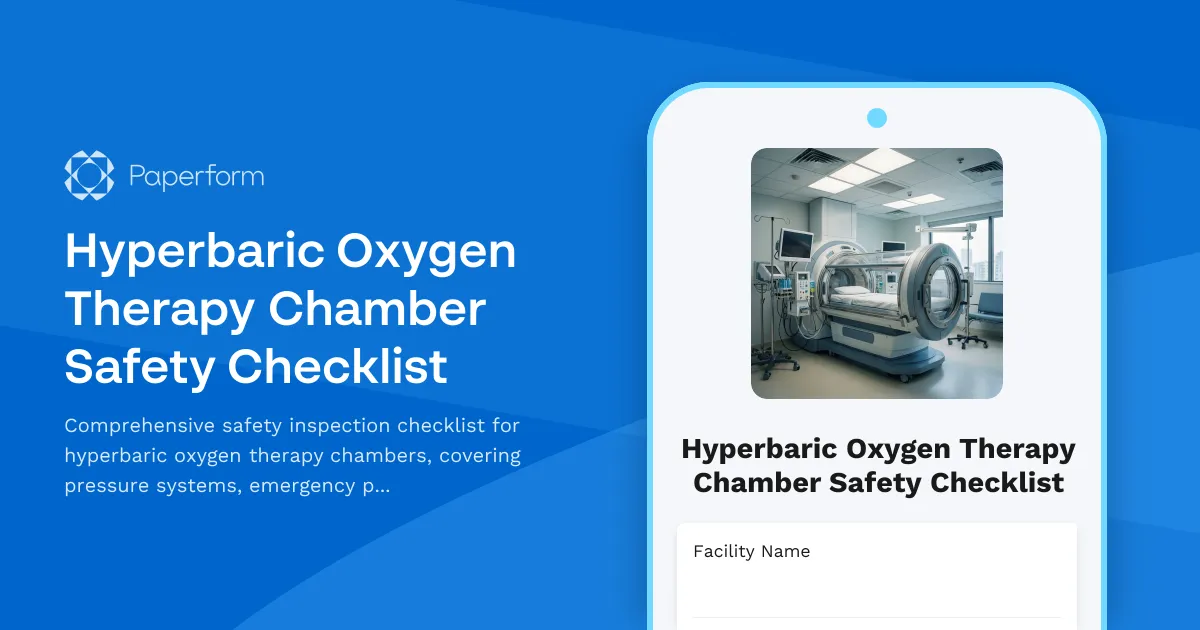
Hyperbaric Oxygen Therapy Chamber Safety Checklist
Comprehensive safety inspection checklist for hyperbaric oxygen therapy chambers, covering pressure systems, emergency protocols, fire prevention, and patient monitoring equipment.
Hyperbaric Oxygen Therapy Clinic Supply Inventory & Maintenance Log
Comprehensive inventory management system for hyperbaric oxygen therapy clinics to track medical supplies, chamber maintenance, oxygen purity testing, and treatment protocol compliance.
IV Vitamin Therapy Lounge Safety Checklist
Comprehensive safety inspection and compliance checklist for IV therapy lounges to verify nursing credentials, emergency equipment, infection control protocols, and patient safety procedures.
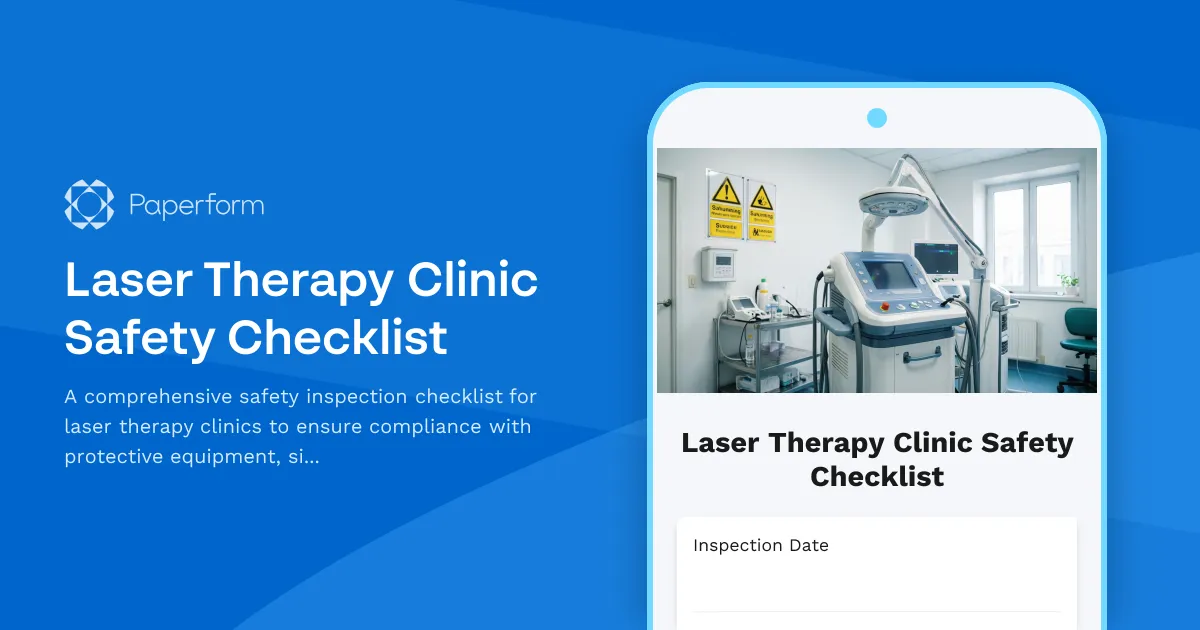
Laser Therapy Clinic Safety Checklist
A comprehensive safety inspection checklist for laser therapy clinics to ensure compliance with protective equipment, signage, calibration, emergency systems, and cooling functionality standards.
Mobile Blood Collection Unit Safety Checklist
Comprehensive safety inspection checklist for mobile blood donation units, covering refrigeration monitoring, infection control, donor screening compliance, and emergency preparedness.
Mobile Mammography Unit Safety Checklist
Comprehensive safety inspection checklist for mobile mammography units covering radiation shielding, electrical systems, patient privacy, equipment calibration, and emergency preparedness.
Mobile Phlebotomy Appointment Checklist
A comprehensive checklist for mobile phlebotomists to ensure proper patient identification, requisition verification, sample collection, and transport preparation before, during, and after each appointment.