Evaluating substitute teachers is essential for maintaining educational quality and ensuring positive learning experiences when regular teachers are absent. This Substitute Teacher Performance Evaluation Form provides schools, administrators, and department heads with a structured way to assess temporary instructors across key performance areas.
Whether you're a principal conducting routine evaluations, a department coordinator managing substitute teacher quality, or a school administrator building a reliable substitute roster, this template helps you gather consistent, actionable feedback. The form covers classroom management effectiveness, lesson plan adherence, student rapport and engagement, professionalism, and overall teaching quality.
Built with Paperform, this evaluation template offers conditional logic to surface relevant follow-up questions based on initial ratings, making the assessment process more efficient. You can customize rating scales, add school-specific competencies, and adjust questions to match your evaluation criteria. The clean, professional design works seamlessly on any device, so evaluators can complete assessments immediately after classroom observations.
Once submitted, evaluation data flows directly into your systems via Stepper workflows—automatically notifying HR teams of concerns, updating substitute teacher profiles, flagging high performers for future bookings, or triggering follow-up meetings. This eliminates manual data entry and ensures timely action on evaluation insights.
With built-in reporting and AI Insights, you can identify patterns across multiple evaluations, spot training opportunities, and recognize outstanding substitute teachers who deserve recognition or permanent placement consideration. SOC 2 Type II compliance ensures all evaluation data remains secure and confidential, meeting school district privacy standards.



More templates like this
Online Learning Platform Course Feedback Form
Gather comprehensive student feedback on online courses, including technical issues, content clarity, instructor responsiveness, and overall learning experience.
Classroom Technology Integration Survey
A comprehensive survey to evaluate how students experience technology in the classroom, including interactive tools, digital platforms, online resources, and tech support effectiveness.
College Academic Probation Support Program Feedback Survey
A comprehensive feedback survey designed to evaluate academic probation support programs, including advisor effectiveness, study skills resources, mental health support, and student success outcomes.
College Accelerated Degree Program Student Survey
Gather comprehensive feedback from students enrolled in accelerated degree programs about course intensity, support services, time management, academic quality, and overall satisfaction with their experience.
College Accessibility Services Student Survey
Evaluate your college's accessibility services with this comprehensive student feedback form covering accommodations, staff support, assistive technology, testing arrangements, and advocacy effectiveness.
College Career Services Satisfaction Survey
Evaluate your career services experience including resume assistance, interview prep, job fairs, employer connections, and alumni networking to help improve student outcomes.
College Entrepreneurship Course Evaluation
A comprehensive evaluation form for entrepreneurship course participants to assess course effectiveness, business development skills, pitch presentation capabilities, mentor engagement, and venture launch readiness.

College Peer Review Writing Workshop Evaluation
Evaluate peer review writing workshops with this comprehensive feedback form. Assess feedback quality, revision improvements, critical reading skills, collaborative learning value, and writing confidence development.
Design Thinking Classroom Project Feedback Form
Evaluate student development in design thinking skills including empathy, ideation, prototyping, user feedback integration, and problem-solving confidence through comprehensive project assessment.
Dual Language Immersion Program Parent Survey
Gather comprehensive feedback from parents about their child's dual language immersion experience, including language development, cultural growth, academic progress, and program satisfaction.
Educational Augmented Reality Lesson Feedback Form
Gather student feedback on AR-enhanced lessons to measure technology integration effectiveness, visual engagement, interactivity, technical challenges, and learning outcomes.
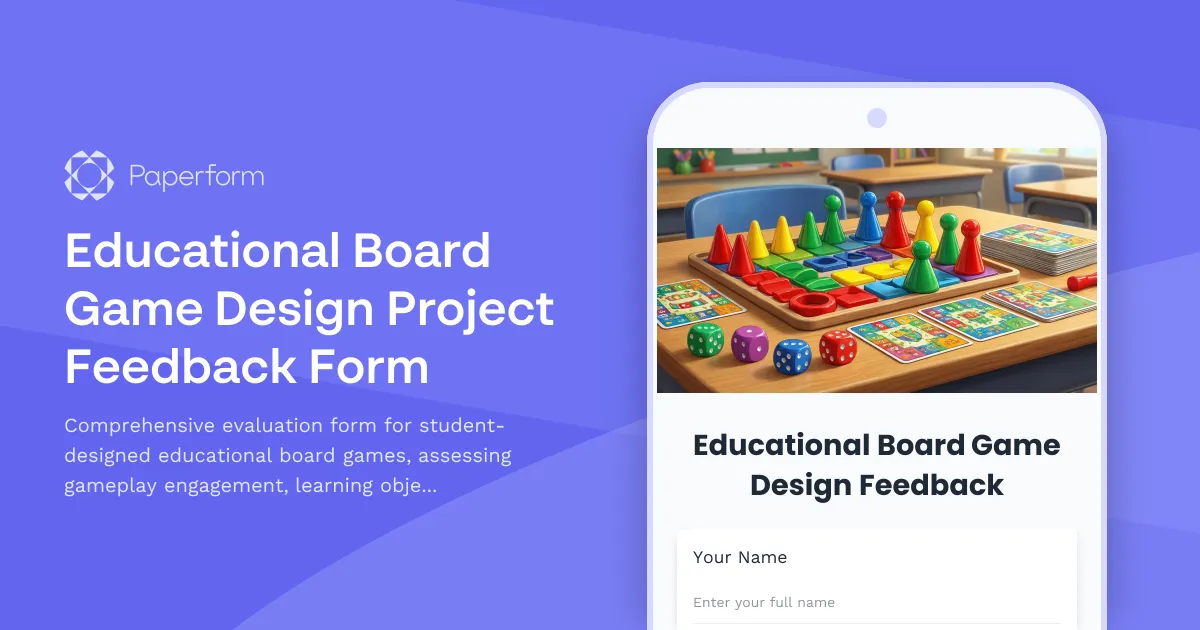
Educational Board Game Design Project Feedback Form
Comprehensive evaluation form for student-designed educational board games, assessing gameplay engagement, learning objectives, rule clarity, creativity, and peer teaching effectiveness.