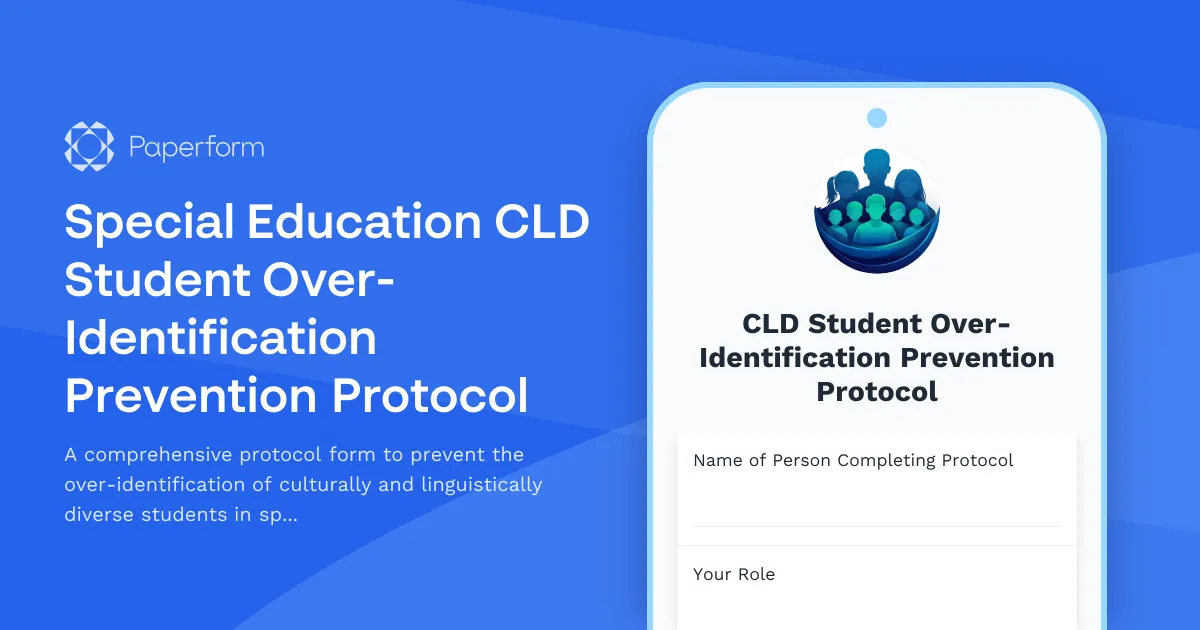
Preventing the over-identification of culturally and linguistically diverse (CLD) students in special education programs requires intentional, data-driven protocols that address implicit bias and ensure equitable evaluation practices. This Special Education CLD Student Over-Identification Prevention Protocol template helps schools and districts implement systematic safeguards throughout the referral and evaluation process.
Designed for special education coordinators, intervention teams, and school psychologists, this form guides educators through critical pre-referral interventions, cultural and linguistic considerations, and disproportionality monitoring checkpoints. By documenting evidence-based interventions, language acquisition timelines, and cultural factors that may impact learning, teams can distinguish between genuine disabilities and differences related to language development, cultural adjustment, or inadequate prior instruction.
The protocol includes sections for response to intervention (RTI) documentation, English language proficiency assessment, culturally responsive teaching strategies, family engagement in the student's native language, and bias awareness checkpoints. This structured approach helps teams make more informed, equitable decisions about special education referrals while maintaining compliance with federal guidelines on disproportionality.
Paperform makes it easy to customize this template to match your district's specific intervention frameworks and monitoring procedures. The conditional logic adapts the form based on student demographics and intervention outcomes, while calculation fields can track intervention duration and progress monitoring results. With Paperform's integration capabilities, you can connect this protocol to your student information system, special education case management software, or Google Sheets for ongoing disproportionality analysis.
For districts looking to automate their equity monitoring workflows, Stepper can route completed protocols to appropriate team members based on risk indicators, trigger follow-up assessments, and maintain a centralized dashboard of disproportionality metrics across schools and demographic groups.
More templates like this
Extended Time Testing Accommodation Request Form
A comprehensive form for requesting extended time accommodations on standardized assessments, including disability documentation, processing speed data, and approval tracking for state testing offices.
Section 504 Annual Review Form
A comprehensive annual review form for Section 504 plans that evaluates accommodation effectiveness, gathers updated medical information, determines continued eligibility, and documents plan revisions for students with disabilities.
Special Education Data Privacy Consent Form
A comprehensive consent form for special education programs that addresses FERPA rights, assessment result sharing, outside agency communication, and parent access to student records.
Special Education Due Process Complaint Form
File a formal due process complaint regarding special education services, including dispute details, prior resolution attempts, and hearing requests for IDEA compliance.
Special Education Eligibility Determination Form
A comprehensive form for multidisciplinary teams to assess student eligibility for special education services, document evaluation results, and provide placement recommendations.
504 Plan Accommodation Request Form
A comprehensive form for parents and guardians to request Section 504 accommodations for students with disabilities, including documentation uploads and professional recommendations.
Autism Spectrum Disorder Diagnostic Observation Consent Form
A comprehensive consent and information form for ASD diagnostic observation including ADOS-2 assessment, parent interview, school observation, and multidisciplinary team evaluation.
Autism Spectrum Support Services Intake Form
A comprehensive intake form for autism spectrum support services that captures sensory profiles, communication preferences, social skills assessments, and behavior patterns to create personalized support plans.
Bilingual Special Education Assessment Request Form
Request a comprehensive bilingual special education evaluation with language dominance testing, cultural considerations, and qualified evaluator assignment for students in multilingual households.
Child Abuse Mandatory Reporter Form
A confidential reporting form for educators and school staff to document suspected child abuse or neglect and fulfill mandatory reporting obligations to state agencies.
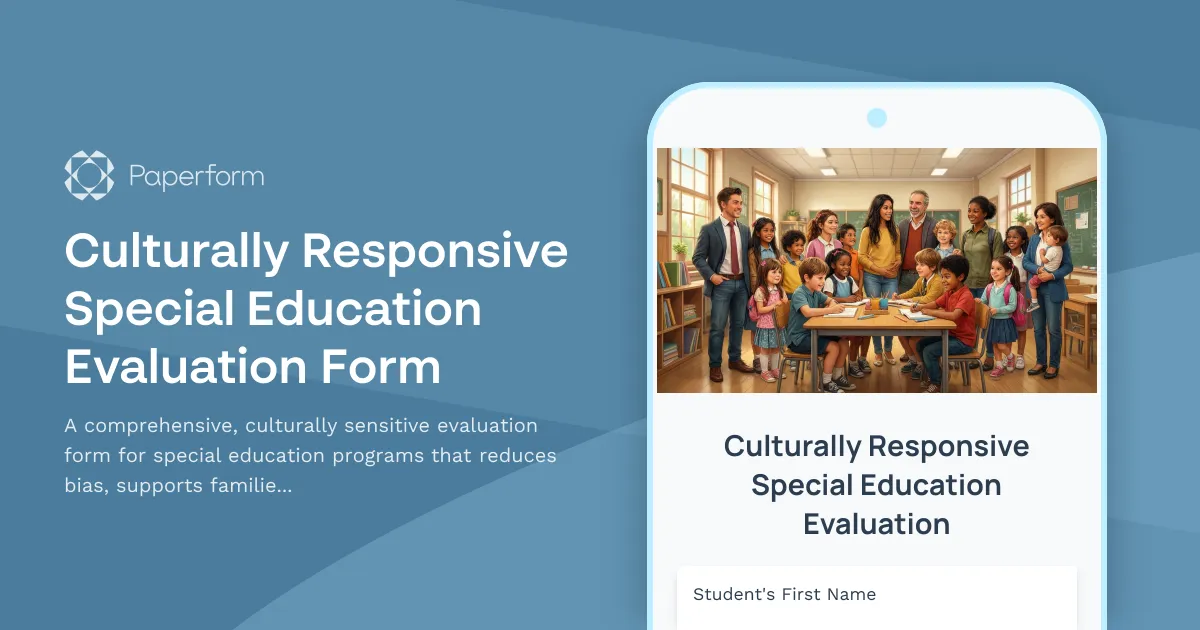
Culturally Responsive Special Education Evaluation Form
A comprehensive, culturally sensitive evaluation form for special education programs that reduces bias, supports families from diverse backgrounds, and ensures equitable assessment practices.
Functional Behavioral Assessment Parent Questionnaire
A comprehensive parent questionnaire for functional behavioral assessments (FBA) that helps educators understand student behavior patterns, environmental triggers, reinforcement factors, and communication methods to develop effective behavioral intervention plans.