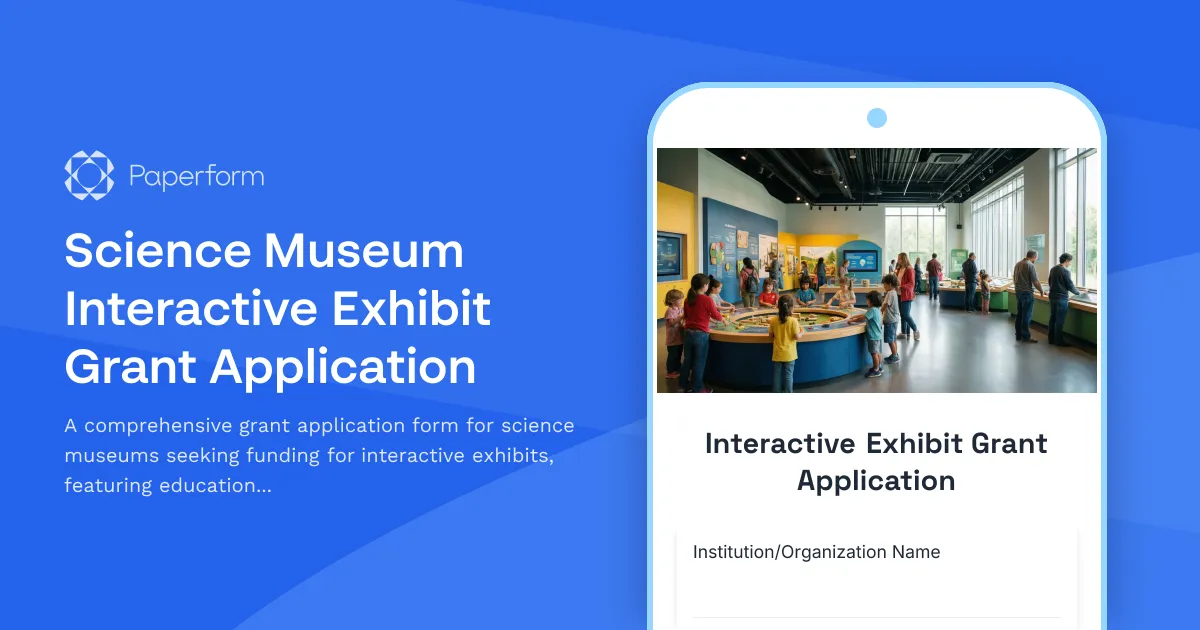
Transform Your Vision into an Interactive Learning Experience
Securing funding for a science museum interactive exhibit requires more than just a great idea—it demands a well-structured proposal that demonstrates educational impact, visitor engagement potential, and measurable STEM learning outcomes. Our Science Museum Interactive Exhibit Grant Application template is designed specifically for museums, science centers, and educational institutions seeking grant funding to bring innovative, hands-on exhibits to life.
Why This Template Works for Museums and Science Centers
Whether you're a small community science center or a large metropolitan museum, this template helps you present your exhibit concept in a compelling, organized format that grant reviewers expect. The form guides applicants through every critical component of a successful grant proposal—from articulating clear educational objectives to projecting visitor engagement and demonstrating alignment with STEM education standards.
Museums, planetariums, aquariums, and science centers use this template to streamline their grant application process, ensuring no critical detail is overlooked. The structured format helps museum directors, exhibit designers, education coordinators, and grant writers collaborate effectively, gathering all necessary information in one centralized location.
What Makes This Grant Application Template Different
Unlike generic grant forms, this template is purpose-built for interactive exhibit proposals. It recognizes that science museum exhibits require a unique blend of educational rigor, creative design, accessibility considerations, and visitor experience planning. The form captures:
- Educational frameworks and learning objectives aligned with Next Generation Science Standards (NGSS) and other STEM curricula
- Detailed visitor engagement projections with demographic breakdowns and accessibility plans
- Exhibit design concepts including mockups, interactive elements, and spatial requirements
- Measurable outcomes that demonstrate real-world impact on science literacy and public engagement
- Budget justifications tied directly to educational and engagement goals
This comprehensive approach helps grant committees understand not just what you want to build, but why it matters and how it will make a difference in your community.
Perfect for Multiple Grant Programs and Funding Sources
Whether you're applying to federal agencies like the National Science Foundation (NSF) or Institute of Museum and Library Services (IMLS), private foundations, corporate sponsors, or local community grants, this template provides the foundation you need. It's flexible enough to adapt to different funders' requirements while maintaining the core information every grant reviewer wants to see.
Education-focused nonprofits, university museums, children's museums, and natural history museums all benefit from this standardized approach to exhibit grant proposals.
Streamline Collaboration Across Your Team
Creating a winning grant proposal requires input from multiple stakeholders. This Paperform template makes it easy for exhibit designers to upload mockups, education staff to detail learning outcomes, development officers to provide budget narratives, and curators to explain the scientific content—all in one collaborative workspace.
With conditional logic built in, the form adapts to your specific exhibit type, ensuring you only see relevant questions. Planning a physics exhibit? You'll see prompts for hands-on demonstrations. Proposing a biology installation? The form guides you through living specimen considerations.
Automate Your Grant Workflow with Stepper
Once your grant application is submitted through Paperform, you can use Stepper to automate what happens next. Set up workflows that automatically:
- Send confirmation emails to applicants with next steps
- Notify your grants committee when new applications arrive
- Create tasks in your project management system for grant review
- Update your CRM or grant tracking database
- Generate formatted PDF proposals from submitted data
- Route applications to appropriate reviewers based on exhibit category
This automation means your development team spends less time on administrative tasks and more time building relationships with funders and refining proposals.
Built for Professional Grant Seekers
The template includes fields for institutional background, project timelines, sustainability plans, evaluation methodologies, and partnership details—everything grant committees expect from serious applicants. It helps you demonstrate institutional capacity, community need, and long-term impact in a format that's easy to review and compare.
For grant writers and development professionals, this template serves as a checklist ensuring every required component is addressed. For museum leadership, it provides a standardized process that makes comparing multiple internal exhibit proposals straightforward before deciding which to pursue for external funding.
Secure, Compliant, and Trusted
When you're handling sensitive institutional information, budget details, and proprietary exhibit designs, security matters. Paperform is SOC 2 Type II compliant and GDPR ready, giving you and your funders confidence that data is protected. All submissions are encrypted, and you maintain full control over who can access application data.
Science museums and cultural institutions around the world trust Paperform to handle their most important forms—from grant applications to donor management, membership sign-ups to event registrations.
Get Started in Minutes
Rather than building a grant application form from scratch or wrestling with outdated PDF forms, start with this professionally designed template. Customize it to match your institution's branding, add your logo, adjust questions to align with your specific funder's requirements, and begin collecting comprehensive exhibit proposals immediately.
The template works beautifully whether embedded on your website, shared as a standalone link, or distributed to internal teams for proposal development. Responsive design ensures it looks professional on any device, so reviewers and collaborators can access it from anywhere.
From Application to Exhibition
Great interactive exhibits start with great proposals. This template helps you articulate your vision clearly, demonstrate educational impact convincingly, and present your project professionally—giving you the best possible chance of securing the funding you need to inspire the next generation of scientists, engineers, and curious minds.
Start building your grant application today and bring your interactive exhibit vision to life with Paperform.



More templates like this
Cultural Heritage Documentation Project Grant Application
A comprehensive grant application form for cultural heritage documentation projects, including oral history collection, digital archiving plans, community engagement strategies, and preservation standards compliance.
Accessible Playground Equipment Grant Application
Apply for funding to install accessible playground equipment with inclusive design features, ensuring safe and welcoming play spaces for children of all abilities.
Arts Council Creative Project Grant Application
Apply for arts council funding with portfolio submission, community impact details, and comprehensive budget breakdown for your creative project.
Community WiFi Infrastructure Grant Application
A comprehensive grant application form for organizations seeking funding to build community WiFi infrastructure, bridge the digital divide, and provide digital literacy training in underserved areas.
Early Childhood Literacy Program Grant Application
Comprehensive grant application for early childhood literacy programs, including age-appropriate book distribution plans, family engagement strategies, reading assessments, and program evaluation frameworks.
Emergency Relief Grant Application
Apply for emergency relief funding to support your organization's disaster recovery efforts. Document damage, assess immediate needs, and outline your recovery timeline.
Environmental Conservation Grant Proposal Form
A comprehensive grant application form designed for environmental organizations seeking funding for conservation projects, featuring land acquisition details, species protection plans, and measurable sustainability outcomes.
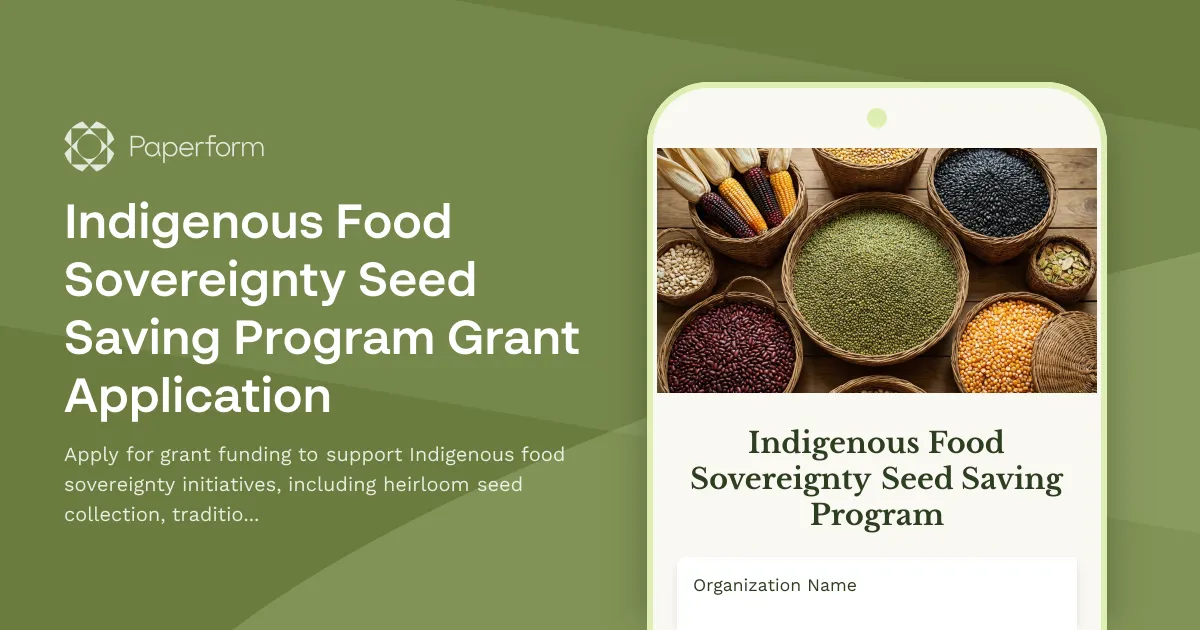
Indigenous Food Sovereignty Seed Saving Program Grant Application
Apply for grant funding to support Indigenous food sovereignty initiatives, including heirloom seed collection, traditional knowledge preservation, seed library establishment, and community garden distribution programs.

Music Education Instrument Grant Application
A comprehensive grant application form for schools and organizations seeking funding for musical instruments and music education programs, including student enrollment data, inventory needs, and curriculum details.
Scholarship Fund Establishment Grant Proposal
A comprehensive grant proposal form for organizations seeking funding to establish new scholarship programs, including selection criteria, award structure, target demographics, and long-term sustainability planning.
University Alumni Legacy Scholarship Endowment Form
Establish a lasting legacy by creating a named scholarship endowment. Set contribution levels, define scholarship criteria, and explore estate planning options to support future generations of students.
Workforce Development Coding Bootcamp Grant Application
A comprehensive grant application form for organizations seeking funding to establish coding bootcamp programs, including curriculum framework, employer partnerships, student support services, and job placement commitments.