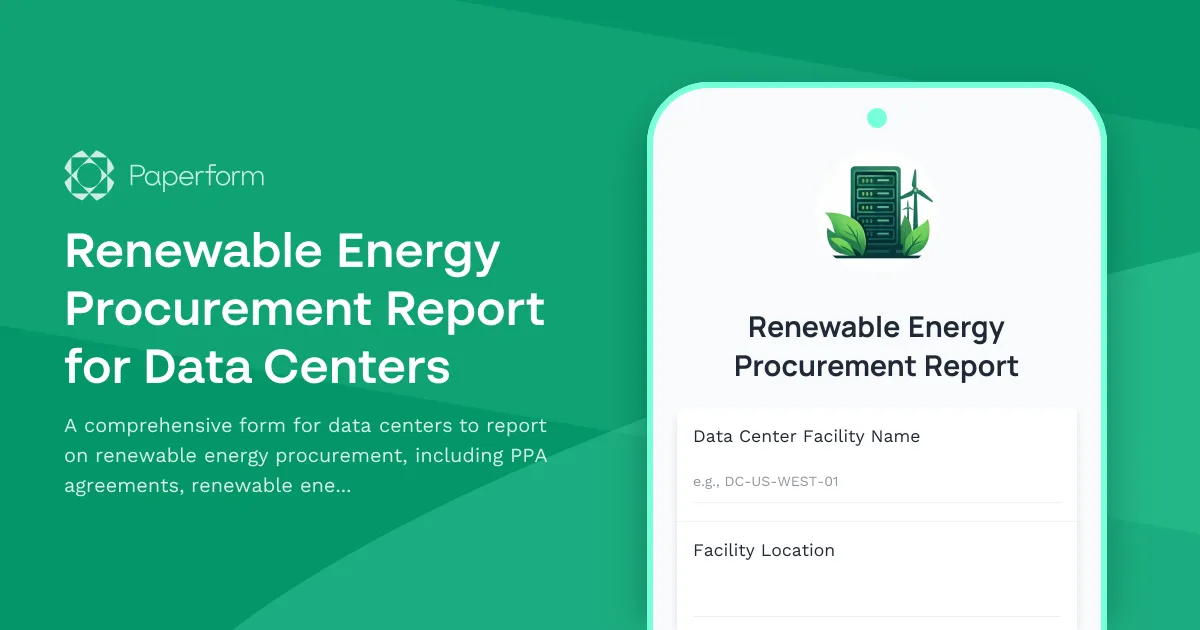
Streamline Your Data Center's Renewable Energy Reporting
As data centers face increasing pressure to meet sustainability targets and ESG commitments, transparent renewable energy reporting has become essential. This Renewable Energy Procurement Report template helps data center operators, sustainability managers, and facilities teams document power purchase agreements (PPAs), renewable energy certificates (RECs), and carbon-free energy (CFE) percentages in a structured, compliant format.
Whether you're reporting to stakeholders, meeting regulatory requirements, or tracking progress toward net-zero commitments, this template consolidates all critical renewable energy data in one place. Capture details on wind, solar, and other renewable sources, track hourly or annual matching percentages, and document the financial and environmental impact of your clean energy investments.
Paperform makes it easy to collect, organize, and share renewable energy data without spreadsheets or manual compilation. With conditional logic, you can tailor the form to different energy procurement types—whether you're reporting on virtual PPAs, physical PPAs, unbundled RECs, or on-site generation. Forms can be embedded into your internal sustainability portal or shared directly with ESG auditors and reporting platforms.
For teams managing complex, multi-site renewable energy portfolios, Stepper can automate what happens next: route submissions to finance for invoice matching, update your carbon accounting platform, trigger quarterly ESG report compilation, or notify executives when CFE targets are met. Keep your renewable energy reporting accurate, timely, and aligned with frameworks like GRI, CDP, and TCFD—all without adding overhead to your sustainability team.
Trusted by data centers and enterprises worldwide, Paperform is SOC 2 Type II compliant and designed for teams that need professional, secure reporting solutions without complexity.


More templates like this
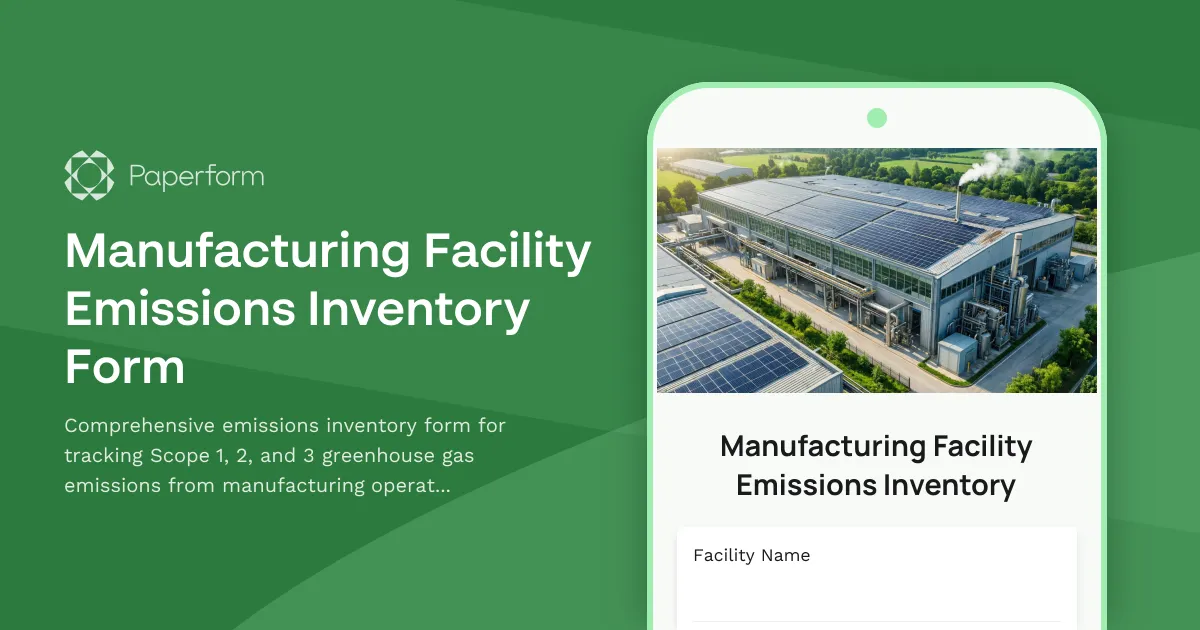
Manufacturing Facility Emissions Inventory Form
Comprehensive emissions inventory form for tracking Scope 1, 2, and 3 greenhouse gas emissions from manufacturing operations, including energy consumption, production volumes, and fuel specifications.
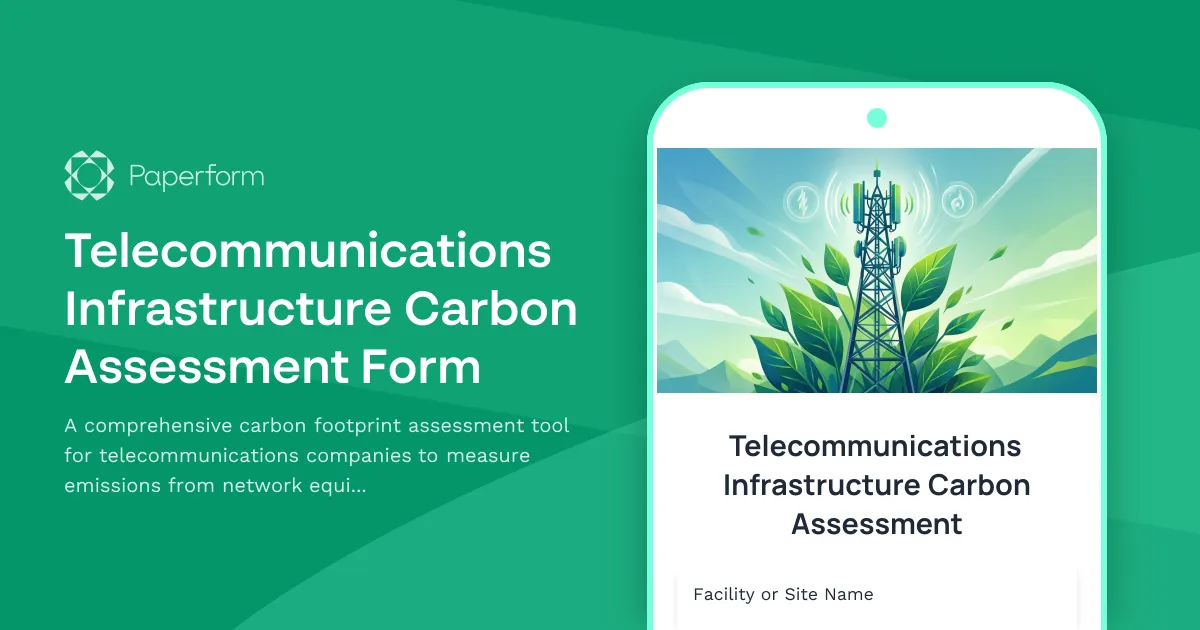
Telecommunications Infrastructure Carbon Assessment Form
A comprehensive carbon footprint assessment tool for telecommunications companies to measure emissions from network equipment, data transmission, maintenance fleets, and facility operations.
Corporate Innovation Lab Carbon Assessment Form
Measure and track the carbon footprint of your corporate innovation lab, including prototyping equipment, testing facilities, collaboration spaces, and maker equipment energy consumption.
ESG Forward-Looking Statement & Target-Setting Framework
A comprehensive framework for establishing science-based ESG targets, documenting forward-looking sustainability commitments, and implementing progress tracking mechanisms with third-party validation protocols.
ESG Narrative Reporting Supplement
A comprehensive form for collecting qualitative ESG stories, case studies, stakeholder testimonials, and supporting media to complement quantitative sustainability data with compelling human narratives.
Infrastructure Environmental Sustainability Assessment Form
Assess your IT infrastructure's environmental impact with energy efficiency metrics, carbon footprint calculations, and tailored optimization recommendations for sustainable operations.
Propane & Fuel Distribution Carbon Footprint Assessment
A comprehensive carbon assessment form for propane and fuel distribution companies to evaluate environmental impact across tank truck fleets, customer site equipment, storage facilities, and safety operations.
Renewable Diesel & Biodiesel Blending Report
A comprehensive ESG reporting form for fuel distributors to track renewable diesel and biodiesel blending operations, feedstock sources, carbon intensity scores, and Low Carbon Fuel Standard (LCFS) credits for regulatory compliance and sustainability tracking.
South Korea Carbon Emissions Reporting Form
A comprehensive carbon emissions reporting form for South Korean businesses to declare greenhouse gas emissions, set reduction targets, and explore offset options in compliance with Korean environmental regulations.
Circular Economy Progress Report
Track your circular economy initiatives with detailed product lifecycle analysis, recycling metrics, and packaging reduction progress. Perfect for consumer goods companies committed to sustainable business practices.
Climate Change Adaptation Plan for Agriculture
A comprehensive ESG reporting form for agricultural companies to document and track climate adaptation strategies, drought-resistant crop development, irrigation efficiency measures, and insurance partnerships.
Coastal and Marine Conservation Report for Tourism Operators
Track and report on coastal conservation efforts, reef restoration projects, sustainable fishing initiatives, and plastic reduction programs for tourism businesses committed to protecting marine ecosystems.