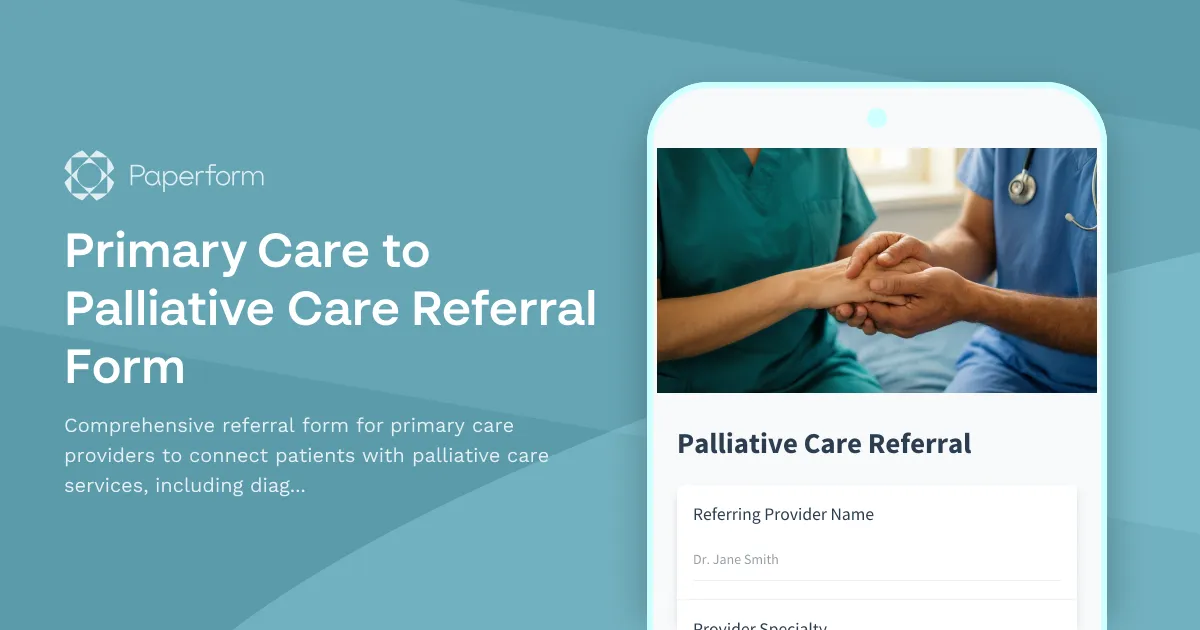
Primary Care to Palliative Care Referral Form: Compassionate Transitions Made Simple
When patients face serious illness, ensuring seamless communication between primary care and palliative care teams can make all the difference in providing comfort-focused, patient-centered care. This Primary Care to Palliative Care Referral Form template helps primary care physicians, nurse practitioners, and care coordinators streamline the referral process while capturing the essential clinical and psychosocial information palliative care specialists need to provide comprehensive support.
Why This Form Matters for Healthcare Providers
Palliative care referrals require more than basic demographic information—they need a holistic picture of the patient's diagnosis, symptom burden, goals of care, and advance planning status. This template addresses the unique needs of:
- Primary care physicians seeking to connect patients with palliative care services early in their illness trajectory
- Oncologists and specialists who recognize when symptom management and quality of life support are needed
- Hospital case managers coordinating post-discharge palliative care
- Hospice agencies receiving referrals for evaluation
- Palliative care teams who need comprehensive intake information to provide person-centered care
By digitizing this critical handoff, you eliminate illegible faxes, incomplete referrals, and communication delays that can prevent patients from receiving timely symptom relief and advance care planning support.
What Makes This Template Effective
This form goes beyond basic referral information to capture:
- Comprehensive diagnosis information including primary and secondary diagnoses, disease stage, and prognosis
- Detailed symptom burden assessment covering pain, dyspnea, nausea, fatigue, anxiety, depression, and other common symptoms
- Advance directive documentation to understand existing care preferences and planning needs
- Quality of life goals that help palliative teams align care with what matters most to patients
- Functional status and caregiver information for holistic care planning
- Urgency indicators to help palliative teams prioritize consultations appropriately
The conditional logic built into this template ensures referring providers only see relevant follow-up questions based on their responses, making the form faster to complete while still capturing comprehensive information.
How Paperform Transforms Palliative Care Referrals
Traditional paper-based referrals often go missing, get delayed in fax queues, or arrive with crucial information left blank. This Paperform template solves those problems:
Faster referral processing: Digital submissions arrive instantly in your palliative care team's workflow, eliminating mail and fax delays that can postpone critical symptom management.
Complete information capture: Required fields and conditional logic ensure every referral contains the clinical details palliative teams need, reducing back-and-forth calls for missing information.
Improved care coordination: Integrate submissions with your EHR, care coordination platform, or case management system using Paperform's native integrations or Stepper workflows to automatically create patient records and notify the appropriate team members.
Better patient outcomes: When palliative care teams receive comprehensive referral information upfront, they can prepare more effectively for initial consultations and begin addressing symptom burden and care planning immediately.
Secure HIPAA-considerations: While Paperform is not HIPAA-compliant, you can use this template for administrative coordination while transmitting PHI through compliant channels, or implement it within your organization's secure infrastructure.
Ideal for Multiple Healthcare Settings
This template adapts to various palliative care referral scenarios:
- Primary care offices referring patients with advanced cancer, heart failure, COPD, or neurodegenerative diseases
- Hospital-based palliative care programs receiving inpatient and outpatient referrals
- Oncology practices integrating concurrent palliative care for symptom management
- Home health agencies coordinating palliative services
- Hospice organizations receiving referrals for eligibility evaluation
Automate Your Referral Workflow with Stepper
Once a referral is submitted, Stepper—Paperform's AI-native workflow automation platform—can help you coordinate the next steps:
- Automatically send referral notifications to the appropriate palliative care team member based on geographic location or specialty
- Create tasks in your care coordination system for intake coordinators to contact patients
- Update your patient management database with new referral information
- Send confirmation messages to referring providers acknowledging receipt
- Route urgent referrals to on-call teams for same-day or next-day consultations
- Generate intake appointment scheduling links for patients and caregivers
Designed for Compassionate Care
The language and structure of this form template reflect the sensitive nature of palliative care referrals. Questions are framed with empathy, and the form guides providers through a logical progression from clinical information to psychosocial and spiritual concerns—mirroring the holistic approach of palliative care itself.
Whether you're a primary care practice looking to improve your serious illness communication and referral processes, a hospital palliative care program seeking to standardize intake, or a hospice agency wanting complete information from referring providers, this template provides the foundation for effective, compassionate care transitions.
Get Started in Minutes
This template is ready to use immediately—just customize the recipient email addresses, adjust any clinical terminology to match your organization's preferences, and embed it on your website or share it directly with referring providers. With Paperform's intuitive editor, you can add your organization's branding, modify symptom scales, or include additional assessment tools without any coding required.
Trusted by healthcare providers worldwide, Paperform offers SOC 2 Type II compliance, secure data handling, and the flexibility to integrate with your existing care coordination tools. Start facilitating better palliative care referrals today.



More templates like this
Community Paramedicine Home Monitoring Referral Form
A comprehensive referral form for community paramedicine programs to connect patients with chronic disease home monitoring, medication management, telehealth setup, and mobile integrated healthcare services.
Faith Community Nurse Referral Form
A comprehensive referral form connecting faith community nurses with parish-based health screening programs, designed to support congregation wellness through integrated spiritual and physical care.
Hospice Care Admission and Consent Form
A comprehensive hospice care admission form to collect patient information, treatment consent, DNR preferences, pain management options, HIPAA authorization, and end-of-life care decisions with family notification settings.
Hospice Care Discovery Form
A compassionate intake form for hospice care providers to assess patient needs, medical status, symptom management requirements, spiritual preferences, and family support services.
Hospice Care Emotional Competency Self-Evaluation
A comprehensive self-assessment tool for hospice care professionals to evaluate their emotional competencies, grief support skills, family dynamics navigation abilities, and capacity for compassionate presence.
Hospice Care Provider Code of Conduct Agreement
A comprehensive code of conduct form for hospice care providers ensuring dignity in end-of-life care, family support boundaries, and advance directive compliance.
Hospice Missing Patient Report Form
A compassionate and detailed form for reporting missing hospice patients with terminal illness, including DNR status, comfort care requirements, and family notification protocols.
Hospice Patient Emergency Contact Form
A comprehensive hospice emergency contact form that captures patient comfort care preferences, spiritual support details, funeral arrangements, and family notification hierarchy for end-of-life care coordination.
Palliative Care Medication Consultation Form
A comprehensive pharmacist consultation form for palliative care patients to assess medication effectiveness, manage drug interactions, provide family education, and optimize comfort at end of life.
Palliative Care New Patient Intake Form
A comprehensive intake form for new palliative care patients to document medical history, symptom management needs, advance care planning, spiritual preferences, and caregiver information.
Palliative Care Specialist Referral Form
A comprehensive referral form for connecting patients with palliative care specialists, covering diagnosis, symptom management needs, hospice considerations, and care environment preferences.
Remote Palliative Care Consultation Form
A comprehensive telehealth form for remote palliative care consultations, including symptom assessment, quality of life evaluation, advance directive collection, and family meeting coordination.