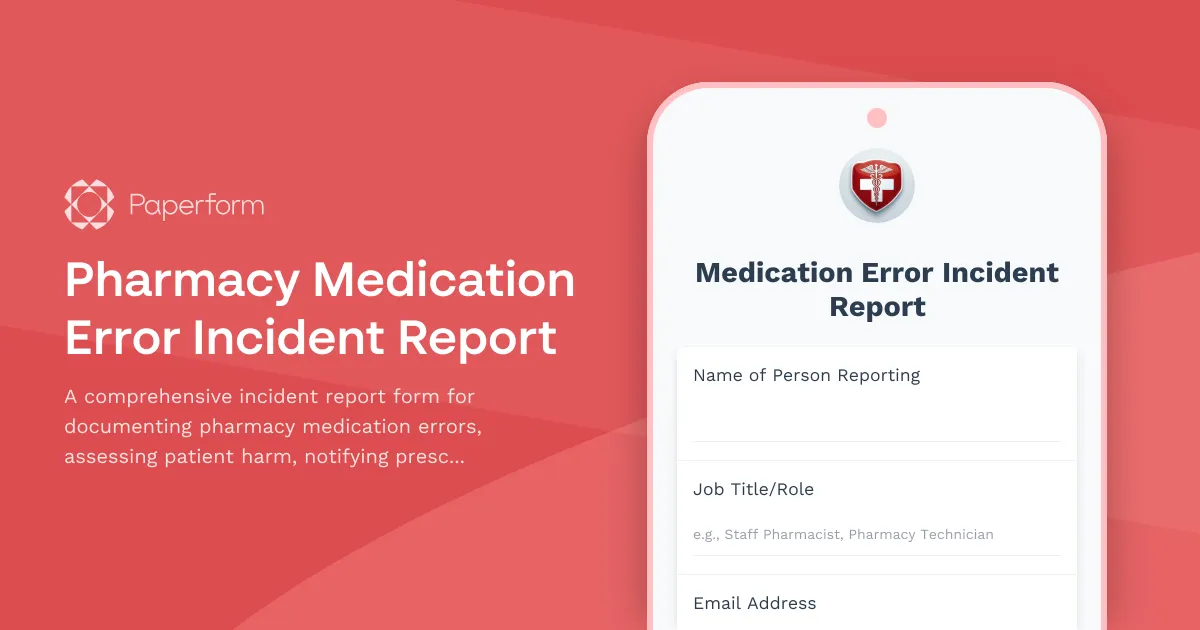
When medication errors occur in a pharmacy setting, swift and thorough documentation is critical for patient safety, regulatory compliance, and quality improvement. This Pharmacy Medication Error Incident Report template provides healthcare professionals with a structured, professional tool to capture every essential detail—from the nature of the error and patient harm assessment to prescriber notification and state board reporting requirements.
Designed specifically for pharmacies, hospital pharmacies, and healthcare systems, this template helps you standardize your incident reporting process, ensuring nothing falls through the cracks during high-pressure situations. The form guides reporters through clinical details, root cause identification, immediate actions taken, and follow-up requirements, creating a complete audit trail that supports both patient care and compliance.
Paperform's conditional logic automatically adapts the form based on error severity and harm level, showing relevant follow-up questions only when needed. You can route submissions directly to pharmacy managers, risk management teams, or quality assurance departments using Stepper (stepper.io) to trigger automatic notifications, task assignments, and escalation workflows based on incident severity.
For pharmacies managing multiple locations or requiring signature acknowledgments from reporting staff, Papersign (papersign.com) integration allows you to capture secure electronic signatures on incident reports, maintaining chain of custody and accountability throughout the investigation process.
Whether you're a community pharmacy, hospital pharmacy, long-term care facility, or retail pharmacy chain, this template helps you maintain SOC 2 Type II compliant documentation, support your continuous quality improvement program, and meet state board of pharmacy reporting obligations with professionalism and care.



More templates like this
Missing Psychiatric Hold Patient Report Form
A comprehensive form for healthcare facilities to report missing patients who left during an involuntary psychiatric hold period before their 72-hour evaluation, including danger assessment and legal authorization tracking.
Blood Bank Contamination Incident Report
A comprehensive form for reporting blood product contamination incidents, coordinating recalls, notifying hospitals, and documenting FDA adverse event reporting requirements.
Blood Donation Adverse Reaction Emergency Form
Report and manage adverse reactions during blood donation with immediate donor stabilization protocols, medical director consultation, and FDA reporting compliance.
Compounding Pharmacy Equipment Damage Claim Form
Report equipment damage, sterile environment breaches, and prescription production impacts with automated state board notifications and specialized pharmacy insurance coordination.
Methadone Clinic Diversion Incident Report
A comprehensive incident reporting form for methadone clinics to document suspected diversion, medication discrepancies, and controlled substance accountability with DEA notification protocols.
Behavioral Health Crisis Center Patient Elopement Report
A comprehensive elopement report form for behavioral health facilities to document missing patients, assess risk factors, and coordinate immediate response efforts with mobile crisis teams.
Cruise Ship Medical Incident Report
A comprehensive medical incident report form for cruise ship medical teams to document passenger incidents, ship doctor assessments, port facility coordination, and maritime law compliance.
Healthcare Facility Code Pink - Infant Abduction Response Form
Immediate response form for Code Pink infant abduction alerts in healthcare facilities. Streamlines law enforcement coordination, facility lockdown procedures, and Amber Alert assessment.
Immigration Detention Medical Unit Missing Detainee Report
A comprehensive form for reporting missing detainees with urgent medical needs from immigration detention facilities, enabling rapid coordination with ICE health services and humanitarian organizations.
Joint Commission Immediate Threat to Life Citation Report
A comprehensive form for healthcare facilities to document Joint Commission immediate threat to life (ITL) citations discovered during unannounced surveys, outline corrective actions, and address patient safety risks to maintain accreditation compliance.
Patient Advocate Imminent Harm Escalation Form
A critical escalation form for patient advocates to report imminent harm situations to hospital administration, ethics committees, and state ombudsman offices.
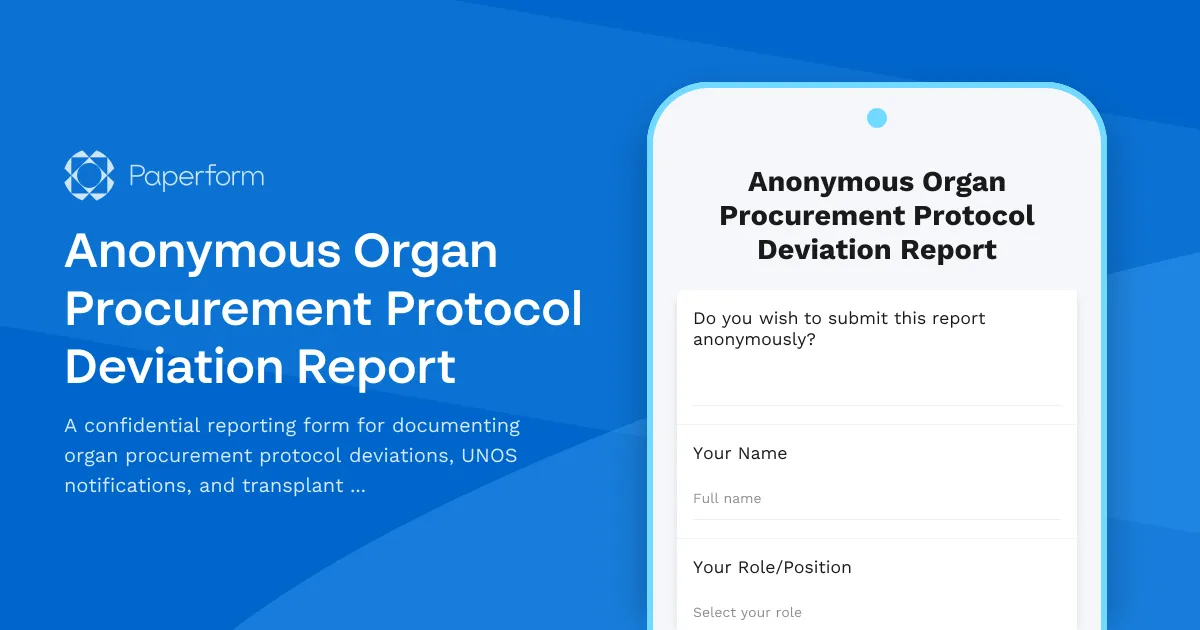
Anonymous Organ Procurement Protocol Deviation Report
A confidential reporting form for documenting organ procurement protocol deviations, UNOS notifications, and transplant safety concerns to ensure patient safety and regulatory compliance.