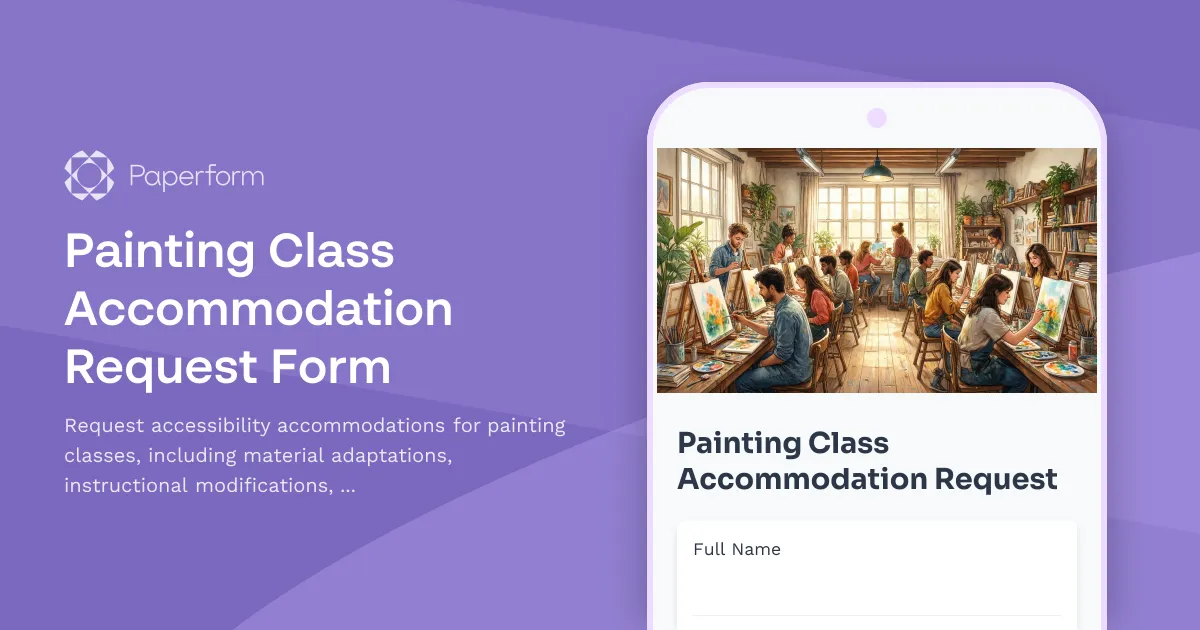
Painting Class Accommodation Request Form – Create an Inclusive Creative Space
Every artist deserves the opportunity to explore their creativity, regardless of physical ability or learning style. Our Painting Class Accommodation Request Form makes it simple for art studios, community colleges, adult education programs, and creative workshop facilitators to gather detailed accessibility needs and provide meaningful accommodations.
Whether you're running watercolour workshops, acrylic painting courses, or mixed-media classes, this template helps you understand each participant's unique requirements—from adaptive brushes and ergonomic easels to alternative instructional formats and sensory considerations.
Why Accessibility Matters in Creative Education
Art classes should be welcoming spaces where everyone can participate fully. Students may need modified materials due to fine motor challenges, alternative instruction methods for visual or hearing impairments, or workspace adjustments for wheelchair access or chronic pain conditions. By collecting accommodation requests proactively, you create an environment where all students can focus on their artistic growth rather than struggling with barriers.
This form helps you move beyond generic "let us know if you need help" statements to specific, actionable questions that uncover real needs—and demonstrate your genuine commitment to inclusive teaching.
What This Form Captures
The Painting Class Accommodation Request Form is designed to gather comprehensive information across several key areas:
Personal Information & Course Details: Basic contact information and the specific class or workshop the student is enrolling in, so you can coordinate accommodations with the right instructor and session.
Disability & Accessibility Overview: A respectful space for participants to describe their condition or disability in their own words, along with how it might impact their participation in painting activities. This helps instructors understand context without making assumptions.
Material Adaptations: Detailed questions about the tools and materials that would help each student succeed—adaptive brush grips, modified palettes, larger print colour charts, non-toxic or low-odour materials for chemical sensitivities, and more.
Instructional Format Modifications: Options for alternative instruction delivery, such as written handouts to supplement verbal demonstrations, closed captions for video content, one-on-one guidance, extra processing time, or simplified step-by-step instructions.
Workspace & Physical Accessibility: Questions about physical space needs, including wheelchair-accessible tables, adjustable easel heights, seating with back support, proximity to restrooms, reduced-stimulus work areas, and adequate lighting.
Communication Preferences: How the student prefers to receive instructions and feedback—whether that's visual demonstrations, verbal explanations, tactile guidance, or written materials.
Additional Support Needs: An open section for any other accommodations not covered elsewhere, such as service animal access, support person attendance, or break frequency.
Perfect for Art Studios, Educators, and Creative Programs
This template is ideal for:
- Art Studios & Galleries offering public painting workshops and classes
- Community Colleges & Adult Education Programs teaching visual arts courses
- Recreation & Parks Departments running accessible art programming
- Senior Centers providing creative enrichment activities
- Nonprofit Organizations offering therapeutic art programs
- Private Art Instructors committed to inclusive teaching practices
- Corporate Wellness Programs including creative workshops
- Rehabilitation Centers incorporating art therapy components
Seamlessly Integrate Accommodations into Your Workflow
With Paperform's conditional logic, you can create a form that adapts to each person's needs—showing relevant follow-up questions based on previous answers. For example, if someone indicates they need material adaptations, the form can expand to show specific options for different types of adaptive tools.
Once submitted, you can connect this form to your existing systems using Paperform's integrations or Stepper (stepper.io). Automatically notify instructors of accommodation needs, create preparation checklists for staff, update your registration database, and send confirmation emails to participants outlining the accommodations you'll provide. This ensures nothing falls through the cracks between registration and the first class session.
Compliance with Disability Rights and Best Practices
Collecting accommodation requests demonstrates your organization's commitment to compliance with the Americans with Disabilities Act (ADA), similar international legislation, and general accessibility best practices. By documenting requests and your response, you create a clear record of your inclusive practices.
The form is designed to ask about accommodations in respectful, person-first language, never requiring disclosure of specific diagnoses unless the participant chooses to share. This approach respects privacy while gathering the practical information needed to make meaningful adjustments.
Customizable for Your Teaching Style and Space
Every art program is different, and Paperform makes it easy to customize this template to your specific context. Add questions about your particular teaching methods, include photos of your studio space so students can identify accessibility features, or incorporate your class policies around materials and attendance.
You can also add payment fields if you charge accommodation fees (though best practice is to provide accommodations at no extra cost), or connect to your broader registration system using Stepper workflows to trigger automatic accommodation implementation processes.
Build Trust Through Proactive Accessibility
By providing a clear, comprehensive accommodation request form, you signal to prospective students that accessibility isn't an afterthought—it's woven into how you operate. This builds trust with the disability community and positions your program as a welcoming option for students who might have faced barriers elsewhere.
Many students hesitate to request accommodations because they worry about being burdensome or don't know what's possible. A detailed form educates participants about the types of support available and empowers them to advocate for what they need.
Get Started with Paperform Today
This Painting Class Accommodation Request Form template gives you a professional, compassionate starting point that you can launch in minutes and refine as you learn more about your students' needs. With Paperform's intuitive editor, you can adjust questions, add your branding, and embed the form directly on your website or share it as a standalone link.
Trusted by educational institutions and creative organizations worldwide, Paperform is SOC2 Type II & GDPR compliant, ensuring sensitive accommodation information is handled securely. Create a more inclusive creative space where every student can thrive—start with this template today.

More templates like this
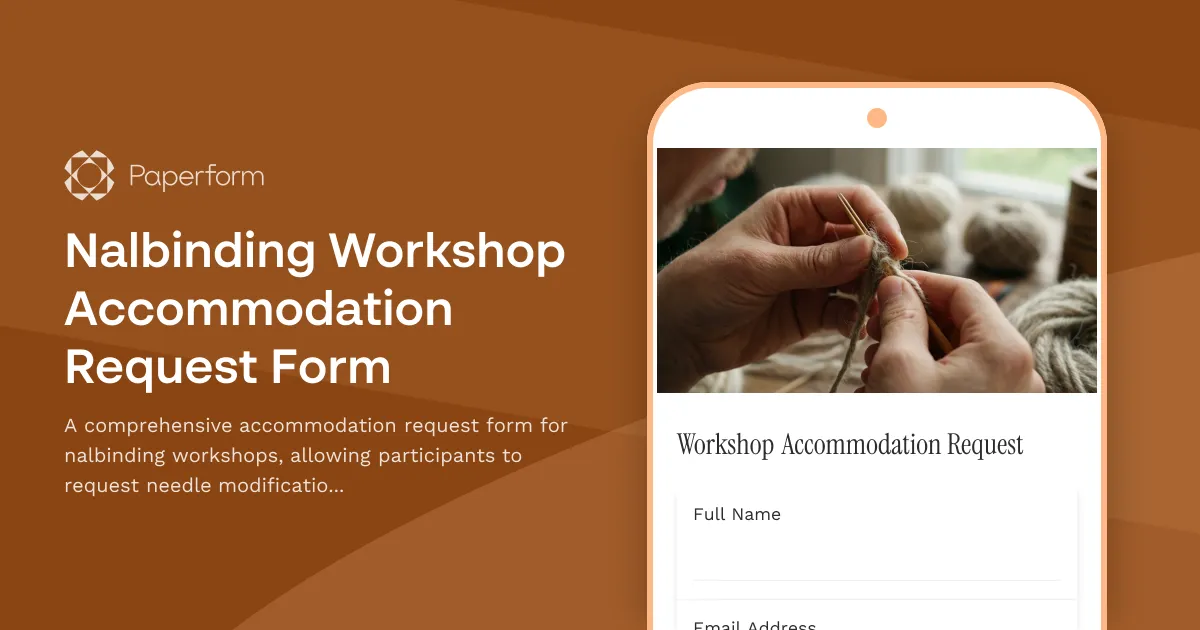
Nalbinding Workshop Accommodation Request Form
A comprehensive accommodation request form for nalbinding workshops, allowing participants to request needle modifications, material handling assistance, and alternative instruction methods to ensure an accessible learning experience.
Pyrography Workshop Accommodation Request Form
Request accessibility accommodations for pyrography workshops including tool modifications, workspace adjustments, and alternative instruction methods to ensure an inclusive creative experience.
Calligraphy Class Accommodation Request Form
Request accessibility accommodations for calligraphy classes including pen modifications, paper positioning adaptations, and preferred instruction formats to ensure an inclusive learning experience.
Embroidery Class Accommodation Request Form
Request accessibility accommodations for embroidery classes including adaptive equipment, workspace modifications, and alternative instruction methods to ensure an inclusive learning experience.
Enameling Workshop Accommodation Request Form
A comprehensive form for participants to request disability and accessibility accommodations for enameling workshops, including kiln accessibility needs, tool modifications, and instruction format preferences.
Ink Making Workshop Accommodation Request Form
Request accessibility accommodations for ink making workshops including workspace modifications, material handling assistance, and alternative instruction methods to ensure an inclusive creative experience.
Mosaic Art Class Accommodation Request Form
Request accessibility accommodations for mosaic art classes including workspace modifications, material handling assistance, and alternative instruction methods.
Oil Painting Class Accommodation Request Form
Request accommodations for oil painting classes including easel modifications, accessible materials, and alternative instruction methods to ensure an inclusive learning experience.
Origami Class Accommodation Request Form
A welcoming form for students to request accessibility accommodations for origami classes, including paper handling modifications, folding technique adaptations, and alternative instruction methods.
Tatting Class Accommodation Request Form
Request accommodations for tatting classes including shuttle modifications, pattern adaptations, and alternative instruction methods to ensure an accessible learning experience.
Vinyl Cutting Workshop Accommodation Request Form
Request disability and accessibility accommodations for vinyl cutting workshops, including equipment modifications, material handling assistance, and alternative instruction formats.
Yuzen Dyeing Workshop Accommodation Request Form
Request workspace modifications, material handling assistance, and instruction format preferences for participants in yuzen dyeing workshops to ensure an accessible and inclusive learning experience.