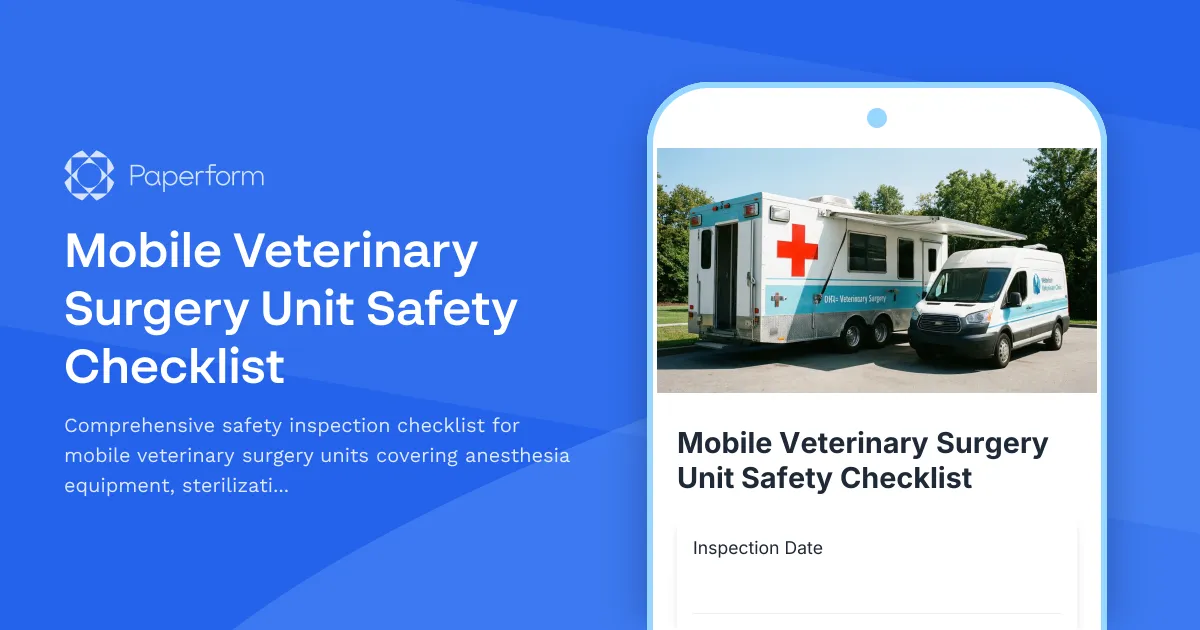
Mobile Veterinary Surgery Unit Safety Checklist: Ensure Compliance and Patient Safety On the Go
Operating a mobile veterinary surgery unit requires meticulous attention to safety protocols, equipment maintenance, and regulatory compliance. Unlike traditional brick-and-mortar clinics, mobile units face unique challenges—limited space, equipment transport risks, and the need for self-contained sterilization and waste management systems. A comprehensive safety checklist isn't just good practice; it's essential for protecting patients, staff, and maintaining your veterinary license.
This Mobile Veterinary Surgery Unit Safety Checklist template from Paperform provides veterinarians, veterinary technicians, and mobile practice managers with a structured, professional tool to conduct thorough safety inspections before every surgical day or as part of routine compliance audits.
Why Mobile Veterinary Units Need Specialized Safety Checklists
Mobile veterinary surgery units operate in dynamic environments, often traveling to farms, rural areas, or providing on-site care where traditional veterinary facilities aren't accessible. This mobility introduces specific safety considerations:
- Anesthesia equipment reliability: Ensuring vaporizers, ventilators, and monitoring devices function properly after transport
- Sterilization compliance: Maintaining autoclave effectiveness and proper instrument sterilization protocols in a mobile setting
- Medical gas storage safety: Securing oxygen, nitrous oxide, and other compressed gases to prevent leaks or hazards during transit
- Biohazard waste management: Properly containing and disposing of sharps, surgical waste, and contaminated materials when you're away from a central facility
- Emergency preparedness: Having fully stocked crash carts, patient stabilization equipment, and emergency drugs readily accessible
Regular safety inspections using a standardized checklist help mobile veterinary practices maintain consistent care standards, meet state veterinary board requirements, and protect against liability—all while building trust with clients who rely on your mobile services.
What's Included in This Mobile Veterinary Surgery Safety Checklist
This Paperform template covers all critical safety areas for mobile veterinary surgical units:
Anesthesia Equipment Testing: Document pre-surgical checks of anesthesia machines, vaporizers, breathing circuits, scavenging systems, and monitoring equipment (pulse oximetry, capnography, ECG, blood pressure monitors). Include leak tests, calibration verification, and backup equipment status.
Sterilization Compliance: Track autoclave functionality, biological indicator tests (spore tests), chemical indicators, sterilization logs, and proper packaging of surgical instrument packs. Ensure cold sterilization solutions are at proper concentrations and within expiration dates.
Medical Gas Storage & Safety: Verify oxygen tank levels, check for leaks in regulators and connections, confirm proper tank securing during transport, inspect backup oxygen supplies, and document any nitrous oxide or other medical gas storage protocols.
Biohazard Waste Disposal: Confirm sharps containers are properly sealed and not overfilled, verify biohazard bags are intact and correctly labeled, check that waste storage meets transportation regulations, and document disposal schedules and licensed waste management vendor information.
Emergency Patient Stabilization Equipment: Inspect crash cart inventory including emergency drugs (epinephrine, atropine, reversal agents), IV supplies, endotracheal tubes, ambu bags, warming devices, and oxygen supplementation equipment. Verify expiration dates and restocking needs.
Vehicle & Power Systems: Check generator function, electrical system safety, proper grounding, backup power availability, and vehicle maintenance that could affect equipment operation (HVAC for climate control, suspension for safe equipment transport).
Environmental Controls: Document temperature and humidity levels, proper ventilation, lighting adequacy for surgical procedures, and any environmental factors that could compromise sterility or patient safety.
Who Benefits from This Template
This mobile veterinary surgery safety checklist is designed for:
- Veterinarians operating mobile surgical practices serving rural, farm, or specialty on-site animal care
- Veterinary technicians responsible for surgical suite preparation and equipment maintenance
- Mobile veterinary practice managers overseeing compliance, safety protocols, and staff training
- Equine and large animal veterinarians performing field surgeries and emergency procedures
- Veterinary practices with mobile units extending services beyond their main clinic
- Veterinary surgery equipment suppliers supporting mobile unit setup and safety compliance
Why Use Paperform for Your Mobile Veterinary Safety Checklists
Paperform transforms traditional paper safety checklists into smart, efficient digital forms that work perfectly for mobile veterinary operations:
Work offline, sync later: Complete safety inspections even without internet connectivity (using the Paperform app), then sync your data when you're back in range—perfect for rural or remote locations.
Photo documentation: Use image upload fields to capture photos of equipment serial numbers, gauge readings, sterilization indicators, or any safety concerns that need visual documentation.
Conditional logic: Show or hide relevant checklist sections based on the type of procedures scheduled, equipment in use, or previous inspection findings—streamlining your workflow without sacrificing thoroughness.
Automatic timestamping: Every submission is automatically timestamped, creating a reliable compliance audit trail that demonstrates when inspections occurred and who performed them.
Digital signatures: Require veterinarians or lead techs to digitally sign off on completed inspections, adding accountability and meeting regulatory documentation requirements.
Instant notifications: Set up automatic email or Slack alerts when critical safety issues are identified (like failed sterilization tests or low oxygen supplies), ensuring immediate corrective action.
Integration with practice management: Use Stepper (stepper.io) to automatically create work orders when equipment repairs are needed, update your practice management system, or trigger equipment maintenance schedules based on safety inspection findings.
Build a Culture of Safety and Compliance
Beyond meeting regulatory requirements, consistent use of safety checklists builds a culture of excellence in mobile veterinary medicine. When your team knows that every piece of equipment is verified, every safety protocol is followed, and every potential hazard is addressed before surgery begins, confidence increases and preventable complications decrease.
This template helps standardize your safety protocols across multiple team members, vehicles, or service locations. New staff can be trained more effectively with clear checklist guidance, and experienced technicians ensure nothing gets overlooked—even during busy surgical schedules or emergency calls.
For multi-veterinarian practices, having digital safety records accessible in real-time means supervising veterinarians can monitor compliance across their mobile units, identify recurring equipment issues, and make informed decisions about equipment replacement or additional training needs.
Stay Ahead of Regulatory Compliance
State veterinary medical boards increasingly scrutinize mobile surgical practices, requiring the same standards of care and safety as traditional clinics. Digital safety inspection records provide the documentation needed during facility inspections or when renewing veterinary licenses.
By maintaining thorough, timestamped safety checklists, you demonstrate due diligence, professional standards, and commitment to patient welfare—critical factors if you ever face a complaint investigation or liability claim.
Get Started with Your Mobile Veterinary Safety Checklist
This Paperform template provides the foundation for professional mobile veterinary surgery safety management. You can customize field labels to match your specific equipment, add your practice logo and branding, and integrate with your existing workflow tools—all without writing a single line of code.
Start every surgical day with confidence, knowing your mobile unit meets the highest safety standards. Create systematic accountability, protect your patients and staff, and build the documentation trail that supports your commitment to excellence in mobile veterinary medicine.
Trusted by veterinary professionals worldwide, Paperform is SOC2 Type II & GDPR compliant, ensuring your sensitive inspection data and practice information remain secure.



More templates like this
Veterinary Clinic Safety Inspection Checklist
Comprehensive safety inspection checklist for veterinary clinics covering anesthesia equipment, radiation safety, zoonotic disease protocols, sharps disposal, and controlled substance storage compliance.
Veterinary Clinic Daily Report
A comprehensive daily report form for veterinary clinics to track appointments, surgical procedures, patient updates, inventory usage, and equipment maintenance in one organized document.
Compressed Gas Cylinder Storage Safety Checklist
A comprehensive safety inspection checklist for compressed gas cylinder storage areas, covering securing mechanisms, valve caps, separation protocols, ventilation, and gas compatibility.

Cryogenic Storage Facility Safety Inspection Checklist
Comprehensive safety inspection checklist for cryogenic storage facilities covering oxygen deficiency monitoring, pressure systems, PPE, emergency protocols, and thermal insulation integrity.

Elevator & Lift Safety Inspection Checklist
Comprehensive elevator and lift safety inspection form covering cable wear, emergency brakes, phone systems, weight capacity signage, and annual certification compliance for buildings and facilities.
Float Tank Facility Safety Checklist
Comprehensive safety inspection and compliance checklist for sensory deprivation float tank facilities covering water quality, equipment functionality, sanitation protocols, and client screening.
Gym Equipment Safety Inspection Checklist
Comprehensive equipment safety inspection form for gyms and fitness centers. Track machine functionality, weight plate integrity, cable wear, emergency stops, and floor conditions to ensure member safety and compliance.
Nuclear Facility Radiation Safety Inspection Checklist
Comprehensive radiation safety inspection checklist for nuclear facilities covering dosimeter calibration, contamination surveys, shielding integrity, emergency procedures, and waste storage compliance.
Pet Grooming Salon Safety Inspection Checklist
Comprehensive safety inspection checklist for pet grooming salons covering animal restraint equipment, electrical safety, ventilation, emergency protocols, and disinfection procedures to ensure compliance and animal welfare.
Pharmaceutical Cleanroom Safety Inspection Checklist
Comprehensive cleanroom safety and compliance checklist for pharmaceutical facilities, covering air pressure differentials, gowning procedures, chemical spill containment, emergency equipment testing, and contamination control verification.
Radiation Safety Inspection Form for X-ray and Gamma Ray Equipment
Comprehensive radiation safety inspection form for X-ray and gamma ray equipment, covering exposure monitoring, restricted area barriers, licensing verification, and compliance documentation.
Radiography & X-ray Facility Safety Inspection Checklist
Comprehensive safety checklist for radiography facilities covering radiation shielding, equipment calibration, badge monitoring, emergency protocols, and regulatory compliance.