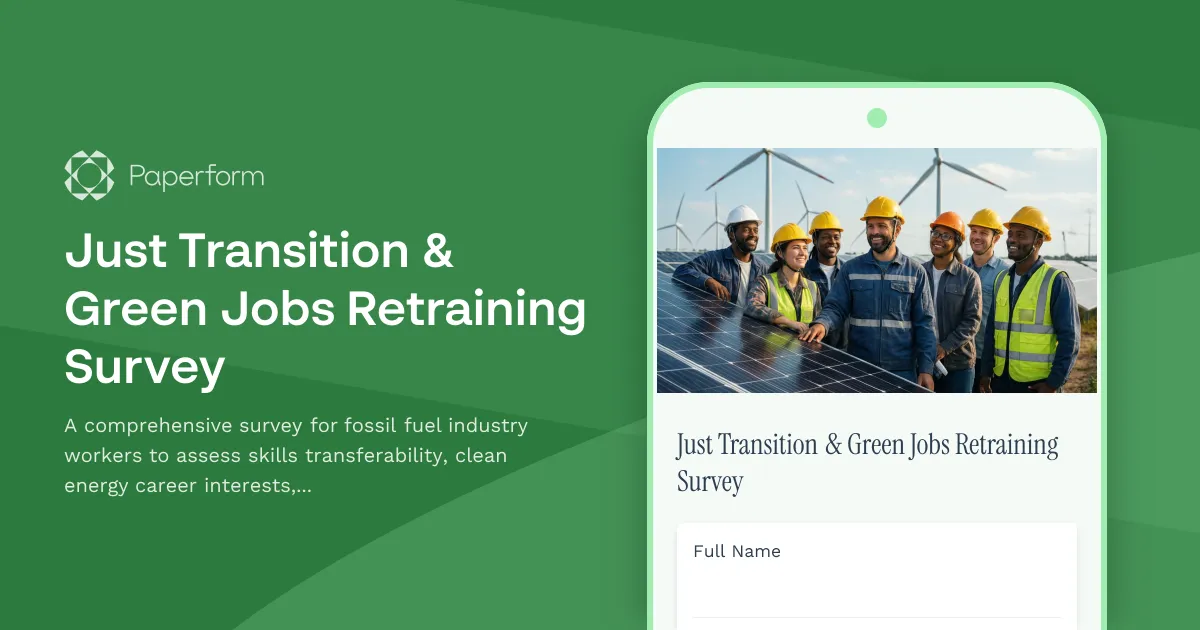
Support Your Workforce Through the Energy Transition
As companies in the energy sector navigate the shift toward renewable and sustainable operations, supporting your existing workforce through this transition is critical. This Just Transition & Green Jobs Retraining Survey helps HR teams, training coordinators, and organizational leaders understand how fossil fuel industry workers can successfully transition into clean energy careers.
Designed for Energy Sector Workforce Planning
This template is specifically built for companies managing workforce transitions in oil, gas, coal, and related industries. It helps you assess:
- Skills transferability from traditional energy roles to renewable sectors
- Career interests in solar, wind, battery storage, energy efficiency, and other green industries
- Educational support needs including preferred training formats, financial assistance requirements, and timeline considerations
- Barriers and concerns workers face when considering career transitions
Turn Insights into Action with Paperform
Built on Paperform's flexible platform, this survey gives you complete control over the employee experience. The doc-style editor lets you customize questions, add your company branding, and use conditional logic to show relevant follow-up questions based on workers' current roles and interests.
AI Insights can automatically analyze hundreds of responses to identify common skill gaps, popular career pathways, and recurring support needs—turning raw survey data into clear workforce development priorities.
Integrate with Your HR Systems
Connect this survey to your existing HR tech stack using Paperform's native integrations or Stepper workflows. Automatically route responses to your HRIS, trigger enrollment processes for approved training programs, or create follow-up tasks for career counselors based on individual needs. This ensures no worker falls through the cracks during organizational transitions.
Built for Empathy and Compliance
Just transition initiatives require sensitivity, transparency, and trust. Paperform's professional design capabilities help you create a survey that feels supportive rather than transactional. With SOC 2 Type II compliance and robust data security, you can confidently collect sensitive employment and training information while protecting worker privacy.
Whether you're planning a company-wide reskilling initiative, applying for government transition funding, or simply exploring how to support your workforce, this template provides the foundation for meaningful dialogue and effective planning.
More templates like this
Employee Cognitive Diversity & Thinking Style Assessment
Discover your team's cognitive diversity with this comprehensive thinking style assessment. Identify problem-solving approaches, optimize team composition, and personalize collaboration strategies for better engagement and performance.
Employee Performance Support and Coaching Frequency Preference Survey
A survey to understand employee preferences for one-on-one meetings, feedback frequency, and coaching depth to optimize performance support and development conversations.
Employee Resource Group (ERG) Participation Survey
Gather employee feedback on ERG participation, affinity group interests, event attendance, and leadership opportunities to strengthen workplace diversity and inclusion initiatives.
Performance Improvement Plan (PIP) Feedback Form
Gather confidential feedback on the PIP process to assess goal clarity, support adequacy, and fairness perception from employees and managers.
Professional Development Needs Assessment
A comprehensive survey to identify skill gaps, training preferences, and career development goals. Help your team grow with targeted professional development opportunities.
Skills-Based Hiring & Credential Flexibility Survey
Gather employee feedback on the shift toward skills-based hiring, degree requirement elimination, competency assessments, and promotion equity to inform fair and inclusive talent practices.
Apprenticeship & Internship Program Evaluation Form
Evaluate your apprenticeship or internship program with this comprehensive feedback form. Assess mentorship quality, hands-on learning opportunities, skill development, and potential for conversion to full-time roles.
Company Core Hours and Flexible Schedule Policy Feedback Survey
Gather employee feedback on flexible work schedules, core hours policy, meeting coordination challenges, and autonomy satisfaction to optimize workplace collaboration and work-life balance.
Company Crisis Childcare and School Closure Emergency Support Survey
Gather employee feedback on childcare challenges, backup care needs, and work-from-home productivity during school closures or emergencies. Assess family support policies and identify areas for improvement.
Company Data Privacy and GDPR Compliance Training Survey
Measure the effectiveness of your data privacy and GDPR compliance training. Assess employee confidence in data handling, understanding of compliance requirements, and identify knowledge gaps to strengthen your organisation's data protection culture.
Company Green Commute and Sustainability Incentives Survey
Measure employee participation in sustainable commuting programs and gather feedback on bike-to-work incentives, EV charging stations, public transit subsidies, carpooling programs, and environmental impact awareness.
Company Procurement and Vendor Diversity Survey
Gather employee insights on procurement practices, vendor diversity initiatives, and supplier selection transparency to build a more equitable and locally-focused supply chain.