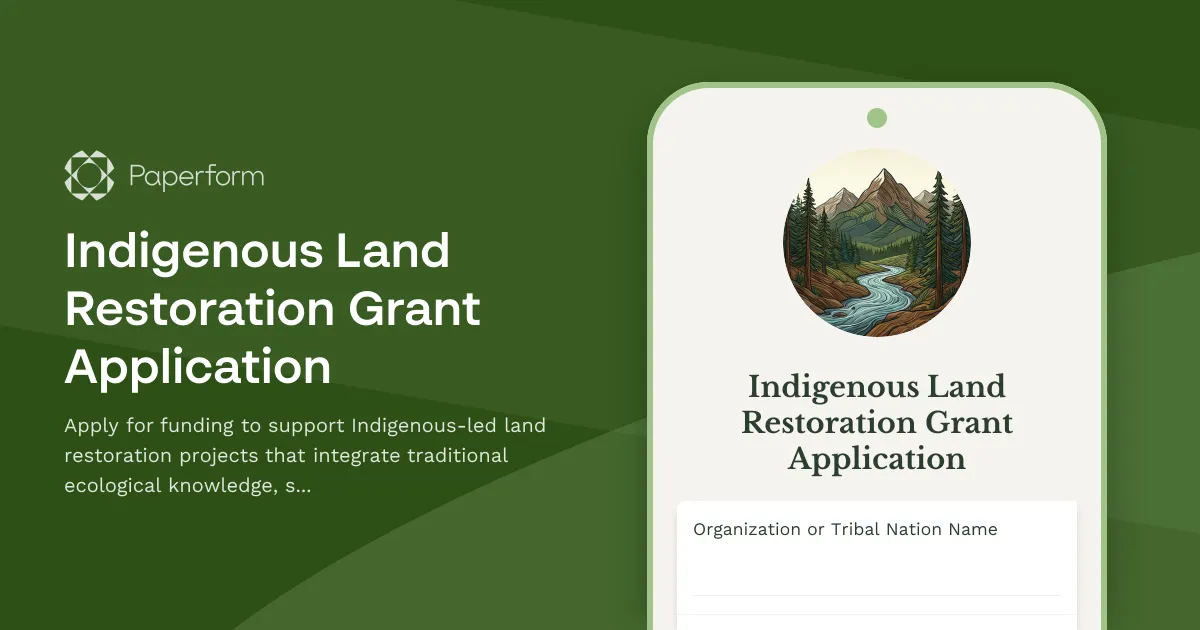
Indigenous Land Restoration Grant Application Template
Preserving and restoring Indigenous lands requires funding that respects traditional ecological knowledge while supporting modern conservation science. This Indigenous Land Restoration Grant Application template helps tribes, Indigenous organizations, and land stewardship groups apply for grants that honor ancestral practices and promote ecosystem health.
Why Indigenous-Led Land Restoration Matters
Indigenous communities have been the original stewards of their lands for thousands of years, developing sophisticated ecological management practices that sustained biodiversity and resilience. Today, many restoration projects recognize that traditional ecological knowledge (TEK) offers critical insights that Western science alone cannot provide. From controlled burns that prevent catastrophic wildfires to species reintroduction programs guided by cultural relationships, Indigenous-led restoration projects deliver both ecological and cultural benefits.
However, accessing grant funding often requires navigating complex application processes designed without Indigenous values or workflows in mind. This template bridges that gap, providing a structured yet respectful application format that captures the full scope of restoration work while honoring tribal sovereignty and cultural protocols.
What This Template Captures
This comprehensive grant application form collects all the essential information funders need to evaluate Indigenous land restoration proposals:
Organizational and Tribal Information: Verify applicant eligibility, tribal affiliation or partnership status, land jurisdiction, and organizational capacity to manage grant funds and execute restoration work.
Project Overview and Objectives: Define the restoration goals, geographic scope, timeline, and how the project aligns with both ecological science and traditional values. The form captures measurable outcomes while respecting that some benefits—cultural revitalization, intergenerational knowledge transfer, spiritual connection—cannot be quantified in conventional metrics.
Traditional Ecological Knowledge Integration: Document how TEK will guide the restoration approach, which elders or knowledge keepers will be consulted, and how cultural protocols will be respected throughout the project. This section recognizes that TEK is not simply "data" to be extracted but living knowledge that requires proper permissions and relationship-building.
Species Reintroduction Plans: For projects involving wildlife or plant reintroduction, gather details on target species, cultural significance, habitat preparation, monitoring plans, and how traditional practices will support population recovery.
Fire Management Strategies: Many Indigenous restoration projects incorporate cultural burning practices that reduce fuel loads, promote native species, and honor ancestral fire stewardship. The form captures fire management techniques, safety protocols, training plans, and coordination with local fire authorities.
Community and Tribal Consultation: Detail how the project will involve community members, ensure broad tribal support, and incorporate feedback throughout implementation. This includes outreach plans, decision-making structures, and benefit-sharing arrangements.
Budget and Sustainability: Outline funding requirements, matching contributions, long-term maintenance plans, and how the project will continue beyond the grant period. This recognizes that restoration is a multi-generational commitment, not a one-time intervention.
Who This Template Is For
This grant application template serves several audiences:
Tribal governments and Indigenous nations seeking funding for restoration projects on ancestral or currently managed lands. The form respects tribal sovereignty while providing the documentation that federal, state, or private funders typically require.
Indigenous nonprofit organizations and land trusts working in partnership with tribes to restore culturally significant ecosystems, from salmon-bearing streams to traditional gathering areas.
Intertribal conservation consortiums coordinating landscape-scale restoration across multiple tribal territories, requiring collaboration and shared stewardship frameworks.
Indigenous-led research institutes developing restoration methodologies that center TEK and train the next generation of Indigenous ecologists, foresters, and fire practitioners.
Grant-making foundations, government agencies, and conservation organizations can adapt this template for their specific funding programs, ensuring application processes are culturally appropriate and accessible to Indigenous applicants.
The Paperform Advantage for Indigenous Grant Applications
Applying for restoration grants shouldn't require navigating confusing portals or submitting disconnected documents. Paperform lets you build a grant application that feels respectful, clear, and accessible—more like a meaningful conversation than bureaucratic paperwork.
Culturally appropriate design: Use Paperform's flexible design tools to incorporate Indigenous artwork, land acknowledgments, and visual elements that honor the communities you serve. Choose colors, fonts, and imagery that reflect cultural values rather than generic corporate templates.
Conditional logic for diverse project types: Not every restoration project includes fire management or species reintroduction. Use conditional fields to show only relevant questions based on project scope, reducing burden on applicants and keeping the form focused.
File uploads for supporting documentation: Let applicants attach letters of support from tribal councils, maps of project areas, TEK documentation protocols, partnership agreements, and resumes—keeping everything in one organized submission.
Accessible on any device: Tribal members and project coordinators can complete the application from smartphones or tablets, whether they're on the land, in community meetings, or working from areas with limited internet access. Paperform saves progress automatically, so applicants can return to their application over days or weeks.
Secure data handling: Grant applications often contain sensitive information—sacred site locations, traditional knowledge, tribal government documents. Paperform is SOC 2 Type II compliant and provides secure submission handling that respects cultural protocols around information sharing.
Integration with review workflows: Once applications are submitted, use Stepper (stepper.io) to route them through multi-stage review processes, notify evaluation committees, and track decisions through approval—all without losing any cultural context or documentation.
Expanding the Template for Your Needs
While this template provides a comprehensive foundation, Indigenous land restoration projects are diverse and regionally specific. You might adapt this form to include:
- Language preservation questions for projects that include place-name restoration or educational signage in Indigenous languages
- Climate adaptation strategies detailing how restoration work addresses changing precipitation, temperature, or extreme weather patterns
- Water rights and watershed restoration sections for salmon recovery, wetland rehabilitation, or riparian zone projects
- Partnership and co-management agreements with federal or state land agencies for projects on public lands within traditional territories
- Youth and education components showing how the project will train young people in traditional practices and ecological monitoring
- Carbon credit or ecosystem services considerations, if relevant, while ensuring tribes retain sovereignty over such programs
Building Equitable Funding Systems
For too long, conservation funding has flowed primarily to non-Indigenous organizations working on Indigenous lands, or required tribes to adopt Western-only approaches that discount millennia of successful stewardship. This is changing as funders increasingly recognize that the most effective land restoration happens when Indigenous peoples lead the work.
By using this template, grant-makers signal that they value traditional ecological knowledge alongside scientific methods, respect tribal consultation processes, and understand that restoration timelines must honor ecological and cultural cycles, not just funding calendars.
For applicants, this template helps you present your vision clearly while maintaining cultural integrity—demonstrating that your project is both scientifically sound and deeply rooted in place-based knowledge that has sustained these lands since time immemorial.
Ready to Get Started?
Whether you're a tribal government launching a watershed restoration initiative, a foundation designing an Indigenous conservation grants program, or an intertribal organization building capacity for traditional fire stewardship, this Indigenous Land Restoration Grant Application template gives you a respectful, organized starting point.
With Paperform's intuitive form builder, you can customize questions, adjust workflows, add multimedia guidance, and create an application experience that honors the significance of this work. And because Paperform plays nicely with your existing tools—from Google Drive to CRMs to project management platforms—you can keep everything connected as you move from application through project implementation.
Restoring Indigenous lands is about healing ecosystems, revitalizing cultures, and ensuring future generations inherit the landscapes their ancestors protected. Start with a grant application that reflects that sacred responsibility.

More templates like this
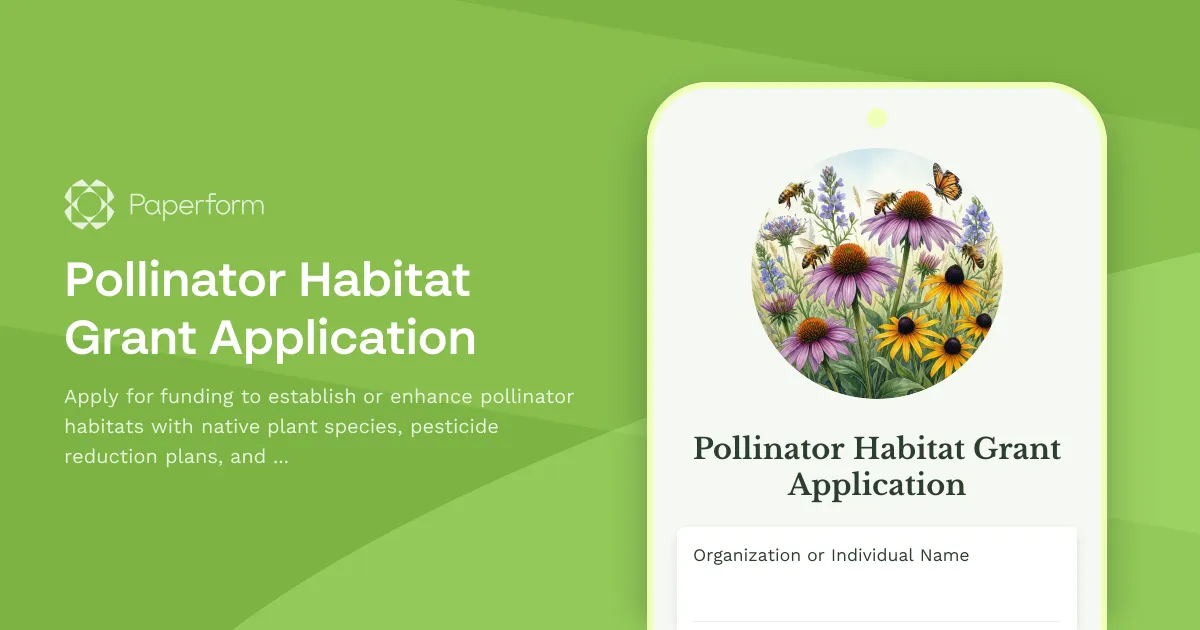
Pollinator Habitat Grant Application
Apply for funding to establish or enhance pollinator habitats with native plant species, pesticide reduction plans, and community education components.
Watershed Protection Grant Application
Apply for funding to protect and restore local watersheds through stream monitoring, riparian restoration, stormwater upgrades, and agricultural runoff controls.
Climate Adaptation Grant Application
Apply for climate adaptation funding with comprehensive vulnerability assessment, resilience strategies, stakeholder consultation records, and monitoring framework documentation.
Coastal Restoration Grant Application
Apply for funding to restore coastal ecosystems with erosion control, native species replanting, dune stabilization, and hurricane resilience projects.
Community Composting Grant Application
Apply for grant funding to establish or expand community composting programs. Includes project scope, collection logistics, composting methodology, distribution plans, and sustainability measures.
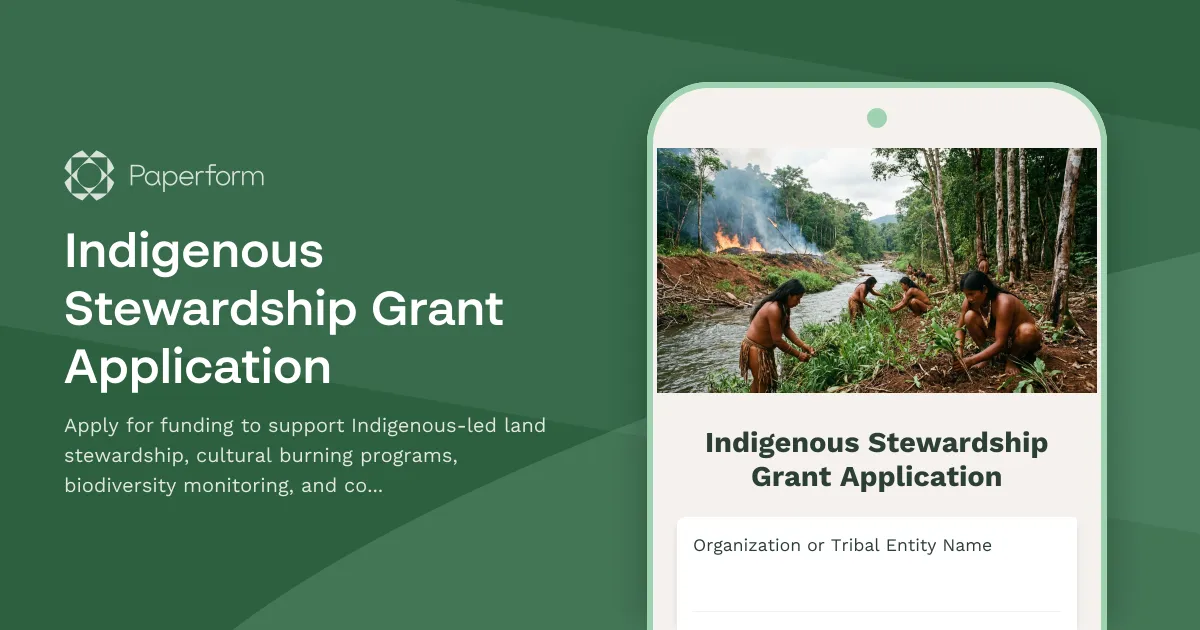
Indigenous Stewardship Grant Application
Apply for funding to support Indigenous-led land stewardship, cultural burning programs, biodiversity monitoring, and co-management initiatives on traditional territories.
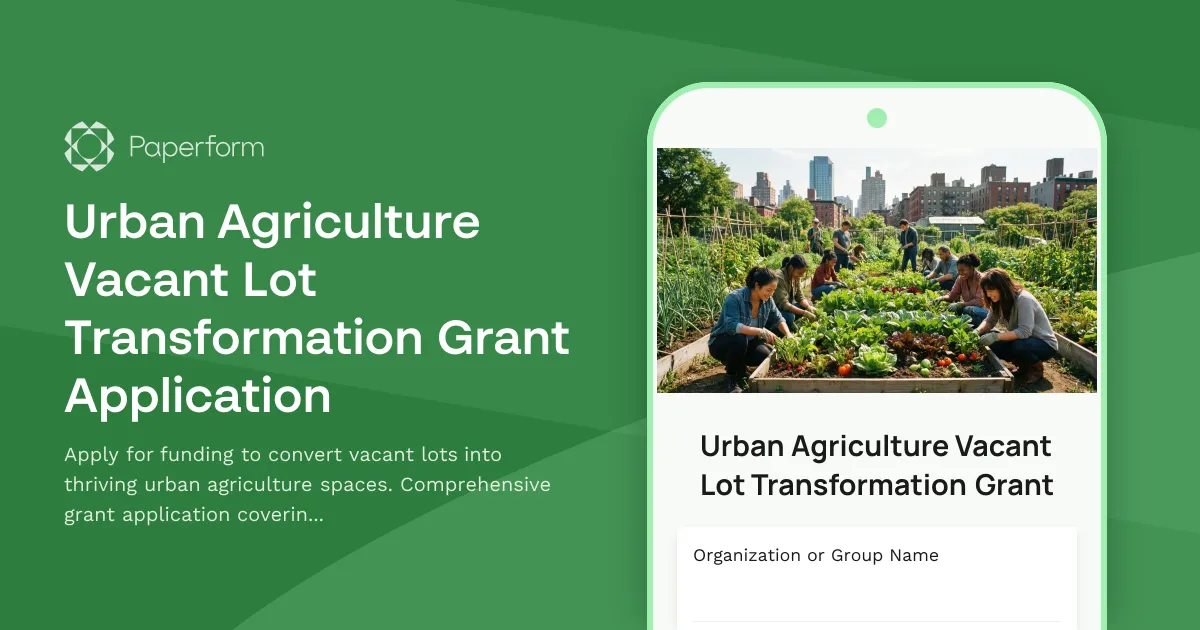
Urban Agriculture Vacant Lot Transformation Grant Application
Apply for funding to convert vacant lots into thriving urban agriculture spaces. Comprehensive grant application covering land acquisition, soil remediation, growing infrastructure, community gardens, and food access improvements.
Aquatic Invasive Species Management Scholarship Application
A comprehensive scholarship application for students pursuing careers in aquatic invasive species management, with focus on ecology, rapid response, and conservation work.
Climate Justice Grant Application
A comprehensive grant application form for climate justice initiatives focused on frontline community leadership, environmental health, just transition planning, and policy advocacy.
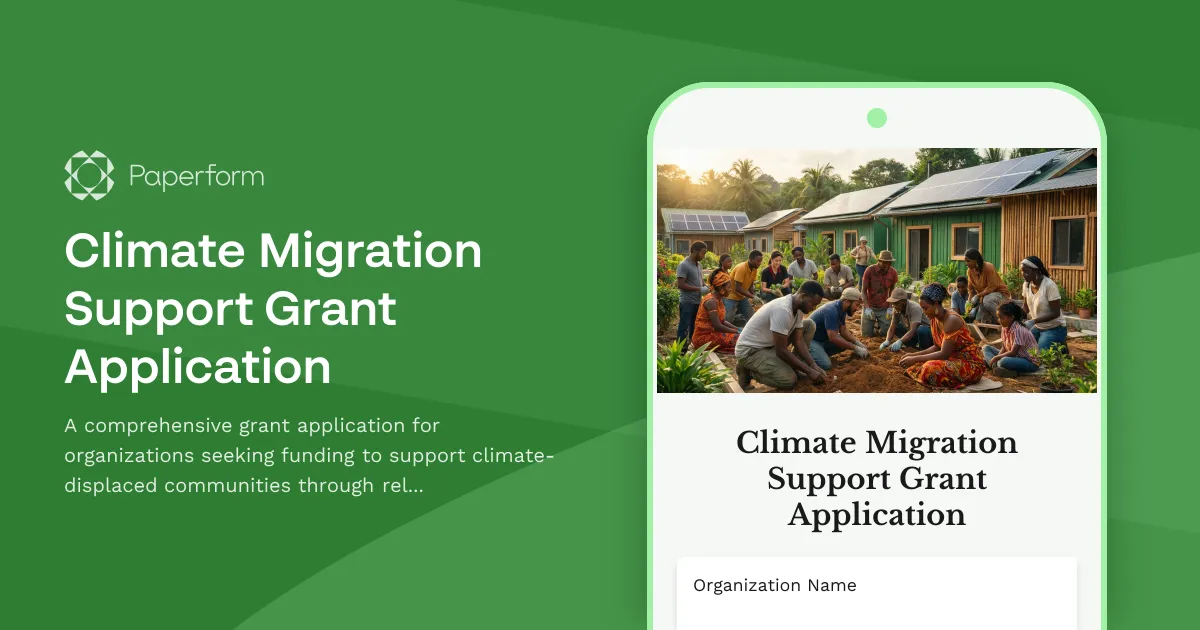
Climate Migration Support Grant Application
A comprehensive grant application for organizations seeking funding to support climate-displaced communities through relocation assistance, cultural preservation, community reception planning, and trauma-informed services.
Community-Owned Energy Grant Application
A comprehensive grant application form for renewable energy cooperatives seeking funding for community-owned energy projects with energy democracy principles, just transition programs, and rate affordability protections.
Criminal Justice Reform Grant Application
Apply for criminal justice reform funding to support diversion programs, data collection systems, and racial equity initiatives in your community.