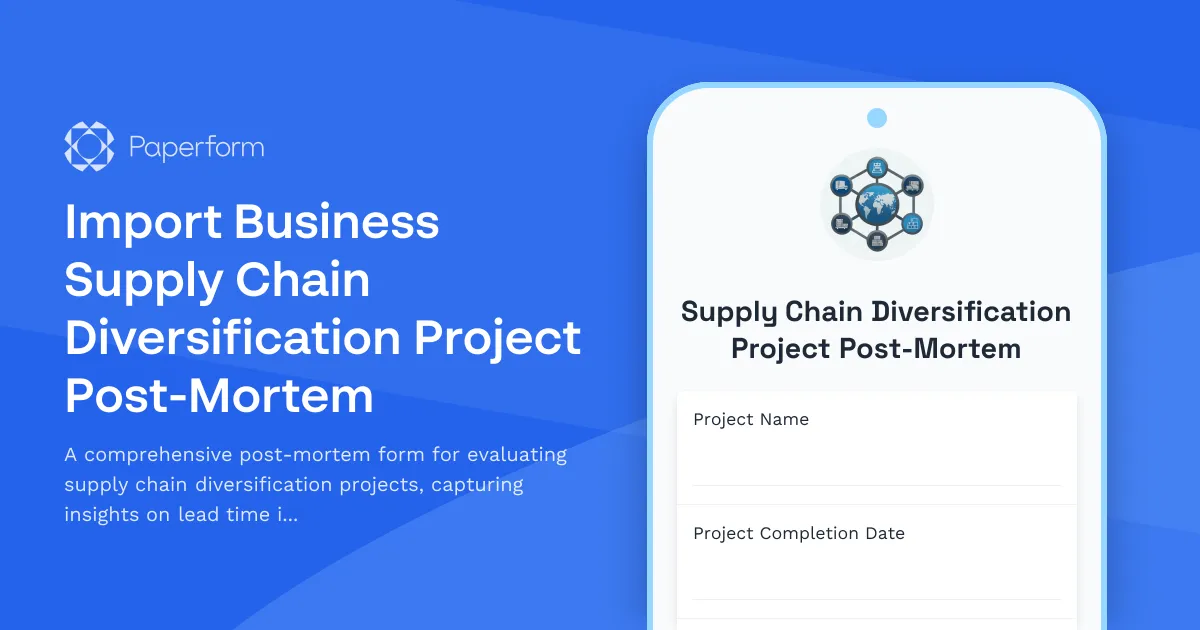
Strengthen Your Supply Chain with Structured Post-Mortem Analysis
Supply chain diversification projects are complex, high-stakes initiatives that can transform your business operations. Whether you've recently onboarded new suppliers, shifted manufacturing locations, or restructured your procurement strategy, capturing what worked—and what didn't—is essential for continuous improvement.
This Import Business Supply Chain Diversification Project Post-Mortem template helps operations managers, supply chain directors, and project teams document critical insights around lead time improvements, cost reductions, quality consistency, and stakeholder collaboration. By systematically reviewing your diversification project, you'll build a knowledge base that makes future supply chain transformations faster, smoother, and more successful.
Who This Template Is For
This template is designed for import/export businesses, wholesale distributors, manufacturers, and procurement teams who have completed a supply chain diversification initiative and need to capture lessons learned before institutional knowledge fades. It's particularly valuable for operations managers, supply chain analysts, logistics coordinators, and project managers responsible for vendor relationships and continuous improvement.
What Makes This Template Effective
Rather than relying on scattered emails and meeting notes, this form creates a single source of truth for your project retrospective. It walks your team through key performance indicators—lead time changes, cost impacts, quality metrics, and implementation challenges—while leaving space for qualitative insights that numbers alone can't capture.
The structured format ensures you don't miss critical evaluation areas, from vendor communication and compliance documentation to internal team collaboration and technology integration. With conditional logic, the form adapts to your project's specific outcomes, diving deeper into areas that need attention.
Automate Your Post-Mortem Workflow with Stepper
Once your team submits their retrospective insights, you can use Stepper to automatically route findings to the right stakeholders. Create workflows that compile post-mortem responses into executive summaries, notify procurement teams of recommended process changes, update your supplier evaluation database, or trigger follow-up meetings when critical issues are flagged. By connecting your Paperform submissions to your project management tools, CRM, or internal wikis, you ensure that lessons learned actually inform future decisions rather than sitting in a forgotten folder.
Built for Real Supply Chain Challenges
Paperform's calculation fields and conditional logic make it easy to quantify improvements—compare baseline vs. achieved lead times, calculate cost reduction percentages, and track quality metrics—all within the same form. The doc-style editor lets you add context with embedded images, supplier comparison charts, or reference documents, creating a retrospective that's as detailed as it needs to be.
Whether you're a growing eCommerce business diversifying away from single-source risk, a manufacturer reshoring production, or a distributor expanding your vendor network, this template turns project hindsight into actionable foresight. Start building a culture of continuous improvement in your supply chain operations with Paperform's flexible, no-code platform trusted by operations teams worldwide.


More templates like this
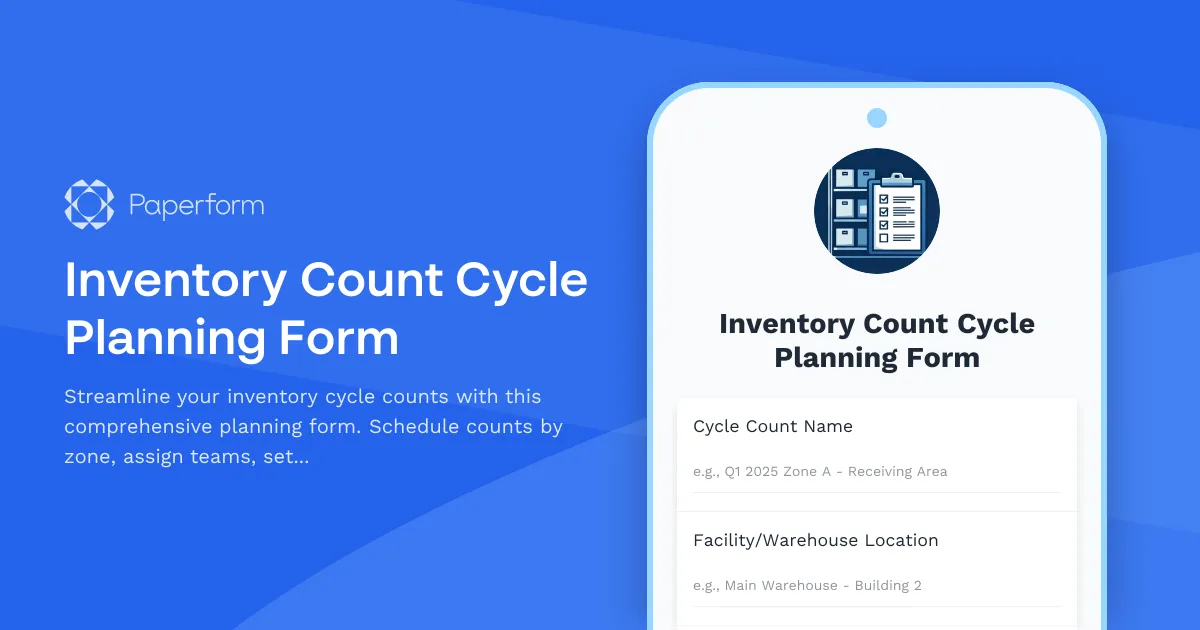
Inventory Count Cycle Planning Form
Streamline your inventory cycle counts with this comprehensive planning form. Schedule counts by zone, assign teams, set variance thresholds, and establish clear reconciliation procedures for accurate stock management.
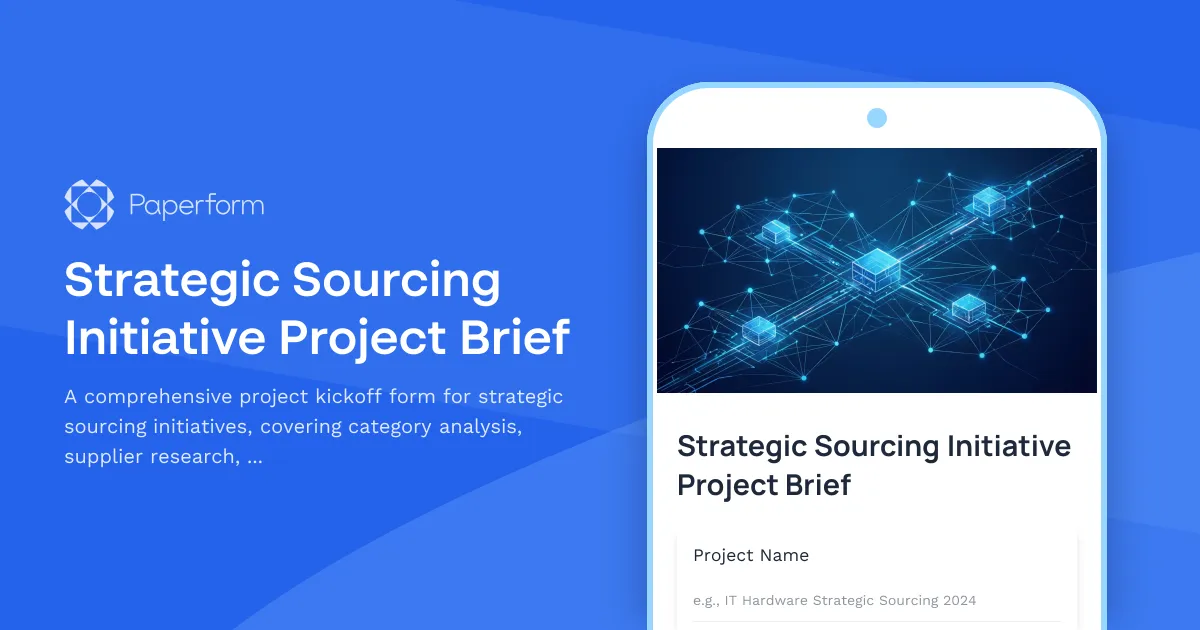
Strategic Sourcing Initiative Project Brief
A comprehensive project kickoff form for strategic sourcing initiatives, covering category analysis, supplier research, RFP development, evaluation criteria, and contract management planning.
Trade Compliance Scope of Work Form
A comprehensive trade compliance scope of work template for managing classification reviews, licensing requirements, restricted party screening, audit preparation, and training programs.
Environmental Compliance Program Implementation Post-Mortem
Comprehensive post-implementation review form for environmental services compliance programs, tracking violation reduction, audit readiness improvements, and cost avoidance metrics.
Environmental Sustainability Initiative Post-Mortem Form
A comprehensive retrospective form for evaluating sustainability initiatives, measuring carbon reduction, cost savings, stakeholder engagement, and capturing lessons learned for future green projects.
Export Compliance Program Implementation Retrospective
Comprehensive retrospective form for evaluating export compliance program effectiveness, violation prevention measures, documentation accuracy, and customs clearance efficiency post-implementation.

Import/Export Coordinator Competency Matrix
Assess import/export coordinator competencies across customs regulations, documentation systems, logistics coordination, trade compliance, and international shipping procedures to identify training needs and skill gaps.
Product Launch Inventory Allocation Form
Strategically allocate product inventory across sales channels, set safety stock levels, plan for promotional campaigns, and establish replenishment triggers for successful product launches.
Product Sourcing Trip Planning Form
Plan and organize your supplier sourcing trips with structured visit schedules, evaluation criteria, sample tracking, and negotiation objectives to maximize productivity and supplier relationships.
Product Vendor Relationship Health Assessment Form
Evaluate vendor partnerships with ratings on communication, responsiveness, product quality, and partnership opportunities. Identify strengths and escalate concerns to maintain healthy supplier relationships.
Production Kanban Card Request Form
A lean manufacturing form for requesting and managing kanban cards with part numbers, reorder quantities, supplier details, and lead time tracking to optimize production flow.
Regenerative Supply Chain Initiative Stakeholder Briefing
A comprehensive briefing form for communicating regenerative supply chain initiatives to key stakeholders, covering supplier engagement, traceability, impact metrics, cost analysis, and brand differentiation opportunities.