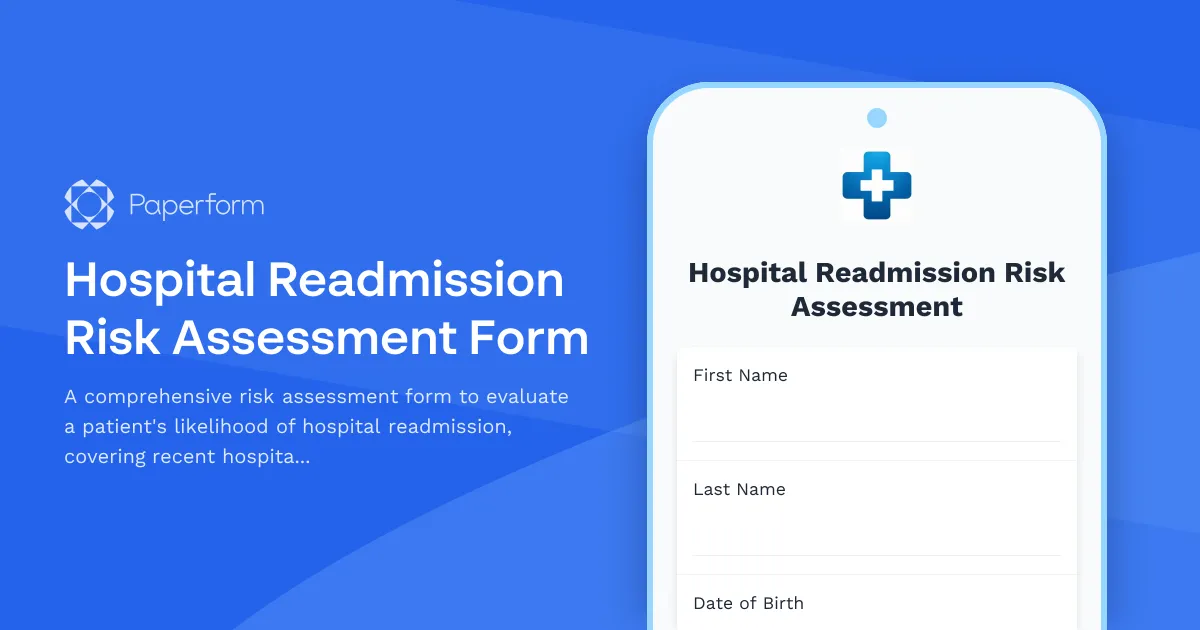
Hospital Readmission Risk Assessment Form
Hospital readmissions are a critical concern for healthcare providers, patients, and families alike. When patients return to the hospital within 30 days of discharge, it often signals gaps in care coordination, medication management, or home support systems. This Hospital Readmission Risk Assessment Form helps healthcare teams identify at-risk patients early and implement targeted interventions to prevent unnecessary readmissions.
Why This Form Matters
Reducing readmission rates isn't just about compliance with healthcare quality metrics—it's about better patient outcomes. This form systematically evaluates key risk factors including recent hospitalization details, medication comprehension, availability of home support, and the patient's ability to recognize early warning signs. By capturing this information in a structured, easy-to-complete format, care teams can make informed decisions about discharge planning, follow-up care, and patient education.
Built for Healthcare Workflows
Created with Paperform, this template gives hospitals, clinics, and home health agencies a professional, HIPAA-aware solution that integrates seamlessly into existing workflows. Use conditional logic to surface relevant follow-up questions based on risk indicators, and connect the form to your EHR, patient management system, or care coordination tools via Paperform's robust integrations.
The clean, accessible design ensures patients or caregivers can complete the assessment without confusion, while healthcare staff receive clear, actionable data that can be reviewed during discharge planning or post-discharge follow-up calls.
Automate Care Coordination with Stepper
Once a patient submits their assessment, use Stepper to automatically route high-risk cases to care coordinators, schedule follow-up appointments, trigger medication education resources, or alert social workers about patients who lack adequate home support. This level of automation ensures no patient falls through the cracks during the critical post-discharge period.
Who This Template Is For
This form is ideal for:
- Hospital discharge planners managing transitions of care
- Primary care physicians conducting post-hospitalization follow-ups
- Home health agencies assessing patient readiness for independent recovery
- Care coordinators identifying patients who need additional support
- Quality improvement teams tracking readmission risk factors across patient populations
Paperform is trusted by over 500,000 healthcare teams worldwide and is SOC 2 Type II compliant, ensuring your patient data is handled with the highest security standards. Start reducing readmissions and improving patient outcomes with this comprehensive assessment template.



More templates like this
Geriatric Medicine Comprehensive Assessment Form
A thorough new patient intake form for geriatric medicine practices covering medical history, fall risk screening, cognitive assessment, medication reconciliation, functional status, and advance care planning.

Hospice Care Discovery Form
A compassionate intake form for hospice care providers to assess patient needs, medical status, symptom management requirements, spiritual preferences, and family support services.
Palliative Care New Patient Intake Form
A comprehensive intake form for new palliative care patients to document medical history, symptom management needs, advance care planning, spiritual preferences, and caregiver information.
Addiction Treatment Center Intake Form
A comprehensive intake form for addiction treatment centers to collect essential patient information, substance use history, withdrawal symptoms, previous treatment attempts, and recovery support systems.
Addiction Treatment Program Admission Approval Form
Streamline admission requests for addiction treatment programs with clinical assessment, insurance verification, bed availability checks, and clinical director authorization in one comprehensive form.
Geriatric Care Assessment Appointment Form
Schedule a comprehensive geriatric care assessment appointment with cognitive screening, fall risk evaluation, medication review, and caregiver support assessment.
Healthcare Care Transition Coach Patient Survey
A comprehensive post-discharge survey to assess hospital-to-home transition support, medication management, follow-up care coordination, and patient understanding of warning signs requiring immediate medical attention.
Heart Failure Symptom Monitoring Form
A comprehensive pre-visit assessment form for heart failure patients to track symptoms, weight changes, edema, and medication adherence between appointments.
Home Healthcare Patient Enrollment Form
Comprehensive enrollment form for home healthcare services with mobility assessment, home safety evaluation, medication needs, and caregiver training requirements.
Hospice Care Admission and Consent Form
A comprehensive hospice care admission form to collect patient information, treatment consent, DNR preferences, pain management options, HIPAA authorization, and end-of-life care decisions with family notification settings.
Hospice Patient Emergency Contact Form
A comprehensive hospice emergency contact form that captures patient comfort care preferences, spiritual support details, funeral arrangements, and family notification hierarchy for end-of-life care coordination.
Hospital Discharge Planning Assessment Form
Comprehensive discharge planning form for healthcare providers to assess post-acute care needs, medical equipment requirements, home modifications, and caregiver training for patients transitioning from hospital to home or facility care.