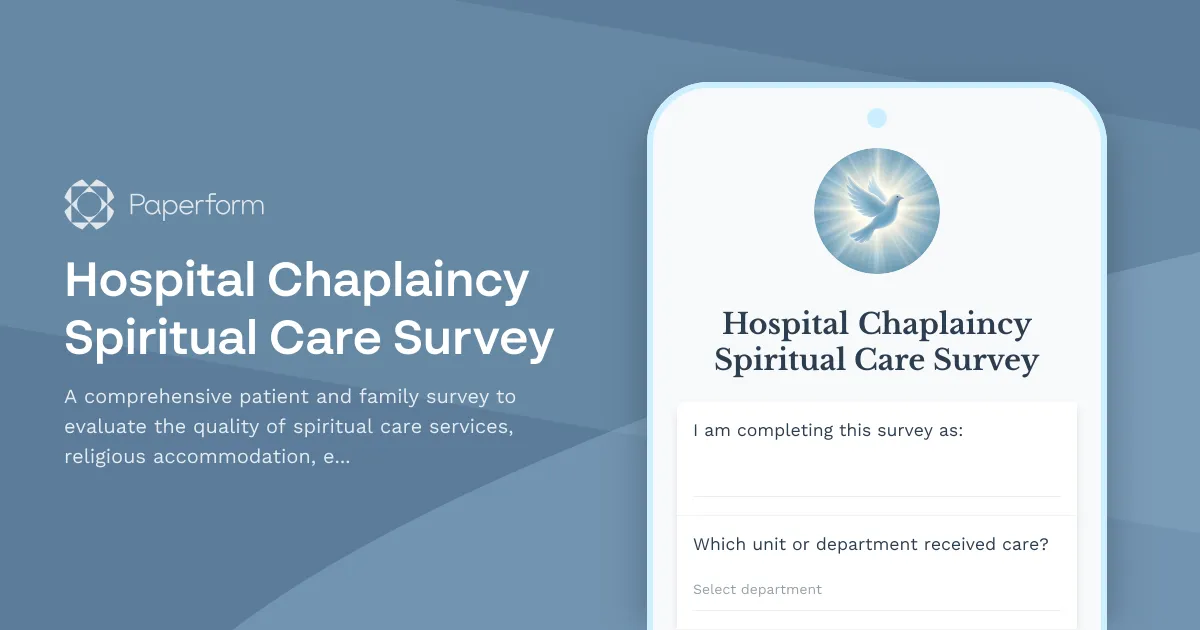
Hospital chaplaincy services play a vital role in holistic patient care, providing spiritual and emotional support during some of life's most challenging moments. This Hospital Chaplaincy Spiritual Care Survey helps healthcare facilities gather meaningful feedback on the quality, accessibility, and sensitivity of their spiritual care programs.
Whether your chaplaincy team supports patients facing end-of-life decisions, families navigating crisis situations, or individuals seeking religious accommodation during their hospital stay, understanding their experience is essential for continuous improvement. This survey template is designed specifically for hospitals, medical centers, palliative care units, and healthcare systems committed to patient-centered, culturally sensitive spiritual care.
Paperform makes it easy to create professional, compassionate surveys that respect the sensitive nature of spiritual care feedback. The form builder's document-style editor lets you craft questions that feel personal rather than clinical, while conditional logic ensures respondents only answer questions relevant to their experience. You can embed the survey in patient portals, share via email after discharge, or provide tablet access in waiting areas.
With Stepper (stepper.io), you can automate what happens next: route feedback to chaplaincy leadership, flag urgent concerns for immediate follow-up, update quality assurance dashboards, and send thank-you messages to participants—all without manual data entry. For healthcare organizations managing multiple departments or facilities, Paperform's Agency+ plan offers centralized oversight while maintaining compliance with privacy standards.
This template helps chaplaincy directors, patient experience teams, spiritual care coordinators, and hospital administrators measure satisfaction across critical dimensions: availability and responsiveness, cultural and religious sensitivity, emotional support quality, and family involvement. The insights you gather will strengthen your spiritual care program and ensure every patient and family receives compassionate, dignified support tailored to their beliefs and values.

More templates like this
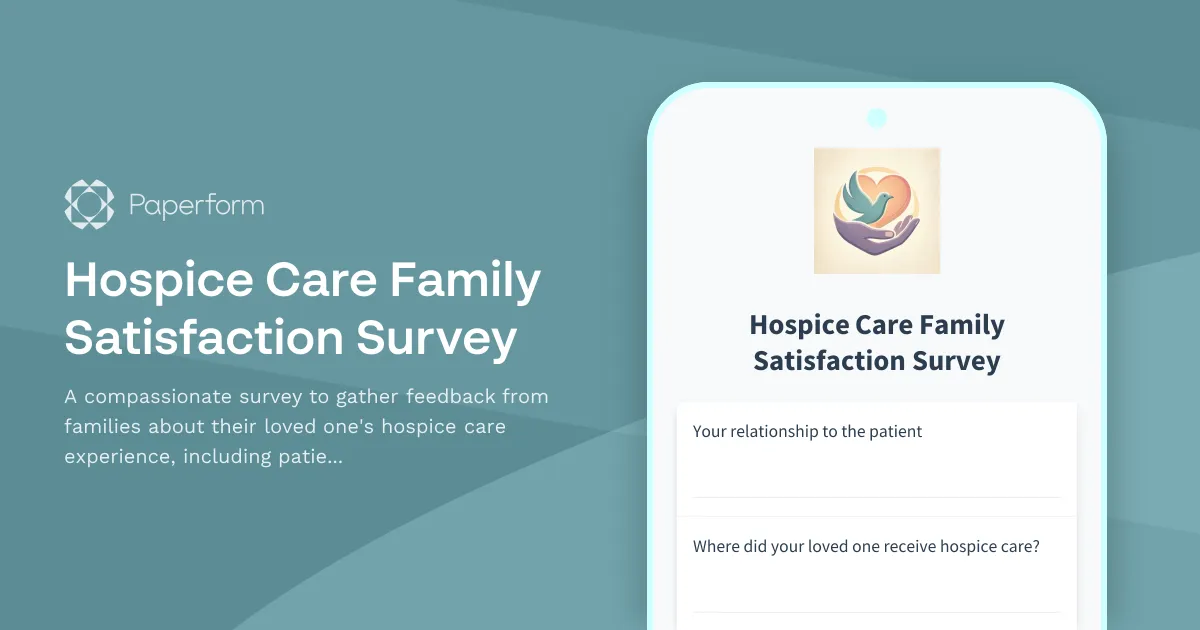
Hospice Care Family Satisfaction Survey
A compassionate survey to gather feedback from families about their loved one's hospice care experience, including patient comfort, emotional support, communication, and dignity in end-of-life care.
Hospital Medical Interpreter Service Quality Survey
Evaluate the quality of medical interpretation services with questions on interpretation accuracy, cultural competency, communication effectiveness, and scheduling convenience to improve patient care.
Ambulance Service Patient Transport Survey
Gather valuable feedback on ambulance transport experiences including crew professionalism, medical care quality, vehicle cleanliness, and billing clarity to improve emergency medical services.
Assisted Living Family Satisfaction Survey
Gather feedback from family members about care quality, communication, activities, and decision-making involvement at your assisted living facility to improve resident experience and family satisfaction.
Behavioral Health Program Effectiveness Survey
Gather comprehensive feedback from patients on behavioral health treatment programs, including group therapy, medication management, staff support, and discharge planning effectiveness.
Clinical Laboratory Outreach Program Survey
Evaluate laboratory outreach services including specimen collection convenience, courier timeliness, test result accuracy, and provider integration quality to improve healthcare delivery.
Community Mental Health Center Client Outcome Survey
A comprehensive mental health outcome survey designed to track symptom reduction, treatment effectiveness, housing stability, employment support, and peer recovery services for community mental health centers.
Healthcare Quality Improvement Patient Advisory Council Survey
A comprehensive survey designed to evaluate patient engagement effectiveness, feedback implementation transparency, co-design participation value, and shared decision-making support within healthcare quality improvement advisory councils.
Healthcare Value-Based Payment Patient Survey
A comprehensive patient survey designed to measure satisfaction with value-based care models, cost transparency, quality measure awareness, and perceived improvements in healthcare outcomes.
Home Healthcare Service Satisfaction Survey
Gather comprehensive feedback on home healthcare services including caregiver performance, communication quality, and overall patient satisfaction to improve care delivery.
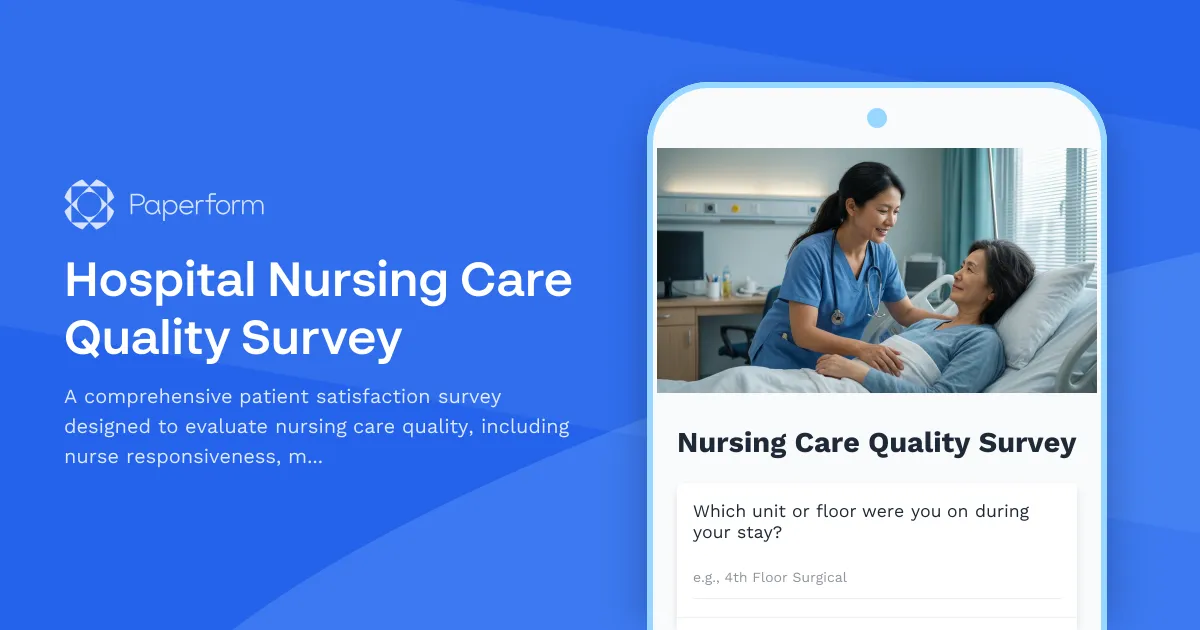
Hospital Nursing Care Quality Survey
A comprehensive patient satisfaction survey designed to evaluate nursing care quality, including nurse responsiveness, medication communication, bedside manner, and pain management effectiveness.
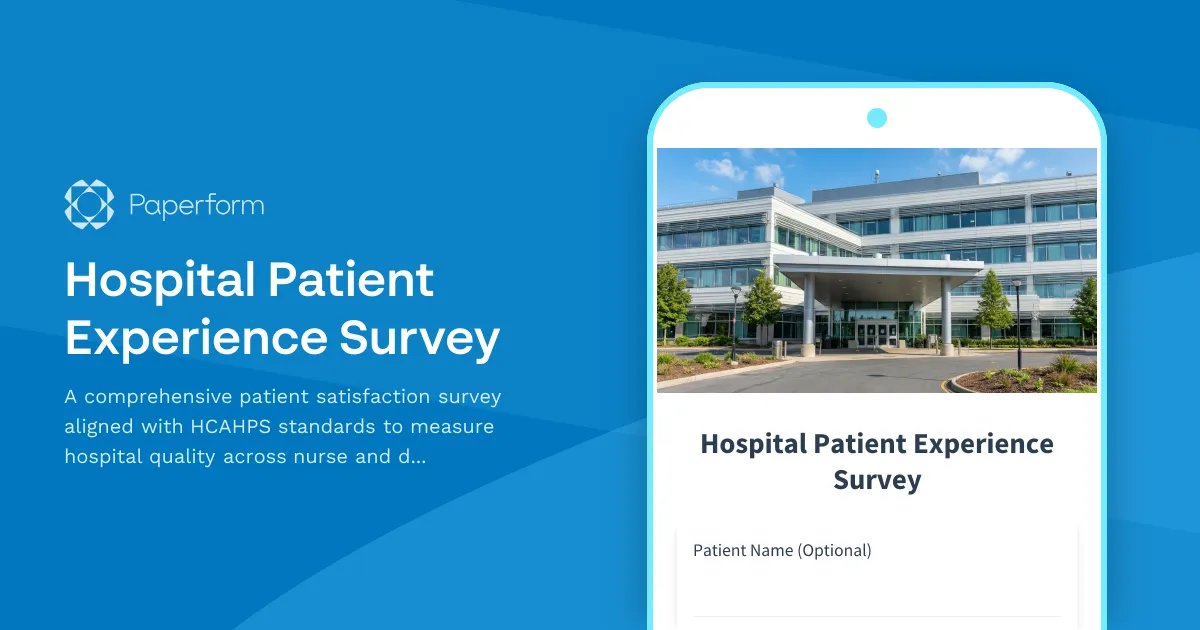
Hospital Patient Experience Survey
A comprehensive patient satisfaction survey aligned with HCAHPS standards to measure hospital quality across nurse and doctor communication, environment, pain management, medications, discharge, and overall experience.