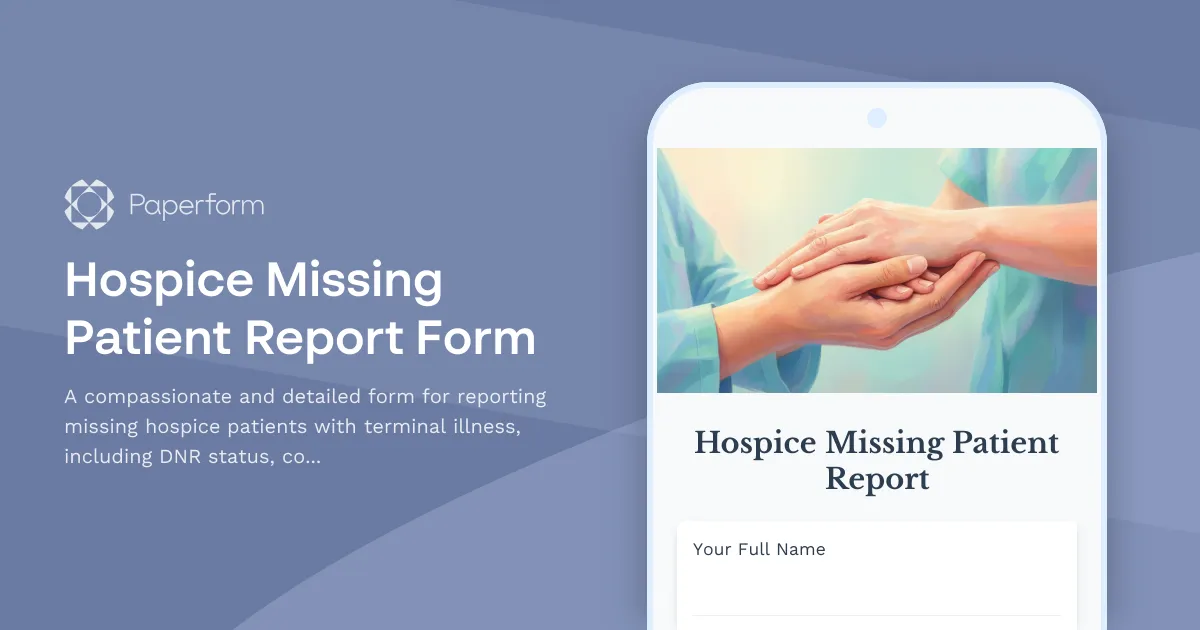
When a hospice patient goes missing, every moment counts—but so does compassion, dignity and medical safety. This Hospice Missing Patient Report Form is designed specifically for hospice care facilities, palliative care teams and home health agencies to quickly document critical medical information, communicate with search teams and coordinate with family members during a sensitive, time-critical situation.
Unlike generic missing person reports, this template recognizes the unique needs of hospice patients: advanced directives like DNR status, comfort care protocols, medication dependencies, mobility limitations and the emotional complexity of involving loved ones. By capturing this information in a structured, compassionate way, your team can ensure search efforts are informed, appropriate and centered on the patient's dignity and wellbeing.
Paperform makes it easy to customize this form to match your facility's protocols, integrate with your incident reporting systems and trigger the right workflows at the right time. With conditional logic, you can tailor questions based on the patient's condition, route urgent reports to administrators and family liaisons, and maintain a clear audit trail for compliance and quality assurance.
Need to notify multiple family members or escalate to local authorities? Use Stepper (stepper.io) to automate those workflows—send notifications via SMS or email, update your patient management system and coordinate follow-up tasks across care teams, all triggered from a single form submission.
This template is ideal for hospice agencies, palliative care programs, senior care facilities and healthcare providers who need a compassionate, compliant way to respond to missing patient incidents while honoring advance care directives and maintaining family communication.



More templates like this
Memory Care Unit Missing Resident Report Form
A comprehensive form for memory care facilities to report missing residents with Alzheimer's or dementia, including identifying information, favorite locations, photos, and community alert coordination.
Missing Psychiatric Hold Patient Report Form
A comprehensive form for healthcare facilities to report missing patients who left during an involuntary psychiatric hold period before their 72-hour evaluation, including danger assessment and legal authorization tracking.
Behavioral Health Crisis Center Patient Elopement Report
A comprehensive elopement report form for behavioral health facilities to document missing patients, assess risk factors, and coordinate immediate response efforts with mobile crisis teams.
Elderly Care Home Missing Resident Silver Alert Form
A comprehensive form for care homes to report missing elderly residents, capturing medical conditions, mobility aids, wandering patterns, and photographs to assist in quick and safe recovery.
Homeless Veteran Welfare Check & Outreach Report
A comprehensive form for reporting missing chronically homeless veterans with service-connected disabilities to facilitate coordinated outreach efforts between street medicine teams, VA homeless coordinators, and community support services.
Hospice Care Emotional Competency Self-Evaluation
A comprehensive self-assessment tool for hospice care professionals to evaluate their emotional competencies, grief support skills, family dynamics navigation abilities, and capacity for compassionate presence.
Hospice Patient Emergency Contact Form
A comprehensive hospice emergency contact form that captures patient comfort care preferences, spiritual support details, funeral arrangements, and family notification hierarchy for end-of-life care coordination.
Immigration Detention Medical Unit Missing Detainee Report
A comprehensive form for reporting missing detainees with urgent medical needs from immigration detention facilities, enabling rapid coordination with ICE health services and humanitarian organizations.
Nursing Home Medical Emergency Report Form
Report and document medical emergencies for nursing home residents with baseline vitals comparison, automated physician notification, and family alert system.
Palliative Care Medication Consultation Form
A comprehensive pharmacist consultation form for palliative care patients to assess medication effectiveness, manage drug interactions, provide family education, and optimize comfort at end of life.
Palliative Care New Patient Intake Form
A comprehensive intake form for new palliative care patients to document medical history, symptom management needs, advance care planning, spiritual preferences, and caregiver information.
Palliative Care Specialist Referral Form
A comprehensive referral form for connecting patients with palliative care specialists, covering diagnosis, symptom management needs, hospice considerations, and care environment preferences.