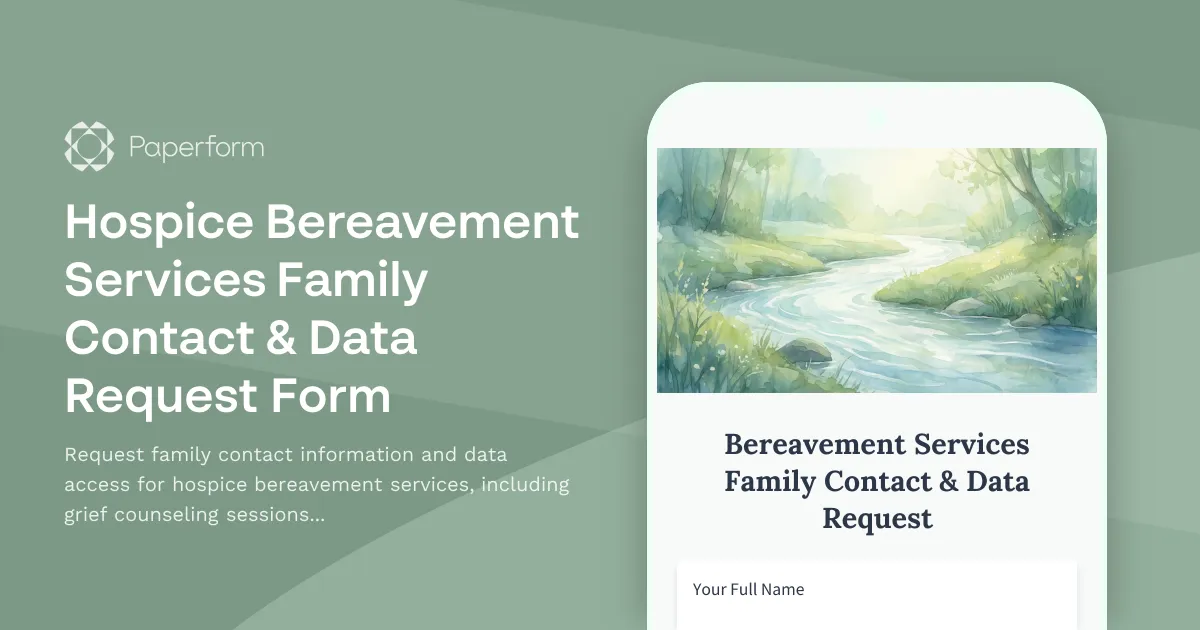
Streamline Bereavement Support with Compassionate Data Access Forms
Coordinating bereavement services for grieving families requires sensitivity, organization, and secure data management. This Hospice Bereavement Services Family Contact & Data Request Form helps hospice care providers, social workers, and bereavement coordinators gather essential family contact information while respecting privacy and ensuring appropriate follow-up support.
Why Use This Form for Bereavement Services?
After the loss of a loved one, families need timely access to grief counseling, memorial event information, and ongoing support resources. This form template enables your bereavement team to:
- Collect accurate family contact details for grief counseling outreach and support coordination
- Understand specific needs including preferred communication methods and support service interests
- Manage consent for ongoing bereavement communications and memorial event invitations
- Document data access requirements for internal staff coordinating multi-faceted support services
- Maintain compliance with healthcare privacy standards while providing compassionate care
Perfect for Healthcare and Hospice Organizations
This template is designed for hospice providers, palliative care programs, healthcare facilities, bereavement coordinators, and social workers who manage ongoing family support after patient loss. The form captures relationship details, contact preferences, and specific bereavement service needs in a respectful, organized format.
With conditional logic built in, the form adapts based on the type of services requested—whether that's individual grief counseling, group support sessions, memorial event participation, or educational resource provision. This ensures families receive personalized follow-up without overwhelming them during a difficult time.
Automate Follow-Up with Stepper
Connect this form to Stepper to automatically route family information to the appropriate bereavement coordinators, schedule follow-up communications, send memorial event invitations, and update your patient management system with family contact preferences. Automation ensures no family falls through the cracks during their grief journey.
Secure, Compliant, and Compassionate
Built on Paperform's SOC 2 Type II compliant platform, this template helps you maintain secure family data while providing the warm, supportive experience grieving families deserve. Customize the form's appearance, add your hospice branding, and create a professional touchpoint that honors both the deceased and their loved ones.


More templates like this
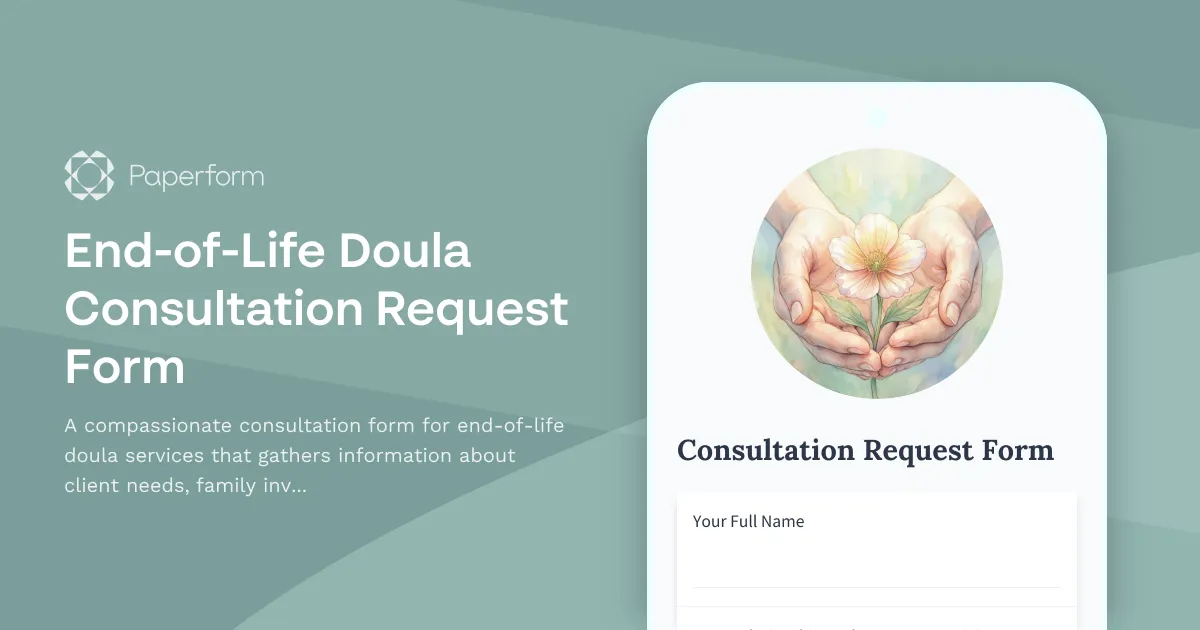
End-of-Life Doula Consultation Request Form
A compassionate consultation form for end-of-life doula services that gathers information about client needs, family involvement, advance directives, and spiritual care preferences.
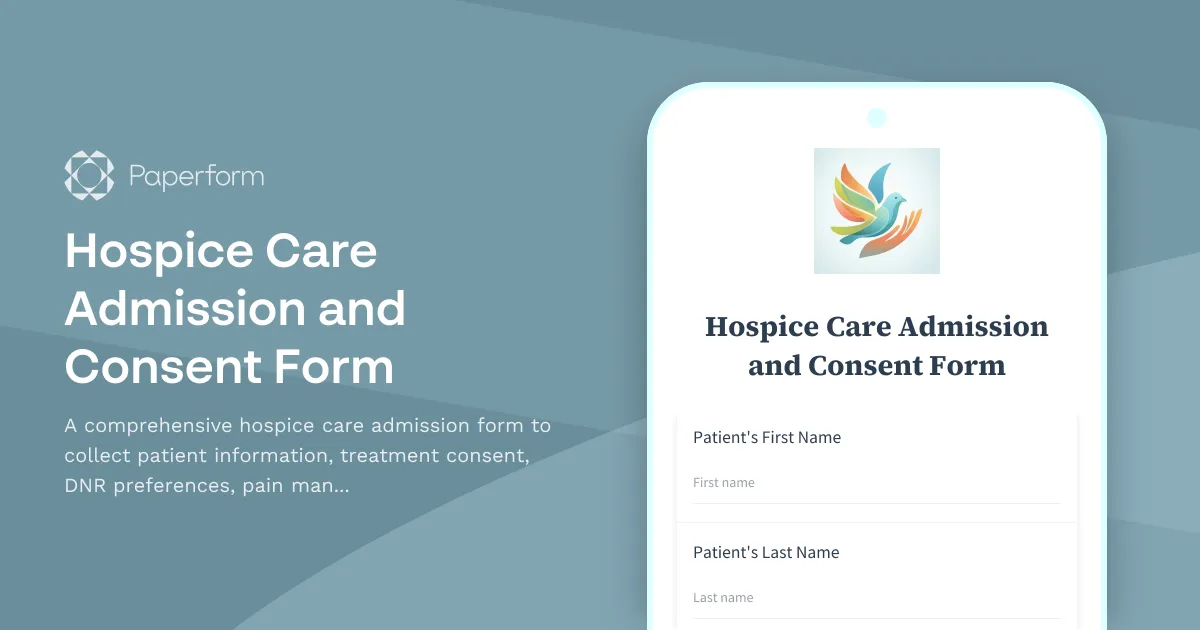
Hospice Care Admission and Consent Form
A comprehensive hospice care admission form to collect patient information, treatment consent, DNR preferences, pain management options, HIPAA authorization, and end-of-life care decisions with family notification settings.
Hospice Care Consultation Age Verification
Verify eligibility and gather essential information for hospice care consultations, including age confirmation, diagnosis details, insurance review, and care preferences.
Hospice Care Discovery Form
A compassionate intake form for hospice care providers to assess patient needs, medical status, symptom management requirements, spiritual preferences, and family support services.
Hospice Care Emotional Competency Self-Evaluation
A comprehensive self-assessment tool for hospice care professionals to evaluate their emotional competencies, grief support skills, family dynamics navigation abilities, and capacity for compassionate presence.
Hospice Care Program Information Request Form
Request comprehensive information about hospice care services, including care options, support programs, and family consultation scheduling for compassionate end-of-life care.
Hospice Patient Emergency Contact Form
A comprehensive hospice emergency contact form that captures patient comfort care preferences, spiritual support details, funeral arrangements, and family notification hierarchy for end-of-life care coordination.
Hospice Respite Care Room Reservation Form
Reserve a peaceful respite care room for your loved one with comprehensive comfort assessment, family support services, and care coordination in one compassionate form.
Palliative Care New Patient Intake Form
A comprehensive intake form for new palliative care patients to document medical history, symptom management needs, advance care planning, spiritual preferences, and caregiver information.
Palliative Care Patient Data Access Request Form
A comprehensive form for healthcare professionals to request access to patient data in palliative care coordination platforms, including advance directives, symptom assessments, and caregiver support documentation.
Remote Palliative Care Consultation Form
A comprehensive telehealth form for remote palliative care consultations, including symptom assessment, quality of life evaluation, advance directive collection, and family meeting coordination.
Residential Hospice Application Form
A compassionate application form for residential hospice care admission, collecting medical documentation, care preferences, and family visitation details to ensure dignified end-of-life support.