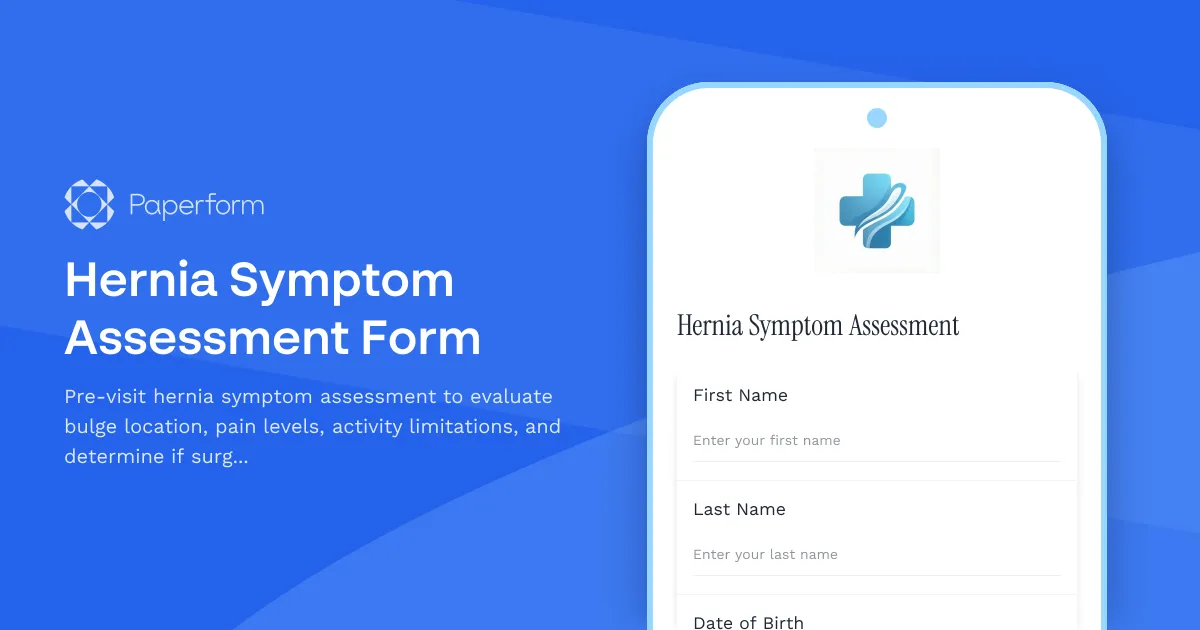
Managing hernia symptoms effectively starts with a comprehensive assessment. This hernia symptom assessment form helps healthcare providers gather detailed information about bulge location, pain severity, activity limitations, and symptom progression—all before the patient arrives for their appointment.
Whether you're running a general surgery practice, gastroenterology clinic, or urgent care facility, this form streamlines the intake process and ensures your clinical team has the context they need to provide appropriate care recommendations.
How Paperform makes hernia assessments better
Built with Paperform's doc-style editor, this template collects everything from symptom onset and bulge characteristics to pain triggers and medical history in a patient-friendly format. Conditional logic shows follow-up questions only when relevant—for example, asking about pain severity only if the patient reports pain, or gathering details about previous hernia repairs only if applicable.
With Paperform's calculation and scoring features, you can flag high-priority cases automatically based on symptom severity, helping clinical staff prioritize urgent surgical consultations. Custom success messages can provide immediate next steps, whether that's scheduling an in-person exam, arranging imaging, or offering pre-operative guidance.
Automate workflows with Stepper
Connect this form to Stepper to turn each submission into an automated workflow. Route high-severity cases directly to surgical coordinators, send standard cases to primary care review, update your practice management system, and trigger reminder emails—all without manual data entry.
For practices that need signed consent or referral forms, integrate Papersign to automatically generate eSignature documents from form responses, keeping your hernia assessment and surgical authorization process fully digital and audit-ready.
This hernia assessment template helps surgical practices, specialty clinics, and primary care providers deliver faster triage, better pre-visit preparation, and more informed clinical decision-making—all while maintaining the professional, trustworthy experience patients expect from healthcare providers.



More templates like this
Cardiology Pre-Visit Symptom Checker
A comprehensive cardiology intake form that helps patients document chest pain symptoms, cardiovascular risk factors, and current medications before their appointment.
Chronic Fatigue Syndrome Diagnostic Screening Form
A comprehensive pre-visit symptom assessment form to screen for chronic fatigue syndrome (CFS/ME) with validated fatigue severity scales, post-exertional malaise evaluation, and sleep quality measures.

Dermatology Pre-Appointment Skin Assessment Form
A comprehensive pre-visit form for dermatology patients to document skin conditions, symptoms, affected areas, and upload photos before their appointment.
Endocrinology Diabetes Symptom Checker
A comprehensive pre-visit diabetes assessment form that tracks blood glucose levels, medication adherence, symptoms, and potential complications to help endocrinologists provide better care.
ENT Sinus and Allergy Symptom Tracker
A comprehensive pre-visit ENT symptom assessment form for tracking sinus, allergy, nasal congestion, hearing, and tinnitus symptoms to help prepare for your appointment.

Erectile Dysfunction Evaluation Form
A confidential pre-visit assessment form for evaluating erectile dysfunction, including onset timing, psychological factors, and cardiovascular risk screening to help healthcare providers prepare for your consultation.

Hearing Loss & Tinnitus Evaluation Form
A comprehensive pre-visit hearing assessment form for evaluating hearing loss, tinnitus symptoms, noise exposure history, and communication difficulties to help audiologists and ENT specialists prepare for patient consultations.

Heart Failure Symptom Monitoring Form
A comprehensive pre-visit assessment form for heart failure patients to track symptoms, weight changes, edema, and medication adherence between appointments.
Infectious Disease Exposure & Symptom Assessment Form
A comprehensive pre-visit form for assessing infectious disease symptoms, exposure risk, travel history, and contact tracing to help healthcare providers screen patients efficiently.
Orthopedic Injury Assessment Form
A comprehensive pre-visit assessment form for orthopedic patients to document injury details, symptoms, mobility limitations, and treatment history before their appointment.
Pulmonary Function Pre-Visit Assessment Form
A comprehensive pre-visit form for respiratory patients to assess breathing difficulties, asthma control, inhaler usage, and pulmonary symptoms before their appointment.
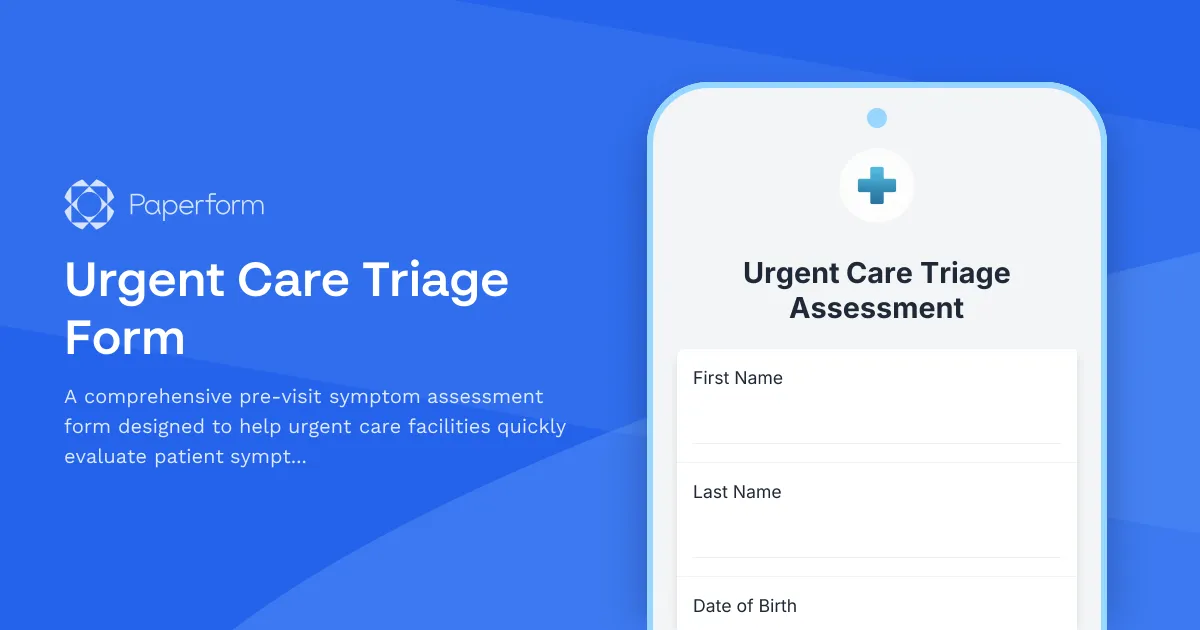
Urgent Care Triage Form
A comprehensive pre-visit symptom assessment form designed to help urgent care facilities quickly evaluate patient symptoms, assess urgency levels, and determine appropriate care pathways.