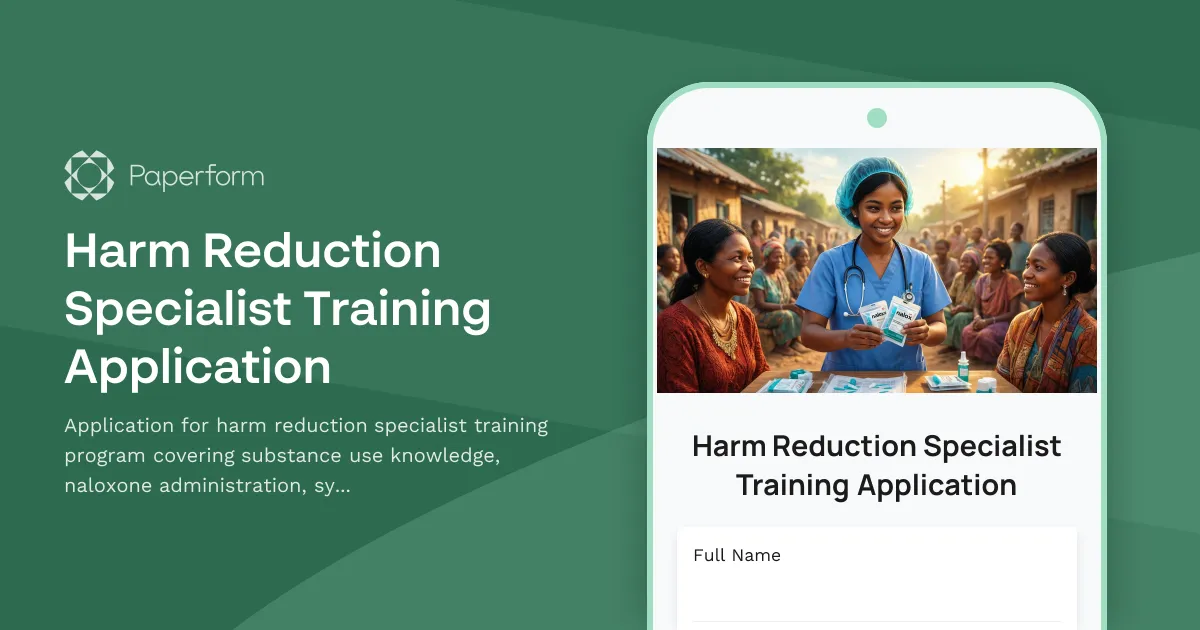
Comprehensive Harm Reduction Specialist Training Application
Harm reduction is a compassionate, evidence-based approach to supporting people who use drugs—meeting them where they are without judgment, stigma or conditions. As communities face ongoing substance use challenges, trained harm reduction specialists are essential frontline workers who save lives, build trust and connect vulnerable populations with vital services.
This Harm Reduction Specialist Training Application is designed for organizations offering certification programs in harm reduction practices, public health departments, community health centers, syringe service programs (SSPs), and nonprofit organizations focused on overdose prevention and substance use support. Whether you're a healthcare provider, social service agency, or grassroots community organization, this form helps you efficiently screen and enroll candidates who are ready to make a meaningful difference.
What makes this application effective?
Our template goes beyond basic contact information to assess the core competencies, lived experience, and value alignment that define excellent harm reduction work:
Knowledge assessment – Gauge applicants' existing understanding of substance use, addiction models, safer use practices, and the principles that guide harm reduction philosophy.
Scenario-based evaluation – Present real-world situations that test non-judgmental communication, de-escalation skills, and the ability to center client autonomy and dignity in challenging moments.
Practical experience – Capture relevant background in syringe services, naloxone distribution, overdose response, peer support, community outreach, or adjacent fields like mental health, nursing, or social work.
Certification readiness – Determine which certification pathways (state, national, or organizational) applicants are pursuing and ensure they meet prerequisites for exam eligibility.
Equity and access – Use conditional logic to offer sliding-scale fees, scholarships, or prerequisite waivers for people with lived experience, ensuring training programs remain accessible to those most connected to the communities they'll serve.
This form is fully customizable through Paperform's intuitive editor, allowing you to add program-specific questions, embed video scenarios, attach reading materials, or integrate payment fields for training fees.
Who benefits from this template?
Public health departments rolling out naloxone distribution programs or fentanyl test strip initiatives can use this application to recruit and train community health workers who reflect the populations they serve.
Syringe service programs (SSPs) can streamline volunteer and staff onboarding, ensuring new team members understand safer injection practices, bloodborne pathogen prevention, and the legal landscape around harm reduction.
Hospitals and healthcare systems launching bridge clinics, addiction medicine programs, or emergency department-based interventions can identify candidates with both clinical skills and the cultural humility needed for effective harm reduction care.
Nonprofit organizations and mutual aid groups offering peer-led overdose prevention training can collect applications, schedule training cohorts, and maintain certification records in one centralized system.
Educational institutions developing certificate programs in addiction studies, public health, or social work can use this form to manage admissions, assess prior learning, and connect students with fieldwork placements.
Streamline your training program with Paperform + automation
Once applications are submitted, Paperform integrates seamlessly with your existing tools to keep your program running smoothly:
- Send confirmations and next steps automatically via customized email responses, including training schedules, preparation materials, and scholarship decisions
- Sync applications to your CRM or database (HubSpot, Airtable, Google Sheets, or your LMS) to track cohort progress, certification status, and alumni engagement
- Use conditional logic to route applications based on experience level, language preference, geographic region, or training format (in-person, hybrid, virtual)
- Trigger workflows with Stepper (stepper.io) to automatically schedule interviews, send pre-training assessments, update certification databases, and notify instructors when new cohorts are filled
Why harm reduction training matters now
The overdose crisis continues to claim lives at record rates, fueled by an increasingly toxic drug supply contaminated with fentanyl and other potent synthetics. Harm reduction specialists are often the first—and sometimes only—trusted point of contact for people experiencing marginalization, homelessness, mental health crises, or criminal legal system involvement.
Effective training programs equip specialists with:
- Life-saving skills like naloxone (Narcan) administration, overdose recognition, rescue breathing, and emergency response coordination
- Safer use education covering sterile injection technique, vein care, wound care basics, and infection prevention
- Trauma-informed communication that honors autonomy, centers dignity, reduces shame, and builds authentic relationships
- Resource navigation to connect clients with housing, healthcare, legal support, food assistance, and voluntary treatment when desired
- Advocacy skills to challenge punitive drug policies, reduce criminalization, and advance health equity at local and systemic levels
By using a structured, thorough application process, training programs can identify candidates who combine technical knowledge, emotional intelligence, and a genuine commitment to meeting people where they are—without judgment or coercion.
Customize this template for your organization
Paperform's flexible design lets you tailor every aspect of this application to match your training program's unique model:
- Add program-specific modules such as overdose prevention site operations, fentanyl test strip distribution, xylazine ("tranq") awareness, or methamphetamine harm reduction
- Include multimedia elements like video testimonials from graduates, photo galleries from community outreach, or audio clips explaining program philosophy
- Embed assessments with scoring logic to auto-calculate prerequisite knowledge and recommend preparatory resources before training begins
- Accept program fees directly through integrated Stripe, PayPal, or Square payment fields, with options for deposits, installment plans, or scholarship codes
- Offer eSignature collection via Papersign (papersign.com) for confidentiality agreements, code of conduct acknowledgments, or liability waivers required before fieldwork placements
This template is built for professionals in public health, community health work, substance use services, peer support, nursing, social work, and allied fields. Whether you're training five specialists or scaling to hundreds, Paperform gives you the tools to run an efficient, accessible, and impactful program.
Trusted by health and social service organizations
Paperform is trusted by over 500,000 teams worldwide and is SOC 2 Type II and GDPR compliant, ensuring applicant data—including sensitive health information and lived experience disclosures—is handled securely. (Note: Paperform is not a HIPAA-compliant solution.)
With powerful automation, intuitive design, and a supportive platform that grows with your mission, this Harm Reduction Specialist Training Application helps you find, train, and certify the compassionate professionals who are saving lives every day.
Start building a stronger, more responsive harm reduction workforce—one thoughtful application at a time.
More templates like this
Veterans Health Screening & Assessment Form
Comprehensive health screening form for veterans including military service history, combat exposure assessment, PTSD screening, VA benefits enrollment, and specialized care coordination needs.
Addiction Recovery Housing Grant Application
Comprehensive grant application form for addiction recovery housing programs seeking funding to provide evidence-based residential treatment, peer support services, and employment assistance.
Animal-Assisted Therapy Certification Scholarship Application
A comprehensive scholarship application for aspiring animal-assisted therapy practitioners seeking certification funding, including therapy animal handling experience, special populations interest, and professional recommendations.
Animal-Assisted Therapy Handler Program Application
Apply to become a certified animal-assisted therapy handler. This comprehensive application collects information about your animal partner, therapy experience, specialization preferences, and training requirements.
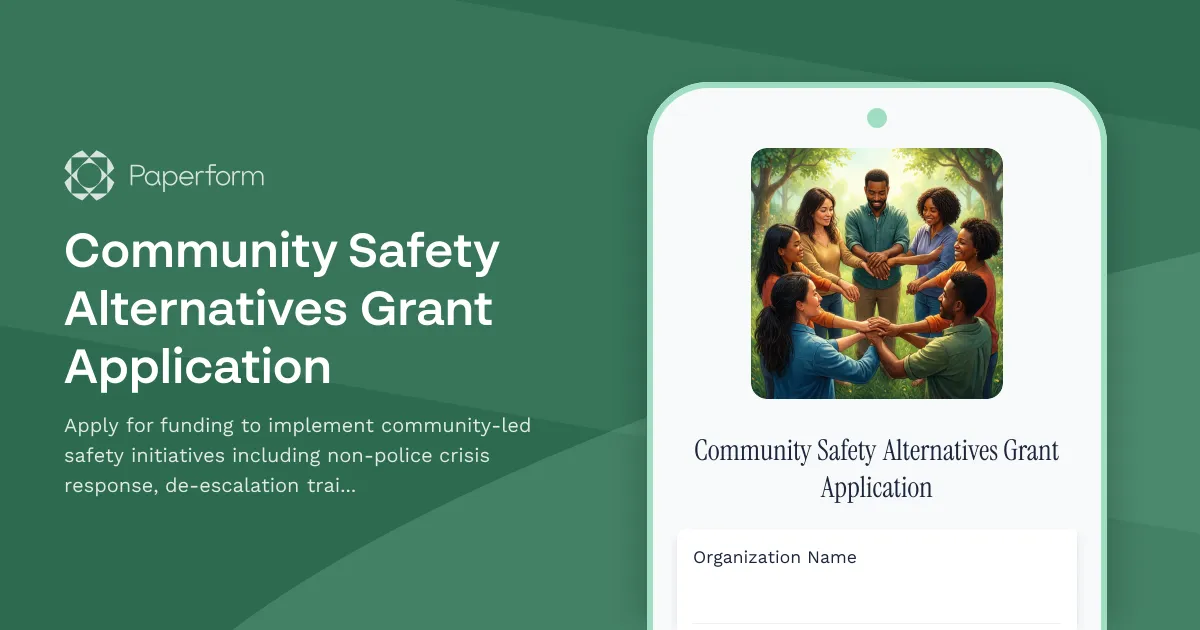
Community Safety Alternatives Grant Application
Apply for funding to implement community-led safety initiatives including non-police crisis response, de-escalation training, mobile mental health teams, and community accountability programs.
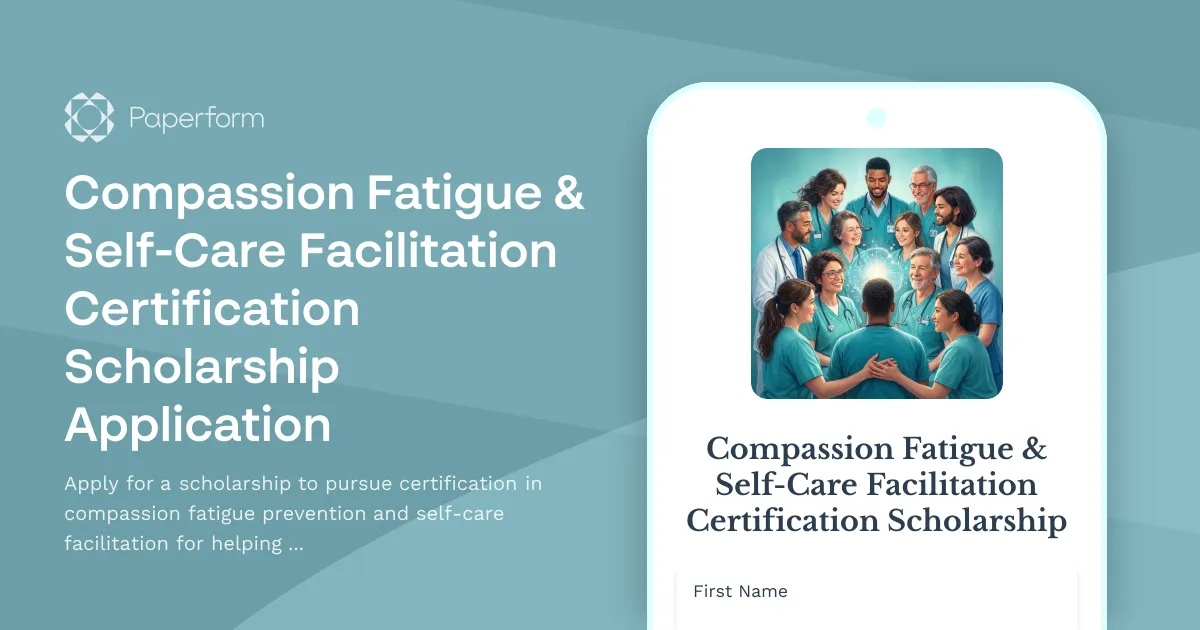
Compassion Fatigue & Self-Care Facilitation Certification Scholarship Application
Apply for a scholarship to pursue certification in compassion fatigue prevention and self-care facilitation for helping professionals working in healthcare and nonprofit organizations.
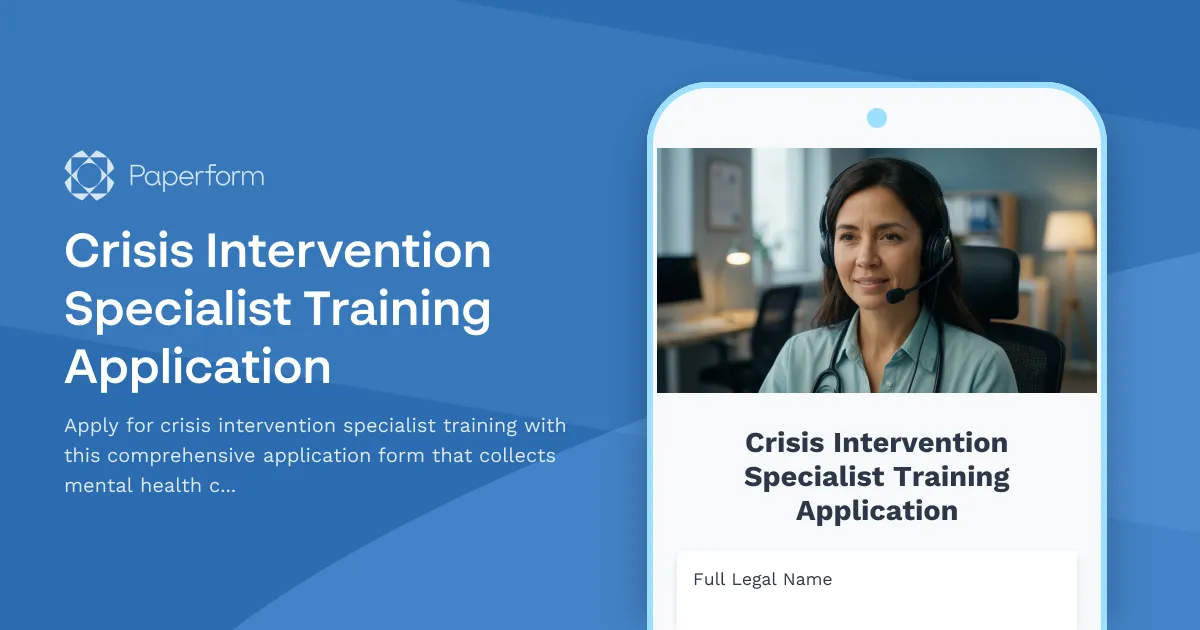
Crisis Intervention Specialist Training Application
Apply for crisis intervention specialist training with this comprehensive application form that collects mental health credentials, de-escalation experience, trauma exposure history, and availability information.
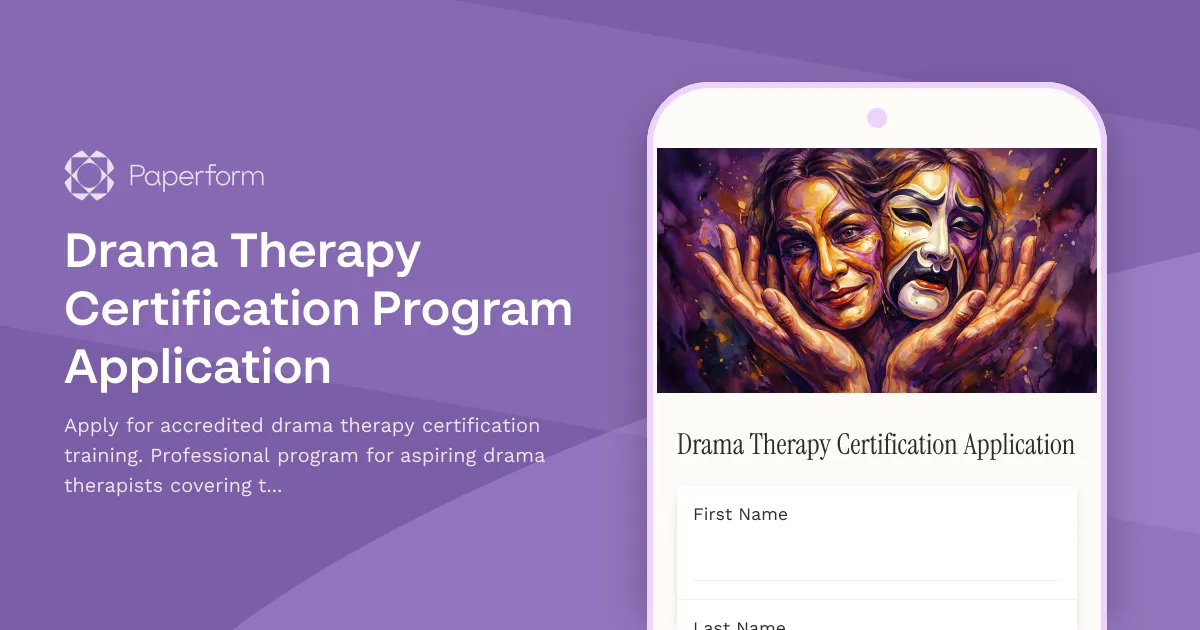
Drama Therapy Certification Program Application
Apply for accredited drama therapy certification training. Professional program for aspiring drama therapists covering theatrical arts, clinical skills, and supervised practice requirements.
Hospice Volunteer Application Form
A comprehensive application for hospice volunteers including emotional readiness assessment, grief counseling training interest, and availability for patient and family visits.
Housing First Application Form
A compassionate housing application for chronically homeless individuals using a Housing First approach with harm reduction principles and no sobriety requirements.
Peer Recovery Coach Training Application
Comprehensive application for individuals seeking to become certified peer recovery coaches in substance use recovery services.

Peer Support Specialist Training Application
A comprehensive application form for individuals with lived mental health experience seeking to become certified peer support specialists through training and certification.