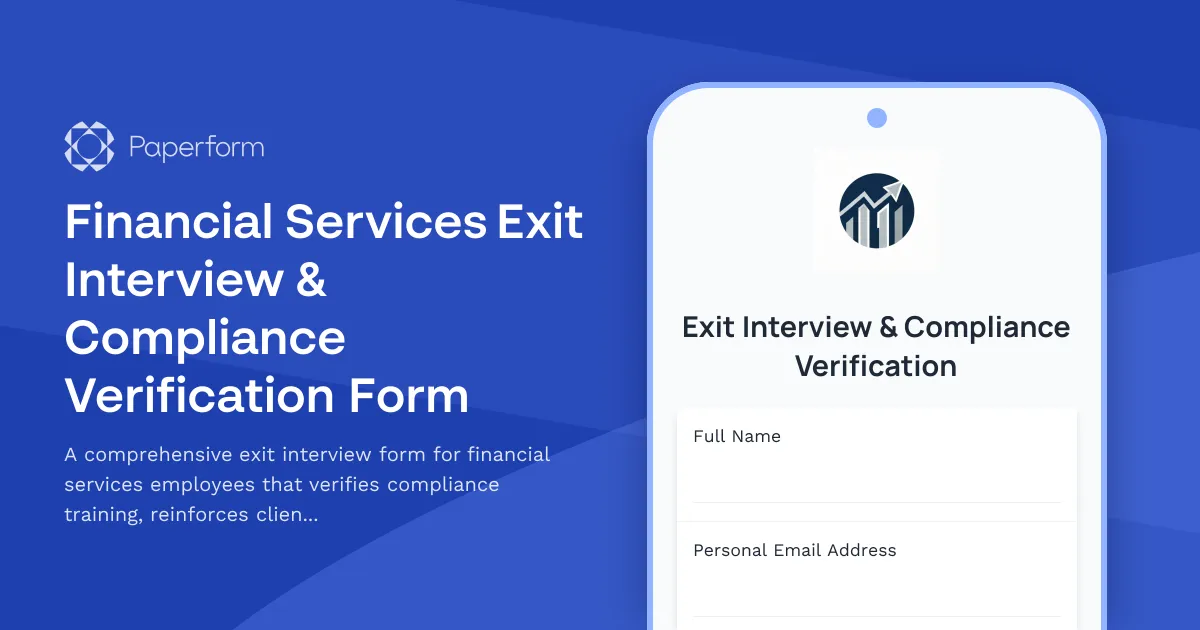
Professional Exit Process for Financial Services Firms
When an employee leaves a financial services organization, the offboarding process extends far beyond collecting company property. Regulatory compliance, client confidentiality, and ongoing reporting obligations demand careful attention to ensure both the departing employee and the firm remain protected.
This Financial Services Exit Interview & Compliance Verification Form is designed specifically for banks, investment firms, broker-dealers, RIAs, and other regulated financial institutions. It streamlines the exit process while maintaining the rigorous documentation standards required in the financial services industry.
Why Financial Services Exit Interviews Need Special Attention
Unlike standard exit interviews, financial services offboarding must address:
- Compliance training verification – Confirming employees understand ongoing obligations under FINRA, SEC, and other regulatory frameworks
- Client confidentiality reminders – Reinforcing NDA terms and the prohibition on client solicitation
- SEC reporting obligations – Documenting acknowledgment of Form U5 filing, continuing disclosure requirements, and potential exam participation
- Non-solicitation agreements – Capturing acknowledgment of restrictive covenants that survive employment termination
- Regulatory record retention – Creating audit-ready documentation for compliance and legal teams
Built for HR and Compliance Teams
This template allows your HR and compliance teams to:
- Gather consistent exit feedback while addressing regulatory requirements
- Create documented proof of compliance acknowledgments
- Route sensitive information to legal, compliance, and management automatically
- Generate timestamped records suitable for regulatory audits
- Maintain confidentiality while sharing appropriate information across departments
With Paperform's conditional logic, the form adapts based on the employee's role, registration status, and reason for departure—showing only relevant compliance sections to each departing employee.
Automate Your Exit Workflow with Stepper
Connect this form to Stepper to turn each exit interview into a complete offboarding workflow. Automatically trigger IT access removal, notify compliance to file Form U5, send client transition emails to relationship managers, and create documentation packets for your legal team—all based on the specific responses in the exit interview.
Secure, Compliant, and Audit-Ready
Paperform is SOC 2 Type II compliant and offers enterprise-grade security features including SSO, role-based permissions, and data residency controls. Every submission is timestamped and stored securely, giving you the audit trail your compliance team needs without the administrative burden.
Whether you're a boutique RIA or a multi-branch financial institution, this template helps you conduct exit interviews that satisfy both HR best practices and regulatory requirements—in one streamlined, professional experience.

More templates like this

Investment Advisor Background Screening Authorization Form
A comprehensive authorization form for investment advisors to consent to background checks, securities registration verification, disciplinary action review, and client reference checks for compliance and onboarding purposes.
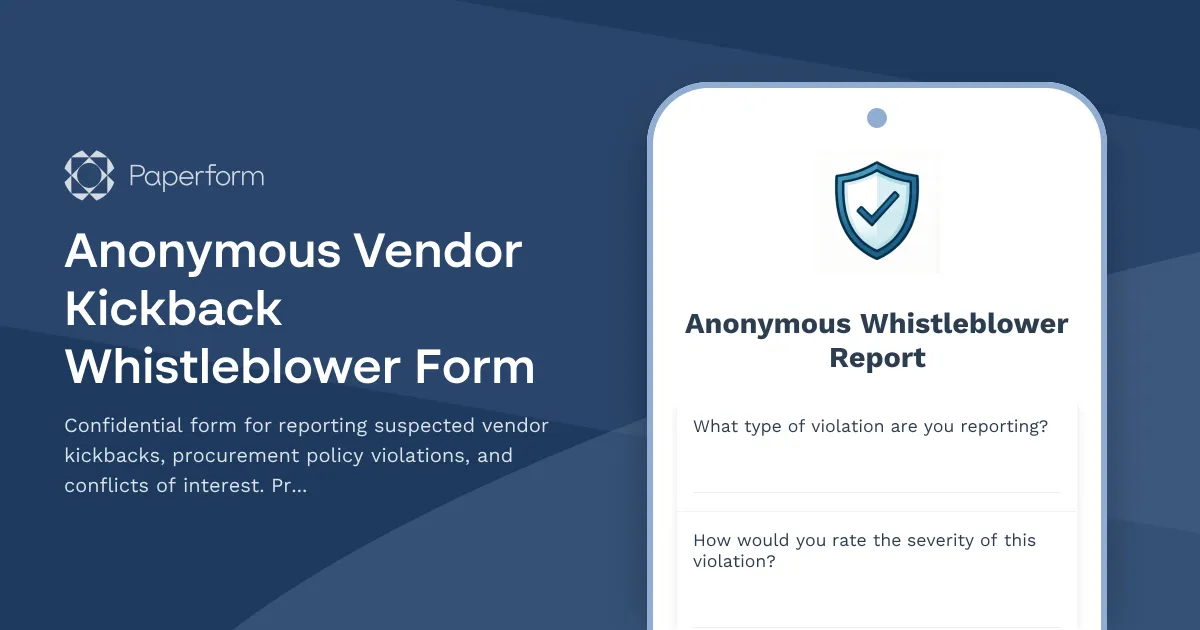
Anonymous Vendor Kickback Whistleblower Form
Confidential form for reporting suspected vendor kickbacks, procurement policy violations, and conflicts of interest. Protects whistleblower anonymity while triggering internal audit reviews.
Caregiver Discrimination Grievance Form
A comprehensive form for employees to report caregiver discrimination, FMLA interference, family responsibility bias, schedule accommodation denials, and related Title VII violations in the workplace.
Company Data Privacy and GDPR Compliance Training Survey
Measure the effectiveness of your data privacy and GDPR compliance training. Assess employee confidence in data handling, understanding of compliance requirements, and identify knowledge gaps to strengthen your organisation's data protection culture.
Cryptocurrency Exchange Compliance Officer Departure Form
A comprehensive exit form for compliance officers leaving cryptocurrency exchanges, covering KYC verification procedures, AML monitoring documentation, regulatory filing records, and transaction review protocols.
Hong Kong Employee Stock Option Plan Participation Form
A comprehensive ESOP participation form for Hong Kong employees covering grant details, vesting schedules, exercise prices, tax implications, and SFC compliance requirements.
Hong Kong Employment Equity Monitoring Report
Comprehensive workforce diversity report for Hong Kong businesses to track equity metrics, pay gap analysis, advancement opportunities, and regulatory compliance with detailed annual board reporting.
Salary Inequity Grievance Form
A confidential form for employees to document and report concerns about salary inequity, wage gaps, and equal pay violations with comparative compensation data.
SUNAT Financial Institution Regulatory Reporting Form
Comprehensive regulatory reporting form for Peruvian financial institutions to submit transaction monitoring data, AML compliance reports, and regulatory information to SUNAT with SBS coordination.
Taiwan Employee Stock Option Plan Registration Form
A comprehensive registration form for employee stock option plans in Taiwan, including exercise terms, vesting schedules, and tax withholding procedures compliant with Taiwanese regulations.
URSSAF Economic Dismissal Procedure Form (Licenciement Économique)
A comprehensive French employment termination form for documenting economic dismissal procedures, including justification, reclassification efforts, and required administrative notifications to comply with URSSAF and French labour law.
Wellness Program Complaint Escalation Form
A confidential form for employees to escalate concerns about corporate wellness programs, including privacy violations, discrimination, participation pressure, and HR policy issues requiring management review.