Support Your Team's Financial Safety and Well-Being
Financial abuse and economic coercion are serious issues that can affect employees both at home and in the workplace. This Employee Financial Abuse & Economic Coercion Awareness Survey helps organizations understand their workforce's awareness of these issues and identify opportunities to provide meaningful support and resources.
Why This Survey Matters
Economic abuse—including restricted access to paychecks, coerced joint account control, or prevented emergency savings—can trap individuals in harmful situations. By measuring awareness and offering resources through this survey, HR teams and employee assistance programs can create a safer, more informed workplace culture.
What This Template Includes
This survey template gathers confidential feedback on:
- Employee awareness of financial abuse warning signs
- Understanding of paycheck access rights and direct deposit control
- Knowledge of joint account safety and financial independence
- Access to emergency fund resources and financial literacy programs
- Comfort level discussing financial concerns with HR or EAP
The survey is designed to be anonymous and supportive, offering educational resources and next steps for employees who may be experiencing or witnessing financial coercion.
Built for HR, EAP, and Employee Well-Being Teams
Whether you're in human resources, employee assistance, or organizational development, this Paperform template makes it easy to:
- Deploy confidential surveys that employees can complete on any device
- Use conditional logic to provide tailored resources based on responses
- Integrate responses with your HR systems, Slack, or Google Sheets via Stepper workflows
- Generate AI-powered insights to identify trends and program gaps without compromising individual privacy
With Paperform's flexible design, you can match this survey to your organization's branding and embed it directly in your intranet, learning management system, or employee portal.
Extend Your Impact with Stepper
Once you've gathered responses, use Stepper to automate follow-up actions—send resource packets to specific teams, notify EAP coordinators when thresholds are met, or schedule follow-up check-ins. All without writing a single line of code.
Trusted by People-First Organizations
Paperform is SOC 2 Type II compliant and trusted by HR teams worldwide to handle sensitive employee data with care. Start with this template and customize it to fit your organization's unique culture and resource offerings.



More templates like this
Employee Resource Group (ERG) Participation Survey
Gather employee feedback on ERG participation, affinity group interests, event attendance, and leadership opportunities to strengthen workplace diversity and inclusion initiatives.
Workplace Mental Health & Wellbeing Survey
A comprehensive survey to assess employee mental health, stress levels, wellbeing support needs, and gather feedback on existing counseling services and workplace mental health initiatives.
Workplace Neurodiversity Accommodation and Support Survey
A comprehensive survey to assess neurodivergent employees' accommodation needs, including sensory-friendly workspace preferences, communication flexibility, and inclusive hiring practices feedback.
Employee Financial Transparency & Salary Policy Perception Survey
Gather employee feedback on salary transparency, pay equity, and compensation disclosure practices to build a fairer workplace.
Workplace Social Equity & Inclusion Survey
A confidential survey to assess workplace inclusion, identify social bias, and measure awareness of caste-based and socioeconomic discrimination in your organization.
Company Layoff Survivor Survey
A comprehensive post-layoff survey to assess employee morale, workload concerns, communication transparency, and engagement levels among remaining team members after workforce reduction.
Company Succession Planning and Talent Pipeline Survey
Assess leadership readiness, identify high-potential talent, and evaluate career development opportunities. Gain insights into succession planning effectiveness and talent pipeline strength.
Corporate Giving Personality Quiz
Discover your employees' unique giving styles and design volunteer programs that resonate. This personality quiz helps CSR consultants understand what motivates their workforce and create more engaging, impactful employee volunteer initiatives.
Employee Committee Assignment Equity Grievance Form
Submit a formal grievance regarding committee assignment equity, visibility opportunities, leadership development access, and selection transparency in the workplace.
Employee Gig Work & Side Hustle Policy Survey
Gather employee feedback on moonlighting policies, conflict of interest understanding, and the approval process for side work and gig economy participation.
Employee Retention Risk Assessment Survey
Identify flight risk employees and understand what drives retention. Assess job search activity, external offer considerations, and key stay factors to proactively address turnover risks.
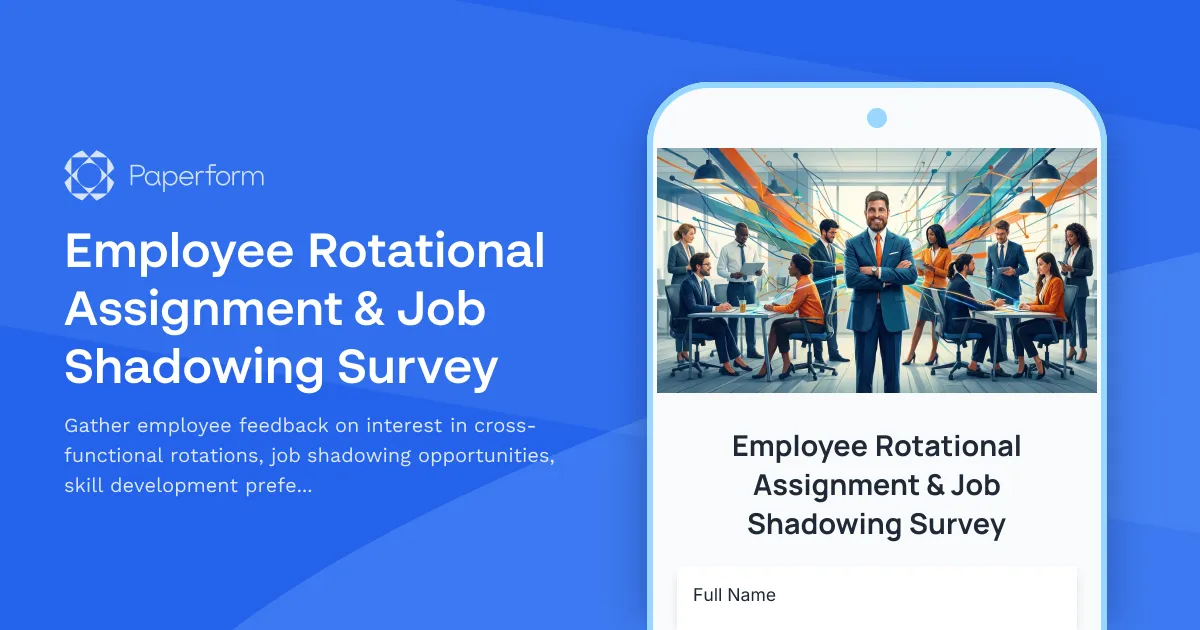
Employee Rotational Assignment & Job Shadowing Survey
Gather employee feedback on interest in cross-functional rotations, job shadowing opportunities, skill development preferences, and barriers to participation in professional development programs.