
Build Better E-learning Content with Data-Driven Insights
Understanding what your learners want—and what gaps exist in your content library—is essential for any e-learning platform looking to grow and retain users. This E-learning Platform Content Gap Analysis Survey template helps you gather actionable feedback on subject matter demand, instructor quality expectations, certification value, and pricing preferences, all in one streamlined form.
Designed for e-learning platforms, EdTech startups, online course creators, training providers, and educational institutions, this template makes it easy to collect structured market research that informs your content roadmap, instructor recruitment strategy, and pricing model.
Why Paperform for E-learning Market Research?
Paperform transforms the survey experience from boring to engaging. With its doc-style editor, you can add headings, context paragraphs, and images inline to guide respondents through your questions. Choose between a classic multi-page layout or one-question-at-a-time Guided Mode for better completion rates.
Once responses start flowing in, use AI Insights to automatically summarize themes from open-ended feedback, identify the most in-demand subjects, and spot patterns in pricing preferences—without manually reading hundreds of responses. You can also connect your survey to Google Sheets, Airtable, Slack, or your CRM via Stepper (stepper.io), Zapier, or webhooks, so insights reach your product and content teams instantly.
For deeper automation, use Stepper to route high-priority feedback to your product team, flag respondents interested in beta programs, or trigger follow-up emails to segment audiences based on their learning goals.
Whether you're validating a new course category, testing pricing tiers, or understanding what makes a great instructor in your learners' eyes, this template gives you the foundation to make confident, data-backed decisions—and Paperform's flexibility ensures the survey experience feels as polished as your platform.
Trusted by over 500K teams worldwide, SOC2 Type II & GDPR compliant, Paperform is the smart choice for education and SaaS companies that need professional surveys without the learning curve.
More templates like this

Cryptocurrency Exchange User Experience Study
A comprehensive user research survey designed to understand trader needs, priorities, and preferences for cryptocurrency exchange platforms, covering trading features, security measures, educational resources, and fee structures.

Food Delivery App Feature Survey
Gather consumer insights on food delivery app features, restaurant discovery preferences, ordering flow usability, loyalty programs, and delivery expectations to guide product development.

Legal Tech Software Feature Validation Questionnaire
A comprehensive market research survey designed for law firms to validate legal tech software features, map case management workflows, analyze billing preferences, and identify integration requirements.

Recruiting Software Feature Validation Survey
Gather insights from HR teams about recruiting software needs, sourcing channels, candidate experience priorities, and reporting requirements to validate product features.
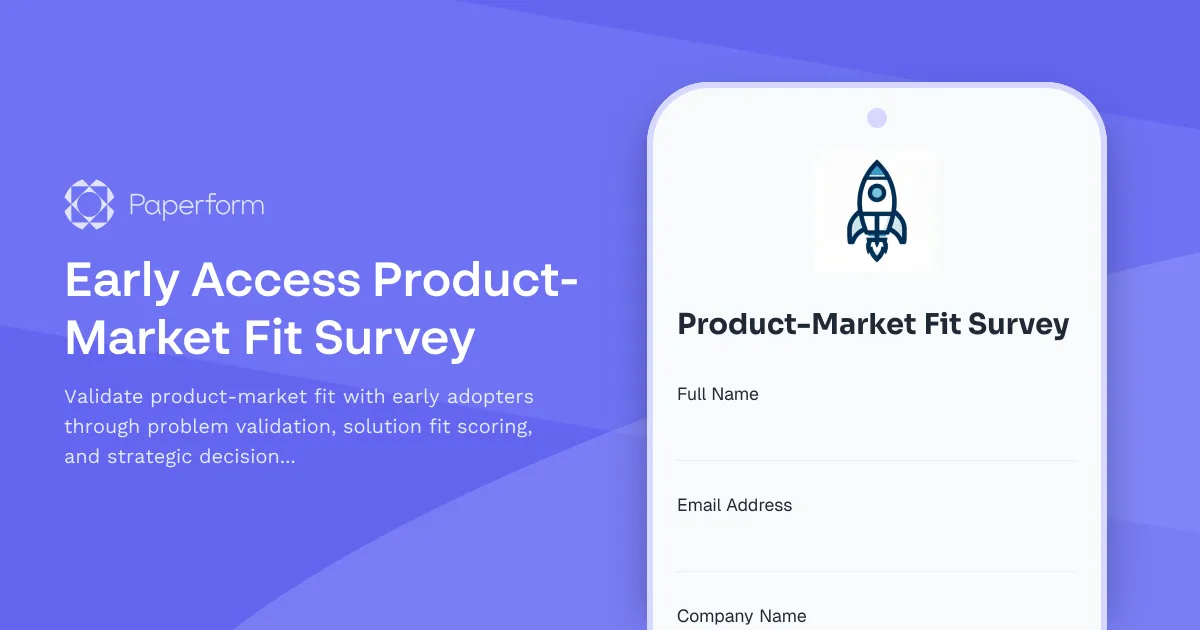
Early Access Product-Market Fit Survey
Validate product-market fit with early adopters through problem validation, solution fit scoring, and strategic decision-making input for your beta launch.
Feature Bundling & Pricing Preferences Survey
Gather customer insights on product bundling preferences, pricing sensitivity, and integration needs to inform your SaaS product strategy and roadmap decisions.

Fitness App Development User Research Intake
Gather comprehensive insights from fitness enthusiasts and potential users to inform your fitness app development with data on pain points, feature preferences, competitor analysis, and beta testing interest.

Property Management Software Adoption Research Survey
A comprehensive market research survey designed to understand landlord challenges, software needs, and property management priorities to guide product development and feature planning.
SaaS Feature Prioritization Survey
A comprehensive product research survey combining Kano model methodology, feature voting matrix, and willingness-to-pay analysis to help SaaS product managers prioritize their roadmap based on real customer insights.
SaaS Pricing Feedback Survey
Gather valuable pricing insights from your users with this comprehensive survey covering willingness to pay, feature bundling preferences, and competitive pricing analysis to optimize your SaaS pricing strategy.

Social Media Content Creator Dashboard Research Form
A comprehensive UX research form for content creators evaluating dashboard analytics, monetization tools, and workflow efficiency to improve platform experiences.

Supply Chain Visibility Software Requirements Survey
Gather detailed requirements and priorities for supply chain visibility software from procurement and operations teams to inform product development and feature prioritization.