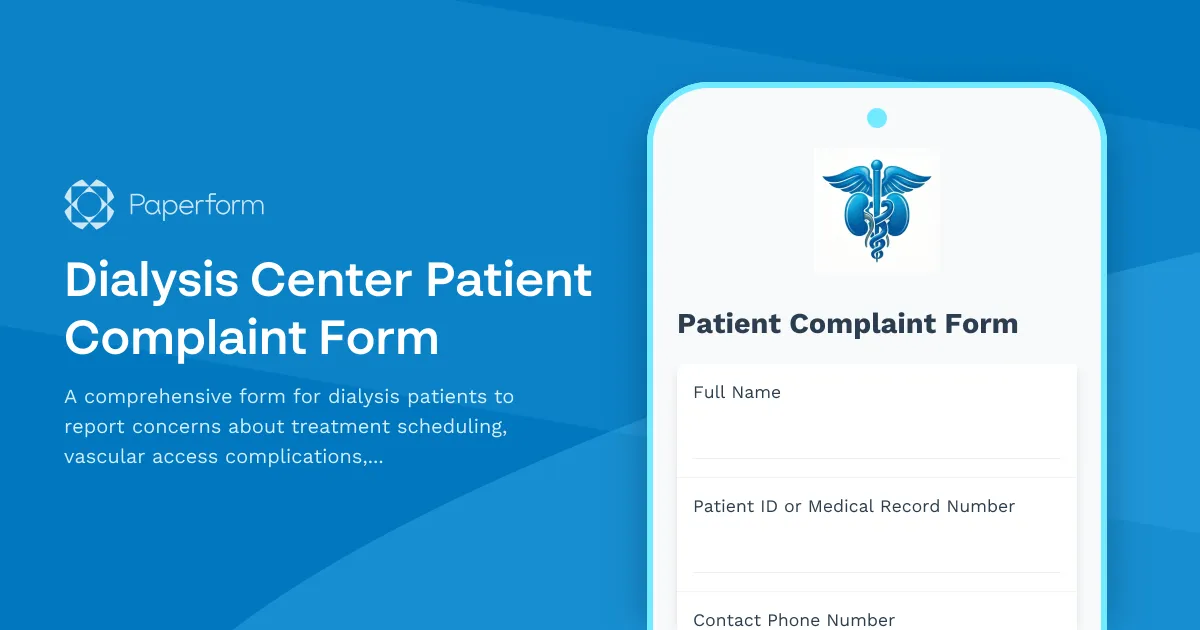
Dialysis Center Patient Complaint Form
Dialysis centers provide life-sustaining treatment to patients with kidney failure, making quality care and responsive service absolutely critical. When issues arise—whether with treatment schedules, vascular access complications, transportation barriers, or facility operations—patients need a clear, respectful way to voice their concerns and get timely resolutions.
This Dialysis Center Patient Complaint Form template gives healthcare facilities a professional, HIPAA-aware structure for capturing patient grievances while maintaining dignity and care quality. Built with Paperform, this template helps dialysis centers streamline complaint management, route issues to the right staff members, and demonstrate commitment to patient-centered care.
Why dialysis centers need a structured complaint process
Unlike many healthcare settings, dialysis patients return to the same facility multiple times per week for years. This ongoing relationship means small issues can compound quickly, affecting treatment adherence, patient satisfaction, and health outcomes. A formal complaint system helps centers:
- Identify systemic problems before they affect multiple patients
- Document concerns properly for quality improvement and compliance
- Respond quickly to time-sensitive issues like schedule conflicts or access complications
- Build trust by showing patients their voices matter
Common complaint categories this form addresses
This template covers the most frequent concerns dialysis patients face:
Treatment schedule changes: Last-minute shift changes, insufficient notice, conflicts with work or caregiving responsibilities, and inconsistent scheduling practices that disrupt patients' lives.
Vascular access complications: Issues with catheter care, fistula or graft problems, infiltration incidents, painful needle sticks, staff technique concerns, and inadequate assessment or response to access site issues.
Transportation barriers: Medical transportation no-shows, late pickups affecting treatment start times, unsafe vehicle conditions, driver concerns, and coordination problems between the center and transport providers.
Facility and staff concerns: Cleanliness issues, equipment problems, long wait times, communication breakdowns, privacy concerns, billing disputes, and interpersonal conflicts.
How Paperform makes complaint management more effective
Rather than relying on paper forms that sit in folders or generic contact forms that lack context, this Paperform template creates a complete digital workflow for complaint resolution:
Conditional routing: Different complaint types automatically trigger different email notifications and workflows, ensuring vascular access concerns reach clinical staff immediately while billing issues go to the finance team.
Sensitive data handling: Built with SOC 2 Type II compliance, Paperform provides the security healthcare facilities need when collecting patient information (note: while secure, Paperform is not HIPAA compliant, so facilities should avoid collecting PHI beyond what's necessary for follow-up).
Automated follow-up: Connect submissions to your patient management system or use Stepper (stepper.io) to create automated follow-up workflows—send acknowledgment emails within hours, assign cases to care coordinators, schedule follow-up calls, and track resolution timelines.
Reporting and trends: Use Paperform's built-in analytics and AI Insights to identify patterns across complaints, spot recurring issues with specific shifts or equipment, and generate reports for quality improvement committees.
Extending the workflow with Stepper and integrations
Once a complaint is submitted, Paperform's integration ecosystem takes over:
- Route to the right team based on complaint category and urgency
- Create tickets in your facility management or CRM system
- Log incidents in your quality assurance database
- Notify supervisors when high-priority issues are flagged
- Send status updates to patients as their complaints move through resolution
- Generate monthly reports summarizing complaint trends and resolution times
With Stepper, you can build sophisticated, multi-step resolution workflows without code—perfect for healthcare operations teams who need automation without IT dependencies.
Who should use this template
This form template is designed for:
- Dialysis centers (in-center hemodialysis and peritoneal dialysis facilities)
- Nephrology practices managing dialysis programs
- Healthcare networks with multiple dialysis locations
- Patient advocacy coordinators and social workers
- Quality assurance and compliance teams
Whether you're a small independent dialysis center or part of a large renal care network, this template adapts to your complaint resolution process while maintaining a respectful, patient-centered approach.
Start improving patient satisfaction today
Every complaint is an opportunity to improve care quality and strengthen patient relationships. With this Paperform template, dialysis centers can transform complaint management from a reactive, paper-based process into a proactive system that drives continuous improvement and shows patients their concerns truly matter.

More templates like this
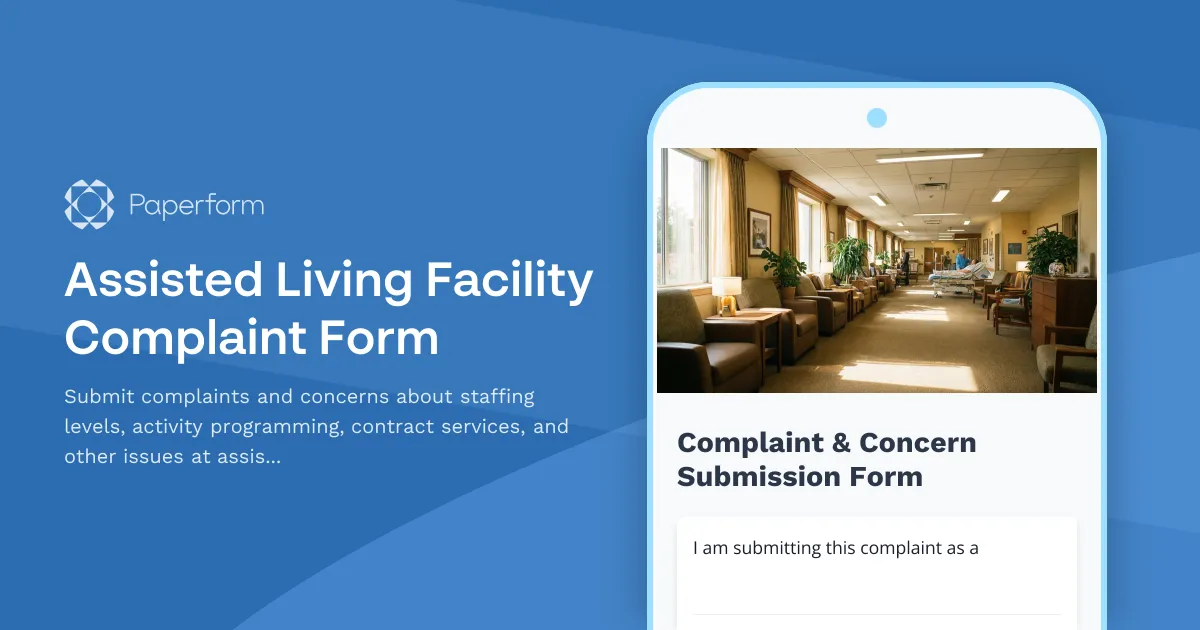
Assisted Living Facility Complaint Form
Submit complaints and concerns about staffing levels, activity programming, contract services, and other issues at assisted living facilities. Ensure your voice is heard and concerns are addressed promptly.
Hospice Care Complaint Form
A compassionate form for families and patients to report concerns about hospice care services, including pain management, communication issues, and service quality.
NICU Family Feedback & Concern Form
A compassionate form for NICU families to share feedback, concerns, or complaints about family communication, developmental care quality, and discharge preparation to help improve care experiences.
Rehabilitation Hospital Patient Complaint Form
A comprehensive form for patients and families to submit complaints about therapy intensity, insurance authorization, discharge timing, and other rehabilitation hospital concerns.
Addiction Treatment Program Admission Approval Form
Streamline admission requests for addiction treatment programs with clinical assessment, insurance verification, bed availability checks, and clinical director authorization in one comprehensive form.
College Health Center Complaint Form
Submit complaints and feedback about college health center services including mental health access, reproductive health services, and insurance billing issues.
Community Paramedicine Program Enrollment Form
Enroll frequent ER users with chronic conditions in community paramedicine programs. Collect medical history, medication needs, care coordination consent, and home safety information.
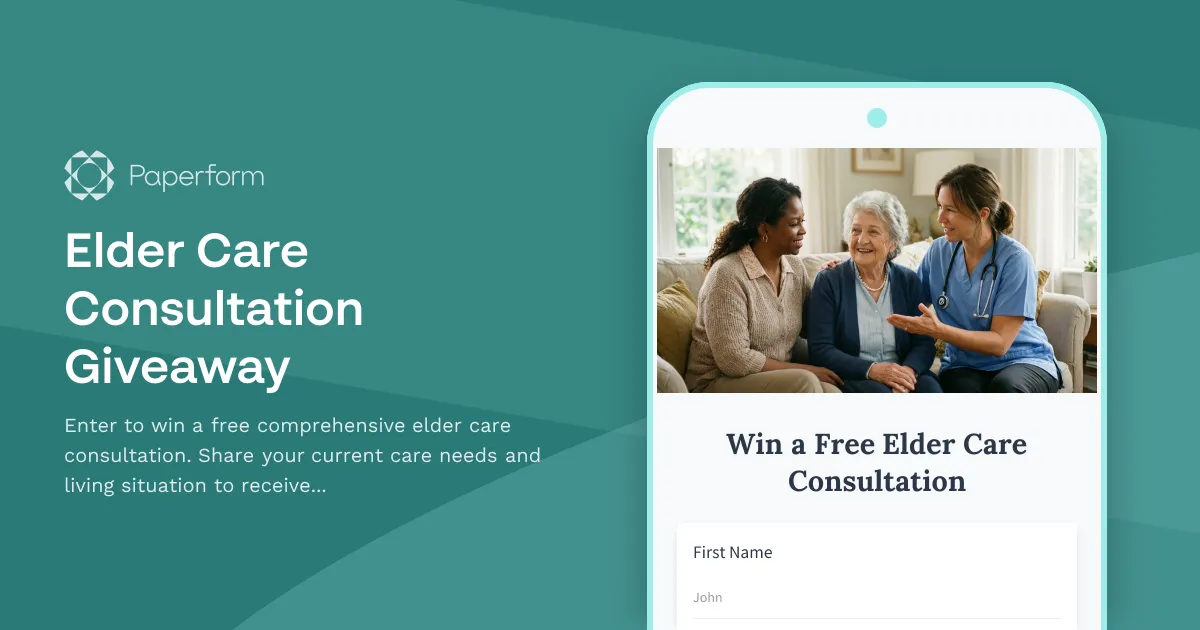
Elder Care Consultation Giveaway
Enter to win a free comprehensive elder care consultation. Share your current care needs and living situation to receive personalized recommendations from our expert care coordinators.
Endocrinology Practice Patient Complaint Form
A professional complaint form for endocrinology patients to submit concerns about diabetes management, thyroid medication, lab testing, and other aspects of their care.
Geriatric Care Assessment Appointment Form
Schedule a comprehensive geriatric care assessment appointment with cognitive screening, fall risk evaluation, medication review, and caregiver support assessment.
Geriatric Medicine Comprehensive Assessment Form
A thorough new patient intake form for geriatric medicine practices covering medical history, fall risk screening, cognitive assessment, medication reconciliation, functional status, and advance care planning.
Healthcare Care Transition Coach Patient Survey
A comprehensive post-discharge survey to assess hospital-to-home transition support, medication management, follow-up care coordination, and patient understanding of warning signs requiring immediate medical attention.