When crisis intervention services fall short, lives can be at risk. This Crisis Intervention Service Complaint Escalation Form gives healthcare providers, mental health organizations, and crisis response teams a structured way to document and escalate serious service failures—from response time breakdowns to clinical quality concerns—so leadership can act quickly and appropriately.
Why this template matters for crisis services
Crisis intervention requires split-second decisions, properly trained staff, and reliable systems. When something goes wrong—a delayed response, a clinical misjudgment, or a gap in training—you need a clear escalation path that captures the full picture and triggers the right review process.
This form helps crisis centers, mental health agencies, hospitals, and emergency services teams standardize how complaints move from frontline observation to management review, clinical supervision, or even accreditation body notification. It's built for situations where standard complaint channels aren't enough and immediate leadership attention is required.
What this form captures
The template walks through the essential details needed for proper escalation:
- Incident details and timeline: When the issue occurred, services involved, and who was affected
- Escalation category: Response time failures, clinical quality concerns, training deficiencies, or accreditation triggers
- Detailed description: What went wrong, what should have happened, and the impact on service users
- Supporting documentation: Space to upload incident reports, call logs, or other evidence
- Previous reporting: Whether this has been raised before and what happened
- Urgency and risk assessment: Immediate safety concerns and potential for recurrence
- Recommended actions: What the escalating party believes should happen next
The form uses conditional logic to show relevant follow-up questions based on the type of concern, ensuring you gather the right information for clinical reviews versus operational failures versus training gaps.
How Paperform helps crisis teams respond faster
Built on Paperform, this escalation form does more than collect complaints—it can drive your entire response workflow:
- Instant notifications: Send different alerts to clinical directors, quality managers, or compliance officers depending on the escalation type selected
- Stepper automation: Use Stepper to automatically create incident tickets, notify leadership teams, log issues in your quality management system, and schedule follow-up reviews based on severity
- Secure documentation: Keep sensitive clinical and patient-adjacent information protected with SOC 2 Type II compliance and access controls
- Custom routing: Direct accreditation-related concerns to your compliance team, training issues to your clinical educator, and response time failures to operations—all automatically
For organizations managing multiple crisis services or locations, Paperform's Agency+ plan lets you deploy standardized escalation forms across sites while maintaining central oversight of all serious concerns.
Whether you're a crisis intervention coordinator, clinical supervisor, quality manager, or healthcare administrator, this template gives you a professional starting point that captures what leadership needs to know and helps you maintain the high standards crisis services demand.



More templates like this
Addiction Treatment Facility Patient Complaint Escalation Form
A comprehensive escalation form for addiction treatment facilities to manage patient complaints involving clinical care quality, insurance authorization issues, and accreditation body notifications.
Telemental Health Complaint Escalation Form
A comprehensive escalation form for telemental health platforms to handle serious complaints about prescriber concerns, crisis response, licensure issues, and clinical supervision.
Crisis Stabilization Unit Counselor Wellness Check
A comprehensive wellness check form designed for crisis stabilization unit counselors to assess work-related stress, burnout, and emotional wellbeing in high-pressure healthcare environments.
Peer Support Service Complaint Escalation Form
A comprehensive escalation form for peer support services to manage serious complaints including boundary violations, confidentiality breaches, and certification concerns requiring management review.
Addiction Recovery Center Staff Code of Conduct
A comprehensive code of conduct agreement for addiction recovery center staff covering professional boundaries, confidentiality standards, ethical guidelines, and relapse response protocols.
Addiction Treatment Center Therapeutic Resources Purchase Request Form
A comprehensive internal purchase request form for addiction treatment centers to procure therapeutic resources, ensuring evidence-based program alignment, insurance coverage validation, and outcome tracking capabilities.
Addiction Treatment Facility Quality of Care Whistleblower Form
Confidential form for reporting quality of care concerns, compliance violations, and patient rights issues at addiction treatment facilities, with SAMHSA standards review.
Addiction Treatment Facility Safety Incident Report
Document safety incidents in addiction treatment facilities while maintaining patient confidentiality, recording staff response, and tracking treatment plan impacts for clinical review.
Addiction Treatment Telehealth Supply Request Form
A professional form for addiction treatment facilities to request telehealth supplies, remote monitoring equipment, and virtual therapy technology while maintaining HIPAA compliance.
Adolescent Depression Prevention Program Research Participation Form
A comprehensive research participation form for adolescent depression prevention studies, including mental health screening consent, therapy randomization, and parent communication preferences for school-based interventions.
Anonymous ACT Fidelity Concern Report
A confidential reporting form for submitting concerns about Assertive Community Treatment (ACT) program fidelity, evidence-based practice adherence, and client outcome monitoring.
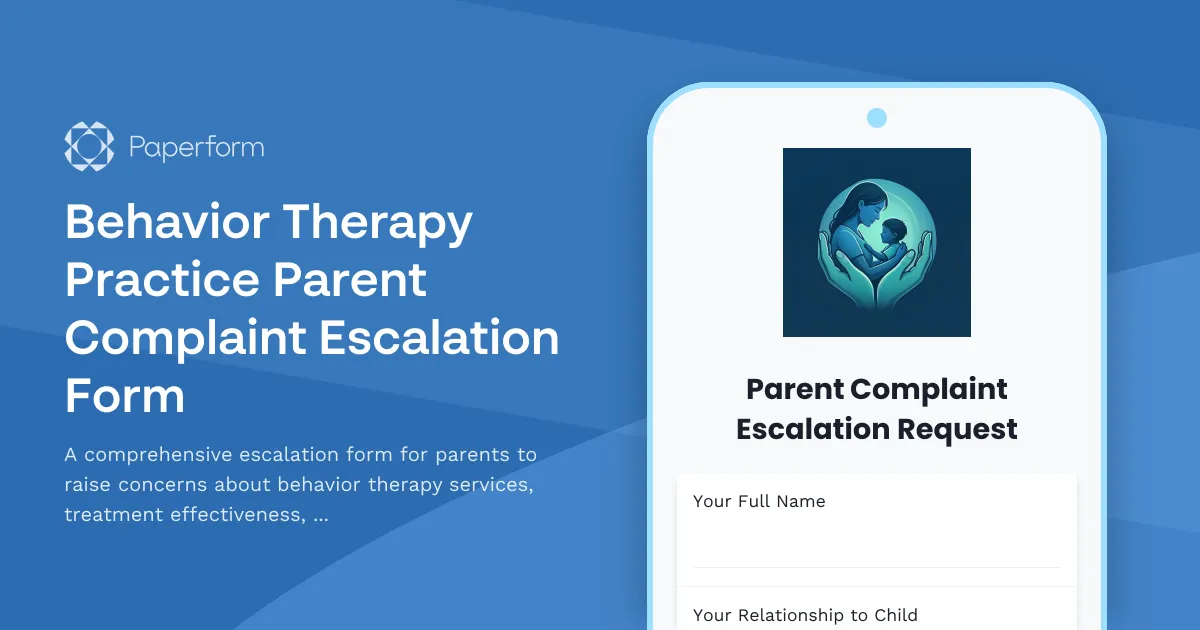
Behavior Therapy Practice Parent Complaint Escalation Form
A comprehensive escalation form for parents to raise concerns about behavior therapy services, treatment effectiveness, insurance barriers, clinical supervision, and overall outcomes for their child's care.