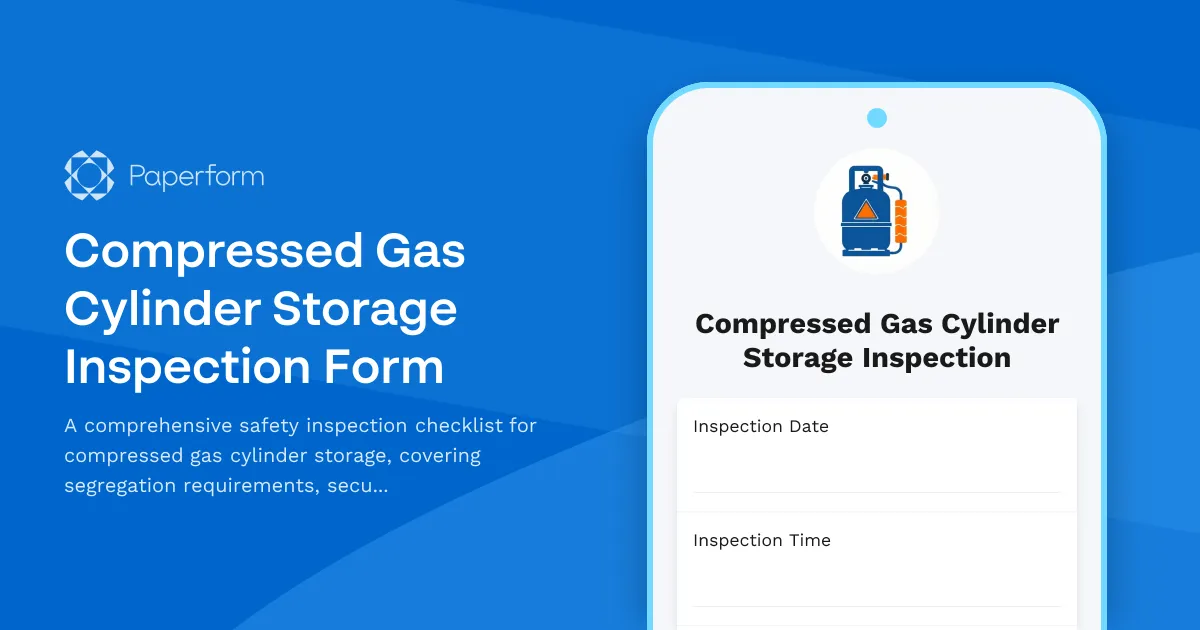
Compressed gas cylinders pose serious safety risks when stored improperly, from fire hazards and explosions to toxic exposure and physical injury. Whether you're managing an industrial facility, construction site, laboratory, or manufacturing plant, regular storage inspections are essential for protecting your team and staying compliant with OSHA, CGA, and NFPA standards.
This Compressed Gas Cylinder Storage Inspection Form helps safety officers, supervisors, and facilities managers conduct thorough assessments of cylinder storage areas. It covers critical safety elements including proper segregation of incompatible gases, securing methods to prevent tipping, adequate ventilation systems, labeling compliance, and emergency equipment accessibility.
Built with Paperform, this template transforms complex safety checklists into a mobile-friendly digital form that can be completed on-site using any device. Instead of juggling paper clipboards and manual data entry, your team can document issues in real-time, attach photos of deficiencies, and automatically generate inspection reports.
Conditional logic guides inspectors through the assessment based on storage type and cylinder contents, while calculation fields can track compliance scores automatically. Once submitted, forms can trigger workflows in Stepper to route corrective action requests to maintenance teams, update safety management systems, or alert supervisors when critical violations are found.
Perfect for construction contractors, industrial facilities, welding shops, manufacturing plants, and any organization handling compressed gases, this form ensures consistent documentation across multiple sites and helps you maintain the safety records required by regulatory agencies. The form is fully customizable to match your specific standards, facility layouts, and inspection protocols.



More templates like this

Hand and Power Tool Inspection Form
Comprehensive tool safety inspection form for evaluating hand and power tools, including guard functionality, cord integrity, grounding verification, and storage compliance.
Emergency Action Plan Drill Documentation Form
Document emergency evacuation drills with evacuation times, headcount verification, emergency contact notifications, and areas for improvement to ensure workplace safety compliance.

Material Handling and Storage Area Inspection Form
A comprehensive inspection form for evaluating material handling and storage areas, including weight limits, stacking stability, and aisle clearance verification to ensure workplace safety compliance.
Material Handling Equipment Installation Form
A comprehensive installation form for material handling equipment that covers floor load verification, anchor placement, electrical requirements, safety features, and operator training documentation.

Blasting and Explosives Safety Inspection Form
Comprehensive safety inspection form for blasting operations, explosives storage, and blast site compliance. Covers magazine security, lightning protection, blast area clearance, and regulatory compliance requirements.

Cold Weather Safety Inspection Form
Comprehensive cold weather safety inspection form for construction sites and outdoor workplaces. Document heated break areas, frostbite prevention measures, ice removal, and winter hazard compliance.
Construction Site Lighting Adequacy Inspection Form
A professional inspection form for assessing construction site lighting levels, emergency systems, and placement compliance to ensure worker safety and regulatory standards.
Dust Suppression System Inspection Form
A comprehensive safety inspection form for evaluating dust suppression systems, water spray functionality, coverage adequacy, and runoff collection compliance on construction sites.

Fall Arrest System Anchor Point Certification Form
Certify fall protection anchor points with 5,000-pound capacity verification, installation details, and compliance inspection schedules for construction and industrial worksites.
Ground Fault Circuit Interrupter (GFCI) Monthly Testing Log
Comprehensive GFCI monthly testing and compliance log for recording trip times, amperage ratings, and weather protection verification to ensure electrical safety on construction sites and facilities.
Hazardous Energy Control Annual Review Form
Comprehensive annual review form for lockout/tagout procedures, hazardous energy control compliance, employee retraining documentation, and equipment modification tracking to ensure workplace safety.

Hot Work Permit Form
A comprehensive hot work permit form for contractors and safety officers to authorize and document welding, cutting, grinding, and other fire-producing operations with proper safety protocols.