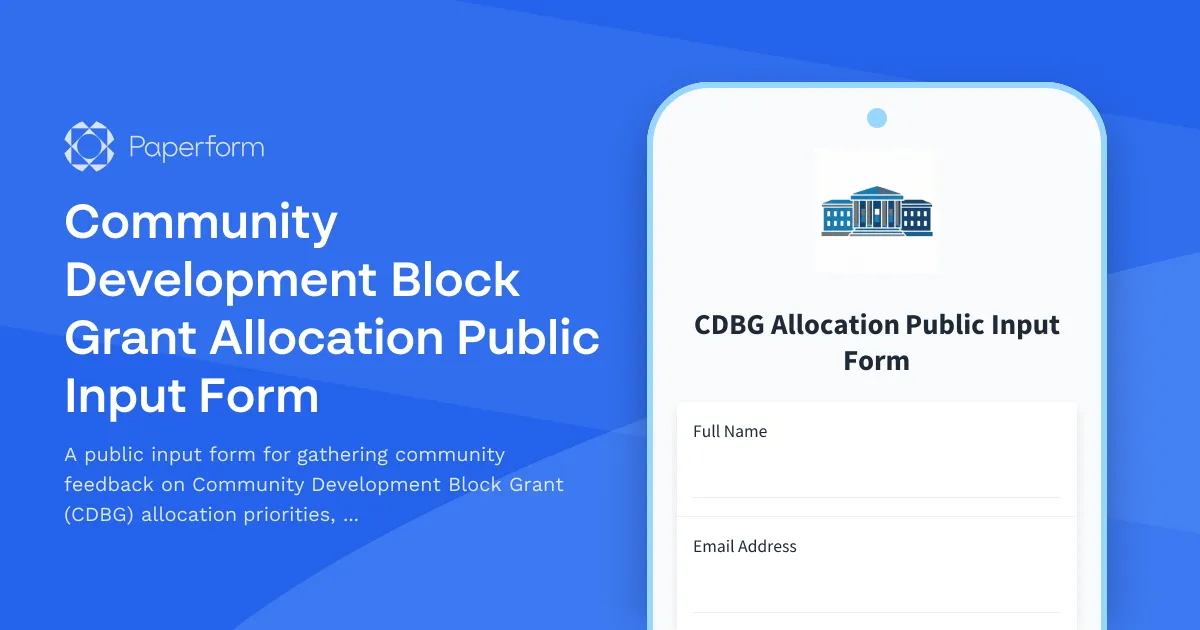
Community Development Block Grant (CDBG) programs are vital funding mechanisms that help local governments address critical community needs—from affordable housing and infrastructure to economic development and public services. But to ensure these federal dollars deliver real impact, municipalities need structured, inclusive ways to gather public input on how funds should be allocated.
This Community Development Block Grant Allocation Public Input Form is designed for city and county governments, planning departments, and community development agencies seeking to collect meaningful resident feedback on CDBG priorities. Built with Paperform, the template streamlines the public comment process while ensuring every voice—especially those from underserved neighborhoods—can be heard and considered in funding decisions.
The form walks residents through eligible project categories, neighborhood-specific needs, and equity considerations, making it easy for community members to share their priorities without needing deep knowledge of grant regulations. By organizing input into clear categories—housing, infrastructure, economic development, public facilities, and social services—local governments can quickly identify trends, allocate resources more equitably, and demonstrate transparent community engagement to federal oversight bodies.
With conditional logic built in, the form adapts to each respondent's interests, asking relevant follow-up questions about specific project types, geographic priorities, and populations that would benefit most. Whether you're holding virtual public hearings, supplementing in-person community meetings, or extending the comment period to reach more residents, this template ensures accessibility and clarity throughout the process.
Paperform's AI Insights can help planning staff quickly analyze hundreds of submissions, surfacing common themes and priority areas across different neighborhoods and demographic groups. Combined with Stepper workflows, you can automatically route high-priority comments to relevant department heads, send acknowledgment emails to participants, and maintain organized records for federal reporting requirements.
Ideal for municipal planning departments, housing authorities, economic development offices, and civic engagement teams, this form supports transparent, data-driven decision-making that reflects true community priorities and advances equity in public investment.
More templates like this
E-Scooter & Bike Share Program Public Comment Form
Submit your feedback on proposed e-scooter and bike share regulations, including safety requirements, sidewalk restrictions, and designated parking locations.
Municipal Broadband Feasibility Study Comment Form
A public comment form for residents to provide input on a proposed municipal broadband feasibility study, including current internet service quality, pricing concerns, and preferences for public-private partnerships.
Neighborhood Traffic Calming Program Input Form
A public comment form for residents to provide input on traffic calming measures, speed reduction strategies, cut-through traffic solutions, and pedestrian safety improvements in their neighborhood.
Vacant Lot Transformation Program Comment Form
Submit public comments on the proposed Vacant Lot Transformation Program, including temporary use permissions, liability provisions, and community stewardship models for revitalizing unused municipal properties.
City Council Public Hearing Comment Form
Submit your comments on proposed zoning variances to your city council. Verify your residency, state your interest in the matter, and share your position on the proposed changes.
City Planning Public Hearing Comment Form
Submit your comments, concerns, and suggestions on proposed development projects during city planning public hearings. Share feedback on environmental impact, traffic, and community character preservation.
Climate Action Plan Implementation Comment Form
A comprehensive public comment form for gathering community feedback on proposed climate action plans, including emission reduction targets, sector-specific strategies, and environmental justice considerations.
Coastal Zone Management Public Hearing Comment Form
Submit public comments on coastal zone management proposals, including shoreline access, environmental protection, and development regulations for public hearing consideration.
Community Development Block Grant Priorities Survey
A public survey to gather community input on CDBG funding priorities including affordable housing, infrastructure, economic development, public services, and administrative capacity investments.
Disaster Debris Management Plan Public Comment Form
Submit public comments on proposed disaster debris management plans, including collection priorities, temporary staging areas, and hazardous material handling procedures.
Fire Station Location Public Hearing Comment Form
Submit public comments on a proposed fire station location, including feedback on response coverage, property impact, traffic concerns, and emergency access routes.
Floodplain Management Ordinance Public Comment Form
Submit public comments on proposed floodplain management ordinance changes, including feedback on property development restrictions, insurance impacts, and hazard mitigation priorities.