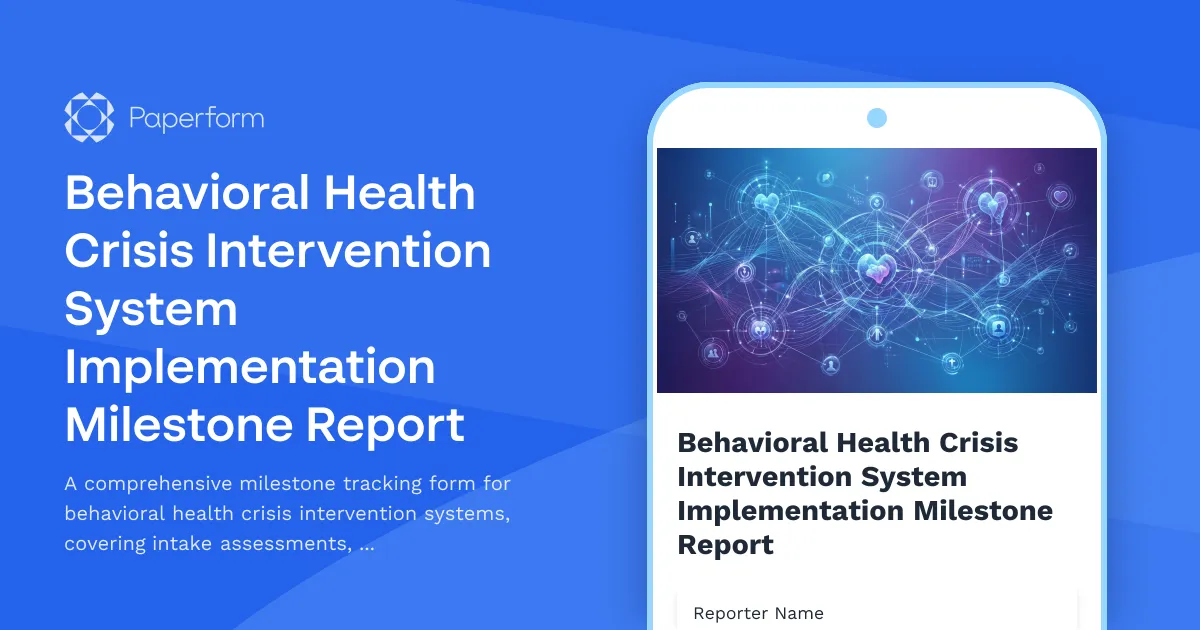
Track Your Behavioral Health Crisis Intervention System Implementation with Confidence
Implementing a behavioral health crisis intervention system requires careful coordination across multiple stakeholders, clear milestone tracking, and continuous outcome measurement. This Behavioral Health Crisis Intervention System Implementation Milestone Report template provides behavioral health organizations, hospitals, community mental health centers, and crisis response teams with a structured framework to document progress, assess system readiness, and ensure all critical components are functioning effectively.
Whether you're rolling out a new crisis stabilization unit, integrating mobile crisis response capabilities, or establishing 24/7 crisis hotlines, this template captures everything from intake assessment protocols and risk stratification processes to care coordination workflows and follow-up procedures. Built specifically for mental health administrators, program directors, clinical supervisors, and implementation teams, it helps maintain accountability while providing leadership with clear visibility into system performance.
Paperform makes behavioral health reporting seamless. Use conditional logic to show relevant questions based on implementation phase or milestone type, automatically route reports to clinical directors and executive teams with customized email notifications, and leverage Stepper workflows to trigger follow-up tasks when critical milestones are delayed or risks are identified. Connect your reports to project management tools, quality assurance systems, or dashboards to keep everyone aligned.
With built-in sections for outcome measurement and quality indicators, this template helps you demonstrate the impact of your crisis intervention system while identifying areas for continuous improvement. Track response times, utilization rates, safety outcomes, and patient satisfaction—all in one professional, easy-to-complete form that respects the complexity of behavioral health implementation work.



More templates like this
Anonymous ACT Fidelity Concern Report
A confidential reporting form for submitting concerns about Assertive Community Treatment (ACT) program fidelity, evidence-based practice adherence, and client outcome monitoring.
Corrections Mental Health Diversion Program Referral Form
Refer individuals with mental illness from the criminal justice system to community-based treatment programs as an alternative to incarceration.
Addiction Recovery Monitoring & Sobriety Tracker
Track sobriety milestones, identify relapse triggers, and monitor support group attendance for addiction recovery programs. A comprehensive check-in form for patients and counselors.
Anonymous Peer Support Specialist Boundary Violation Report
A confidential form for reporting boundary violations by peer support specialists, ensuring client safety and adherence to behavioral health certification standards.
Behavioral Health Crisis Center Patient Elopement Report
A comprehensive elopement report form for behavioral health facilities to document missing patients, assess risk factors, and coordinate immediate response efforts with mobile crisis teams.

Certified Peer Recovery Specialist Supervision Form
A comprehensive supervision form for certified peer recovery specialists to document coaching sessions, track ethical boundaries, and maintain continuing education records for professional development and compliance.
Collaborative Care Model Enrollment Form
A comprehensive enrollment form for integrated behavioral health programs combining primary care, psychiatric consultation, and care management services into a unified treatment approach.
First Episode Psychosis Program Protocol Deviation Whistleblower Form
Confidential reporting form for protocol deviations in first episode psychosis programs aligned with NIMH RAISE standards and early intervention quality assurance requirements.

Group Therapy Resource Allocation Request
Streamline mental health group therapy planning with this comprehensive resource allocation form. Coordinate therapist assignments, room bookings, intake coordination, billing support, and crisis coverage rotation for optimal patient care.
Integrated Behavioral Health Screening & Coordination Form
A comprehensive behavioral health screening form for primary care settings, enabling warm handoffs to mental health specialists and coordinated treatment planning between providers.
Intimate Partner Violence Screening & Safety Assessment
A confidential, trauma-informed screening tool for healthcare providers to assess intimate partner violence risk, conduct safety planning, and connect patients with appropriate resources and support services.

Maternal Depression Screening & Support Services Form
A comprehensive maternal mental health screening form using the Edinburgh Postnatal Depression Scale to assess perinatal and postpartum depression, evaluate bonding concerns, and connect mothers with appropriate support services and treatment resources.