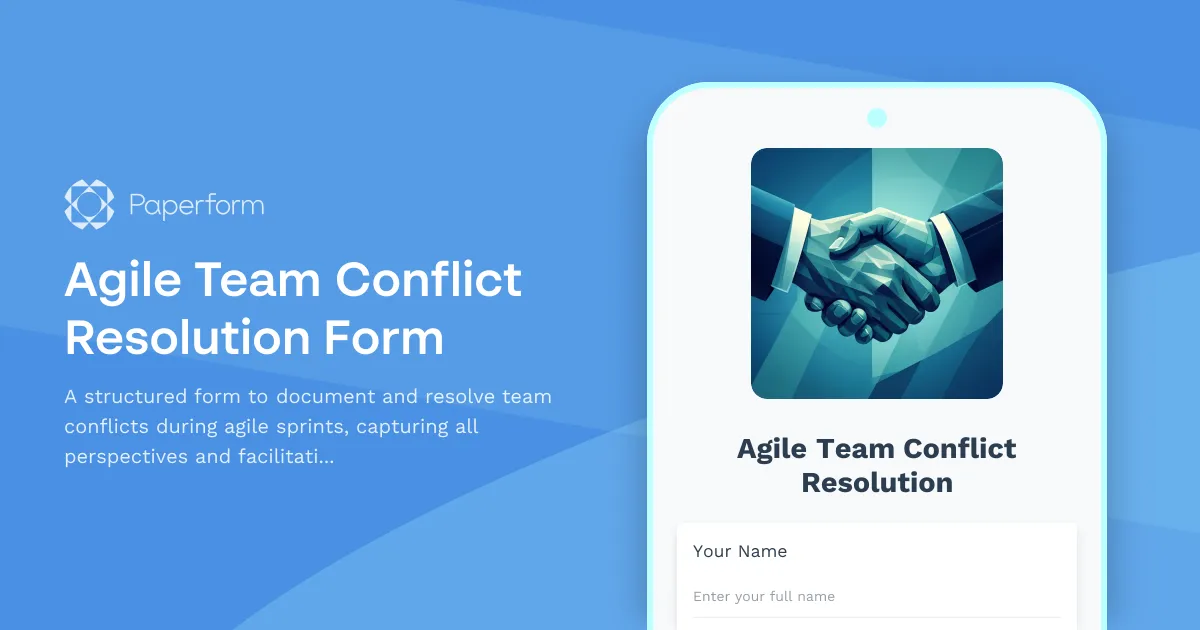
Resolve Agile Team Conflicts with Clarity and Structure
Team conflicts are inevitable in fast-paced agile environments—competing priorities, communication breakdowns, and differing approaches can all disrupt sprint momentum. This Agile Team Conflict Resolution Form gives your team a structured, neutral framework to document issues, capture all perspectives, and reach agreed resolutions that keep your sprints on track.
Built specifically for agile teams, Scrum Masters, and project managers, this template helps you move from tension to resolution without derailing your ceremonies or productivity. Whether it's a disagreement during sprint planning, a communication issue between developers and designers, or interpersonal friction affecting standups, this form ensures every voice is heard and documented.
Why Paperform for Agile Conflict Resolution?
Paperform's flexible editor lets you customize the form to match your team's specific conflict resolution process. Add conditional logic to route different types of conflicts to appropriate mediators, use calculation fields for priority scoring, and set up automatic notifications to relevant stakeholders when conflicts are logged.
Once a conflict is submitted, you can integrate with your existing project management tools like Jira, Asana, or Monday.com through native integrations. Better yet, use Stepper to automate your conflict resolution workflow—automatically create follow-up tasks, schedule mediation sessions, notify team leads, and track resolution progress without manual coordination.
The form's professional, neutral design helps de-escalate emotions and focus on facts, perspectives, and solutions. It's fully customizable to your team's culture and can be embedded in your internal wiki, shared in Slack, or sent directly to team members when tensions arise.
Built for Modern Agile Teams
Whether you're a distributed team navigating remote collaboration challenges, a growing startup managing team dynamics, or an established product team maintaining healthy sprint practices, this template supports constructive conflict resolution that strengthens rather than divides your team.
Start resolving conflicts with clarity and empathy. Create your Agile Team Conflict Resolution form with Paperform today and build a healthier, more collaborative team culture.
More templates like this
Agile Team Capacity Planning Form
Calculate sprint capacity based on team availability, skill sets, focus factors, and planned time off. Perfect for sprint planning and resource allocation in agile teams.
Agile Team Skills Matrix Form
Track team competencies, learning goals, and knowledge sharing opportunities to optimize sprint planning and resource allocation in agile teams.

Community of Practice Coordination Form
A comprehensive form for coordinating community of practice sessions, defining learning objectives, organizing knowledge sharing activities, and fostering team collaboration.
Quarterly Sprint Planning Form
Plan your team's quarterly sprint cycles with roadmap alignment, capacity forecasting, holiday adjustments, and goal setting for agile teams.
Sprint Capacity Planning Form
Plan your sprint capacity with team availability, PTO tracking, velocity estimates, and commitment levels. Perfect for agile teams running Scrum or Kanban workflows.
Sprint Health Check Form
Assess your sprint's health with metrics on team morale, velocity trends, quality, and process adherence. Perfect for agile teams looking to continuously improve their sprint performance.
Agile Experiment Design Form
A structured form for designing and documenting agile experiments with clear hypotheses, test approaches, data collection methods, and success criteria to drive data-informed decision making.
Agile Governance Review Form
A comprehensive governance review form for evaluating agile process adherence, analyzing sprint metrics, documenting improvement recommendations, and providing leadership updates on team performance.
Agile Leadership Support Request Form
Request leadership intervention for sprint impediments, resource needs, policy exceptions, and strategic alignment issues. Escalate blockers and get the support your agile team needs to deliver.
Agile Metrics Dashboard Submission Form
Track sprint performance with comprehensive agile metrics including velocity, cycle time, lead time, and quality indicators for continuous team improvement.
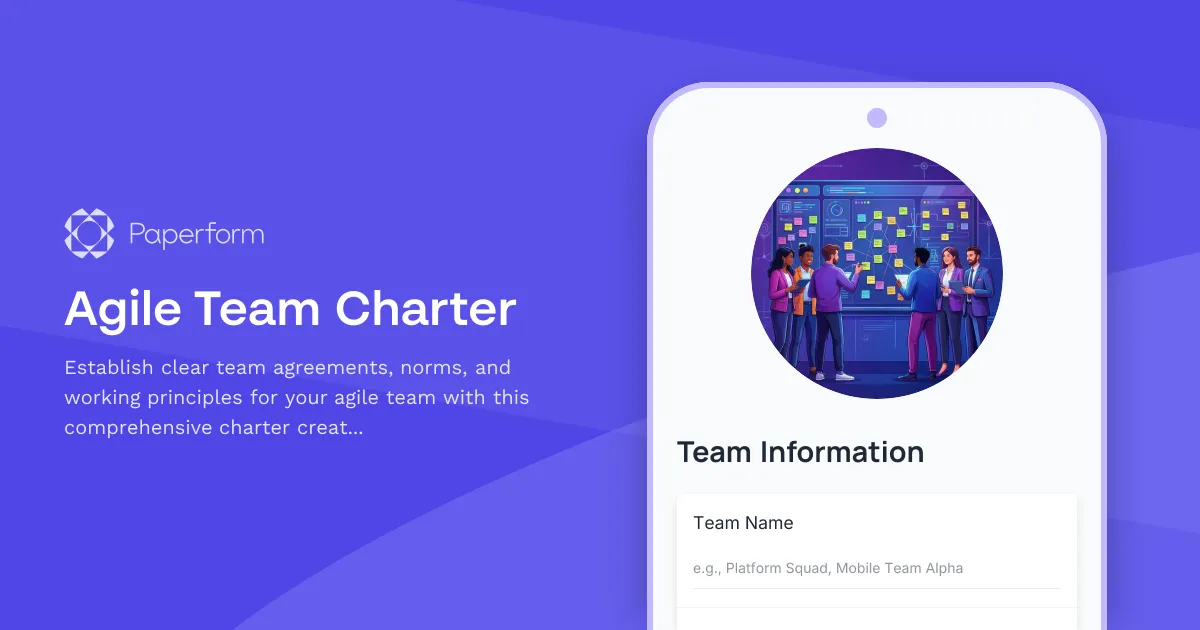
Agile Team Charter
Establish clear team agreements, norms, and working principles for your agile team with this comprehensive charter creation form.
Agile Team Retrospective (Sailboat)
Run engaging sprint retrospectives using the sailboat metaphor to identify what's propelling your team forward, what's holding you back, and where you're headed next.